Category Archives: History

Landlord Invokes Herring Hill Past in Decision to Evict Storeowner

The long standing Georgetown shop P St. Pictures is closing. As related in this article last summer, the shopkeeper, Judy Schlosser, has been told to vacate the shop-space that she has occupied for 28 years.

Losing a shop like this stings, but it gets a lot worse when you find out that the future occupant of the space is just the 7-11 next door that wants to expand. It’s just another example of big chain moving in and pushing out a small independent shop.

At least, that’s how GM pictured it until he read a letter sent to the ANC commissioners from Bob Enzel. Enzel is the trustee for the property at issue. He argues that the story that has been presented to the community isn’t accurate. He provides his side of the story, stating that Schlosser had a long list of outstanding debts that were unpaid or simply forgiven.

This is clearly a he-said-she-said situation–as stories like this often go–and GM is not in a position to settle it here. But it was the rest of the letter that GM found fascinating.

First of all, Enzel isn’t some distant landlord with no attachment to the area, cashing checks. He’s a Georgetown native and it sounds like he knows these streets like the back of his hand:

I am a native of Georgetown. Our family has lived in this area for 80 years. I went to Corcoran Public School [ed. note: he’s talking about the Corcoran elementary school at 1219 28th St., which was the white elemtary school in this part of Georgetown until it closed in the 1950s], Gordon Jr. High and Western Sr. High. I can show you where every little store was located and in many cases identify who owned them. The block that housed P Street Pictures and 7-11 had a barber shop, shoe shine parlor and Reed’s Electric Company before Reed’s moved to Wisconsin Avenue. Around the corner on Twenty- Seventh Street, The Diamond Cab Company operated its taxi cabs. In days past, Georgetown housed the Ledo and Dumbarton movie houses, Murphy’s Five & Dime, Galliher & Huguely Lumber Yard, Ladd Mills Esso and the original Georgetown Boys Club…

He continues by pointing out that 7-11 is more a part of the neighborhoods history than any other store still open: Continue reading
10 Comments

Filed under History

Georgetown Skyline: 1910

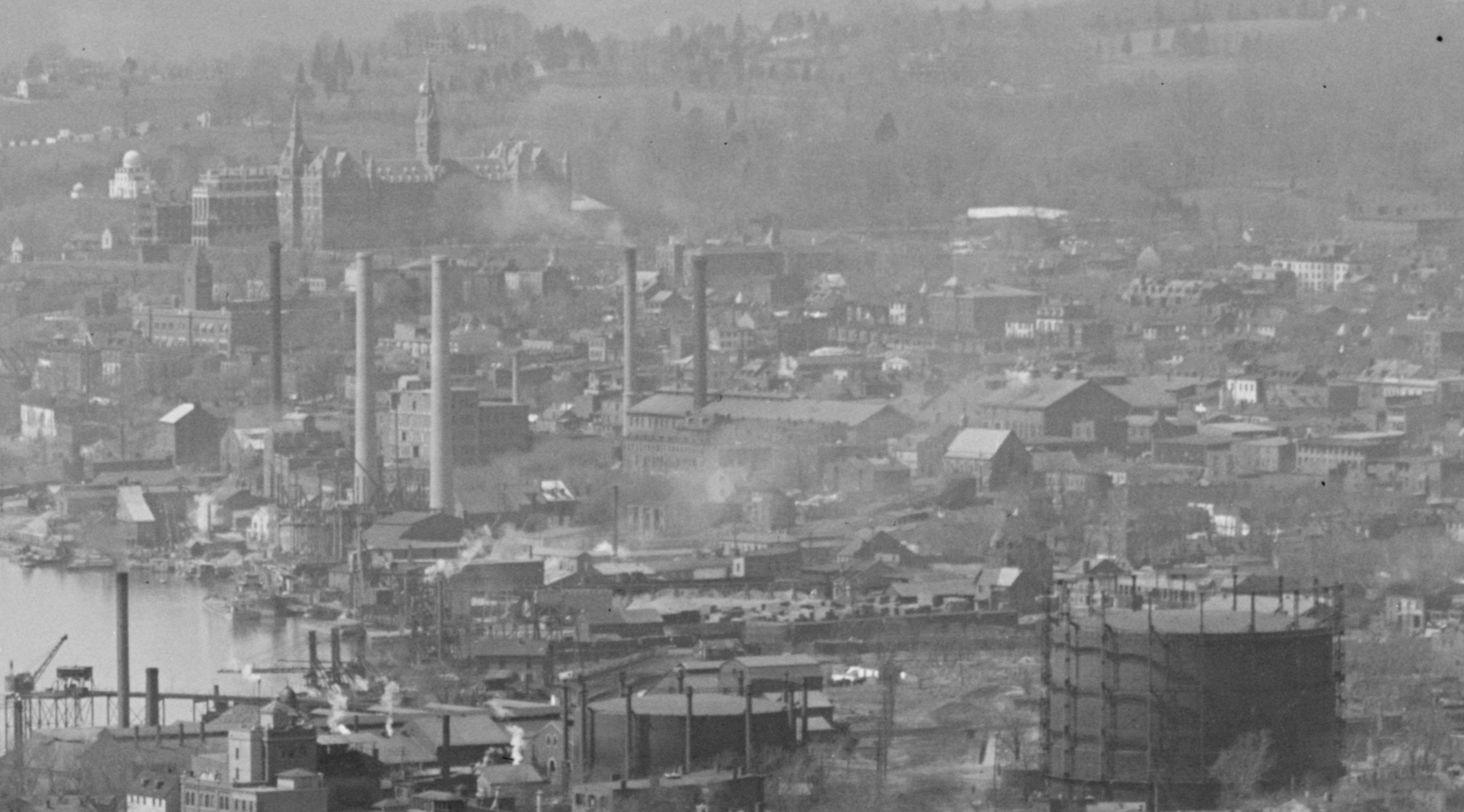
As the debate over the future of the West Heating Plant continued over here, the discussion turned instead to the past. Reader Walter directed our attention to a photo at the Library of Congress from 1910 (or thereabouts) taken from the top of the Washington Monument. It’s part of a 360 degree panoramic, but given the high quality of the large format photography used at the time, we can zoom in and get a wonderful snapshot of Georgetown’s skyline.

Here’s the overall shot:

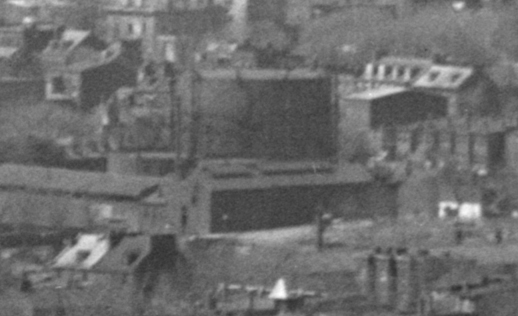
The immediate point being addressed by Walter in linking to the photo was that at the time a gigantic tank of gas was stored at the corner of M and 30th. Here’s a shot of it:

What immediately jumps out at you when looking at this shot is the ramshackle state of the waterfront. It was still a very active and industrial area. There are five significant smokestacks, of which two remain today. But your eyes are also drawn to GU:

Continue reading

2 Comments

Filed under History

Georgetown Bootlegger Honored By Ken Burns

Vodpod videos no longer available.

The other night, during part II of Ken Burns fantastic documentary on Prohibition, the camera turns to M St. and the story of Paul Ward, a bootlegger.

The clip shows a photo of the Thomas Sims Lee corner at 30th and M. But that’s not necessarily where the activity took place, since the basement of those buildings doesn’t go out to the alley. There are, however, a bunch of buildings down on the west end of M St., including Cady’s Alley, where that is the case. Either way, what a great story.

The series itself was absolutely fantastic, with photography and film from the period as captivating as we’ve come to expect from Burns’ work. If you missed it, watch the whole thing right here.

Here’s another clip of Donald Ward telling an even better story from his dad, which kicked off the episode:

Vodpod videos no longer available.

GM really, really wishes he knew Donald Ward, he seems like he’s got a lot of great stories.

3 Comments

Filed under History

One Last Remnant of Washington’s Cable Cars Lives on in Georgetown

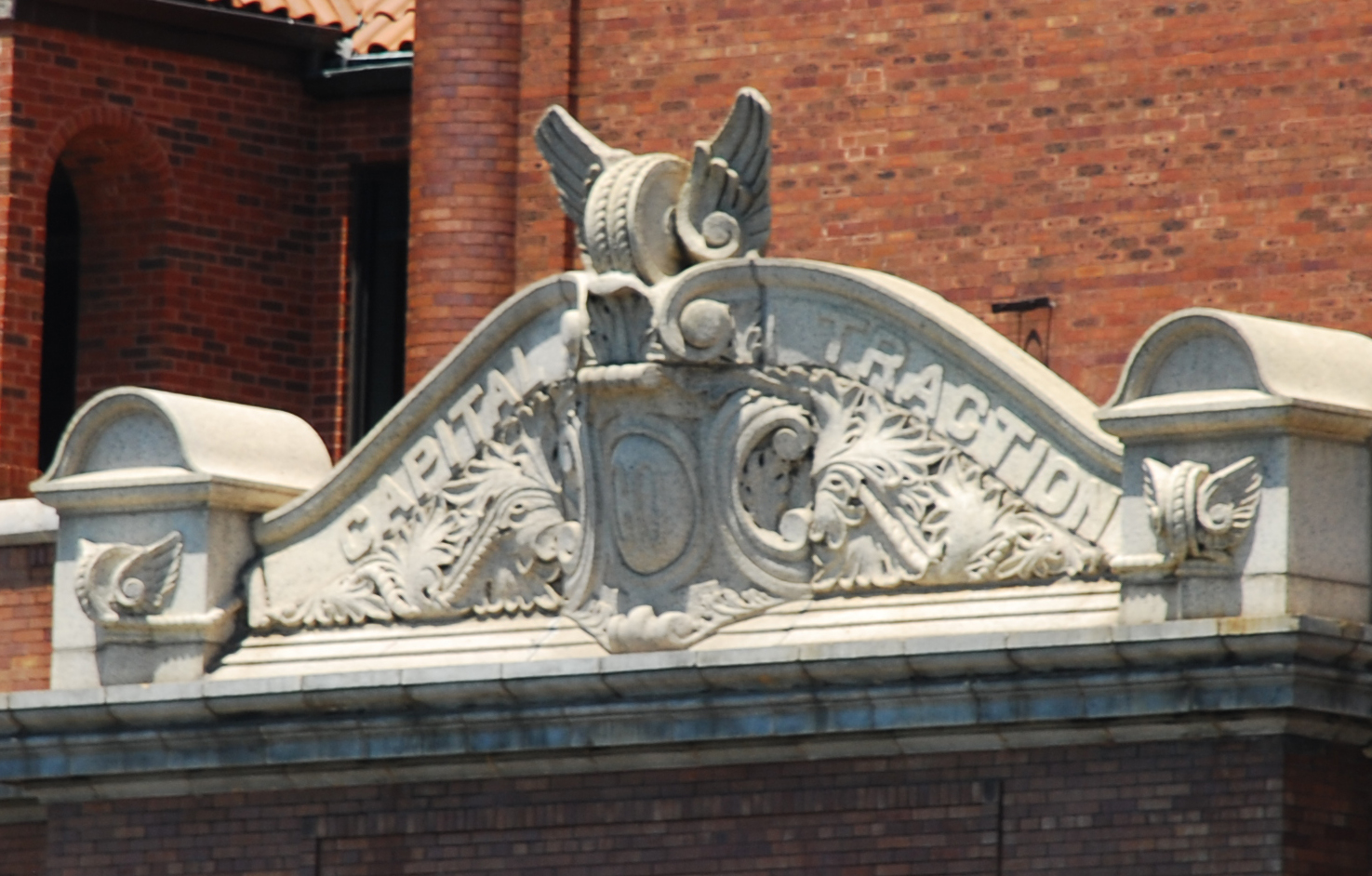
At the far western end of M St. stands the massive Car Barn. Built in 1895, the Car Barn served as a depot for the streetcars until they stopped running in 1962. After changing hands a couple times, the building now serves as extra space for Georgetown University. But GM just noticed a very cool feature in the building’s architecture that reflects its earlier use.

On the pediment of the building it still reads Capital Traction. The Capital Traction Co. was one of the earlier mass transit companies that operated in DC and it constructed the Car Barn with an intent for it to be a Union Station. As described by Wikipedia:

Union Station was designed to serve four streetcar companies: The old Washington and Georgetown lines would use the ground floor on M Street NW while the Washington, Arlington and Falls Church and the projected Great Falls and Old Dominion were to come across the Potomac from Rosslyn entering the second and third floors respectively on steeltrestles. The Metropolitan would use the roof. In reality, the Virginia companies never used it and the Metropolitan only sparingly so. The Washington and Great Falls took over the third floor. The station opened on May 27, 1897 and contained Washington’s only cable loop.

That’s right, for a very short while Washington DC had cable cars. From 1890-1899, the Washington and Georgetown Railroad and then its successor, Capital Traction, ran cable cars through the city. Continue reading

10 Comments

Filed under History

Crews Begin to Remove Streetcar Tracks Today

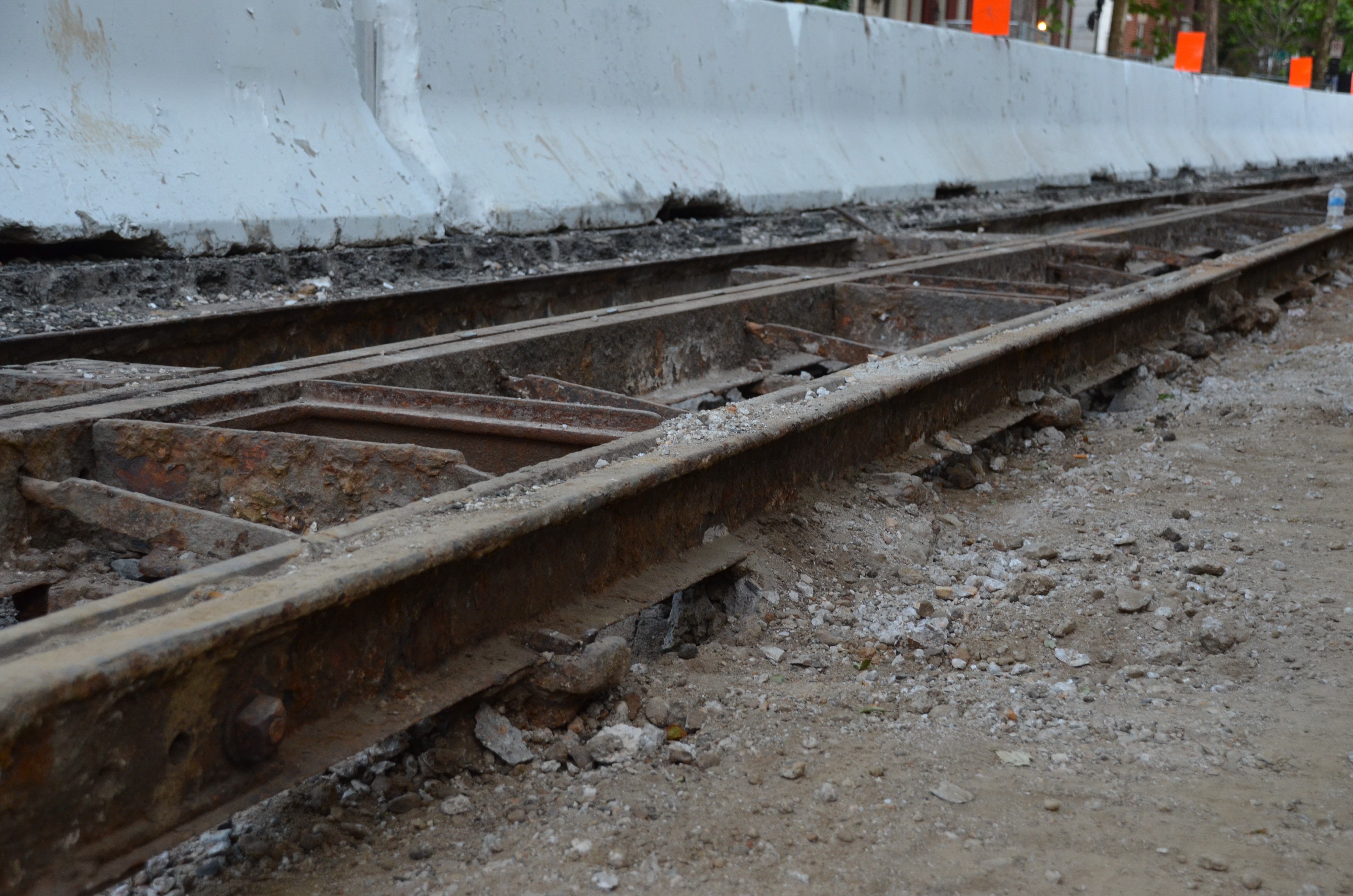
Right now, the city is undergoing a long, long project to rehab the streetcar tracks on O and P Streets. They will pull up all the cobblestones (well, technically they’re Belgian blocks, but everyone just calls them cobblestones) and pull up the tracks and the yolks that support them. They will then reposition the yolks lower to be better aligned with the street grade, which has eroded a lot over the years. Then they will reposition the cobblestones and, hopefully, the streets will look beautiful and be a lot more safe to ride on.

But what won’t be riding on the tracks is streetcars themselves. The whole point of this exercise is to preserve in place the last remaining examples of Washington’s rare conduit power system. That’s a fancy way of saying the streetcars got their power from a buried power line. The streetcars accessed the powered line through a slot running down the center of the tracks. It looked a lot like a cable car slot, and for good reason because a lot of the streetcars in Washington were originally cable cars that were transitioned over to electric power. Continue reading

7 Comments

Filed under History

Carol Joynt’s Book is Out

This week, friend of GM and fellow Georgetown blogger, Carol Joynt, published her first book. It’s a memoir of her life, particularly her life after her husband, Howard Joynt, died and left her in serious trouble with the IRS.

At the center of the book is the story of Nathans. And GM’s going to take this chance to look back on his coverage of the demise of that neighborhood institution. After getting some of your memories stoked, go out and pick up a copy of Carol’s book.

GM wasn’t around Georgetown for Nathan’s glory days, but a couple years ago he dug up an odd little snippet of those days:

Canadian Club hid a case of its liquor somewhere in the District. Where was it?

Start at a place that was named for America’s most important city. See where a bark takes you. From there, go to what you can’t miss. When you have arrived, face in the direction of a past scandal that was uncovered and made public. Turn in the opposite direction and make tracks for a nearby Metro station. Ride three stops.

Come up and then find the way to a famous ending. Continue in the most obvious direction, when you know the time is right. Before it’s too late, head for the nearest bridge that can take you over water. If it becomes impossible to continue in a straight line, go toward a body of water and find a spot with three banks. From the highest bank, go in the direction of a bridge. When you’ve reach it, walk back 100 paces and you’ll be right over the hidden treasure: a whole case of Canadian Club.

It’s all yours if you’re first to find the person in charge and say, “C.C. please” with feeling.

So where was that case of Canadian Club?

Nathans.

Continue reading

3 Comments

Filed under History

Plucked From the Comments

GM doesn’t normally do this, but he was especially touched by a comment he received the other day in response to posting the image of the old Roy Rogers on Wisconsin Ave. It’s from reader “George” and it’s a love letter to Georgetown’s past:

I remember the balloon man, I heard he was busted for selling heroin, he used to be outside of the Little Tavern, at Wisconsin and N St. And those were not “Hells Angels”, they were “Pagans”. They were scary! Used to be a lot of them in the middle sixties, down on M Street, when the auto parts stores were there, and the saddlery store, near Desperado’s, and the laundromat on M St. And the other Little Tavern. Near Stohlman’s Chevrolet, and Menehan’s and Hardware, around the corner was Weaver’s. And the Cellar Door. And the head shops selling trippy posters and black lights. Before “Up Against the Wall”. Remember when Britches first opened on Wisconsin, just below N? 1967. And Doc Dalinsky’s, Mrs. Crocker’s lamp shop, Dorcas Hardin’s dress shop. Bill Fitzgerald’s Wine and Cheese Shop, next to Peoples Drug Store. Or Coffee, Tea and Spice? Rive Gauche! The French Market, Magruders, the Sealtest dairy at 25th and M St? They delivered! Rich’s shoe store. John Learmont’s Records and Books. Arpad’s Antiques. Long before, my mom kept her horse in the stable at 23rd and P Street. We used to take the street car to the amusement park at Glen Echo! My sister and I once got stuck there because our nanny didn’t have the 5 cents for the return trip. Buying our goldfish at Woolworth’s. Exotics pets up at Friendly Beasties. And the man with his haunting bell, who would walk the streets in the summer, sharpening knives. Lad Mills selling Esso on Que Street. Georgetown was a great place to grow up, and still is. Continue reading

34 Comments

Filed under History

All You Need to Know About the Georgetown Metro Stop

Last week when GM was writing about the debate over Georgetown University’s Ten Year Plan, he mentioned that ultimately the best way to tackle the transportation challenges facing the university and the neighborhood would be for both parties to get behind the effort to bring a Metro stop to Georgetown. This comment led a reader to write to GM and ask what the status of that effort is.

Rather than just answer that question, GM thought he’d take this opportunity to write about all he knows about a Metro stop in Georgetown: why we don’t have one and why we may yet get one (eventually).

Why There is No Georgetown Metro

If you take anything away from this article, please let it be this: the reason there is no Metro station in Georgetown has absolutely nothing to do with neighborhood opposition. Nothing. No “rich Georgetowners wanted to keep out minorities”-conspiracy. No matter how much it fits with the popular stereotype, it’s just not true.

As rigorously documented in Zachary Schrag’s Great Society Subway, the planners behind Metro simply never seriously considered putting a station in Georgetown. The reason: the Potomac. To get under the river, the Metro tunnel has to start heading down far enough away so that it’s not like a roller-coaster.

Commercial Georgetown is very close to the river and on a steep hill, which wouldn’t give the tunnel much distance to reemerge from underneath the river. Thus a Georgetown station would be extremely deep. It would be physically possible to build, but it would be extremely expensive.

And the Metro planners didn’t see a reason to spend that sort of money on Georgetown. In the 1960s when the plans were developed, Georgetown had little office space and few apartment buildings. It simply was not a destination of suburban commuters. Since that was the audience for which the Metro was primary designed to serve, Georgetown was not considered a worthwhile station location.

That’s it. No matter how affirming of all the stereotypes of Georgetowners the myth is, it’s absolutely false.

Why There May Someday Finally Be a Georgetown Metro

In 2013, the first phase of the new Silver Line will open. As planned, the Silver Line will branch off of the Orange Line at East Falls Church and head out to Tyson’s Corner and onwards to Dulles and beyond. Since the Silver Line will share tracks with the Orange Line from East Falls Church to Rosslyn and the Blue and the Orange Lines from Rosslyn eastward, the Silver Line will ultimately add a significant amount of riders to already overburdened rails. Continue reading

25 Comments

Filed under History, Transit

Weaver Hardware: 85 Years Ago


The other day, Shorpy.com–the wonderful blog of historic photos–featured a great shot of Wisconsin Ave. showing a truck from W.T. Weaver & Sons hardware. For those that don’t know, Weaver Hardware is still around at the same address on Wisconsin. These days the fourth generation-owned shop provides high-end decorative bath hardware.

From this great photo you can make out so much great stuff still around:

Right near the center of the photo you can see the tower of 1238 Wisconsin Ave:

That tower now houses Zara:


The facades on the east side of Wisconsin are barely changed as well: Continue reading

4 Comments

Filed under History

The Story of How Georgetown Found it Grid

If there is one thing that people love the most about Georgetown, it’s the small blocks filled with 18th and 19th century homes. But how exactly did it come to be that way? GM has written about Georgetown’s past a lot, but never much about its actual birth. Today he’ll fix that.

Much of the land that would eventually become Georgetown was originally granted to a Scotsman named Ninian Beall in 1703. Beall named this 705 acre plot of land the Rock of Dumbarton in a reference to his native country.

The location of the land that would become Georgetown became an important aspect to the town’s early development. Located as it is just south of Little Falls, this land is the furthest north that ocean-bound ships could reach on the Potomac. As such, it was a natural location for a tobacco port. Landowner George Gordon constructed a tobacco inspection station along the Potomac shore and soon a thriving commercial port developed.

In 1751, merchants of this new tobacco port successfully lobbied the Maryland colonial legislature to authorize the creation of a new town. The men chosen as commissioners of this new town approached George Gordon and George Beall (son of Ninian) to purchase their land. The Georges were not interested in selling their land and sued the commissioners for condemning their land. A jury full of Bealls and Magruders (ancestors of the Magruders grocery store) awarded the Georges £280.

Whether the decision to name it Georgetown was in honor of these two gentlemen, or the reigning monarch, King George II, is a fact lost to time. Continue reading

3 Comments

Filed under History