
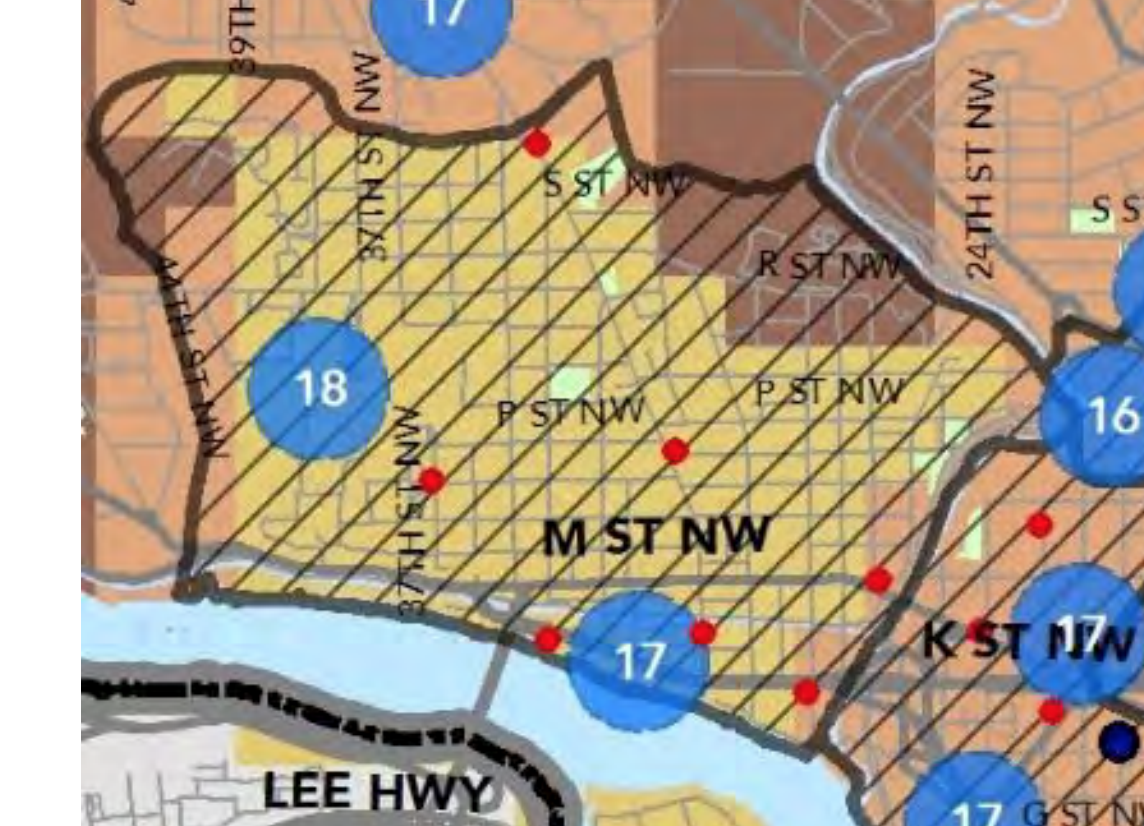
Yesterday DDOT released a report on expansion of the Capital Bikeshare system. It’s an incredibly detailed report with loads of information. But the most exciting part of it is that it announces the addition of 99 new stations over the next three fiscal years, including two more for Georgetown.
The two spots for Georgetown are not identified by exact address but the map above shows their approximate locations. There would be a station at about 33rd and K for fiscal year 17 (hence the large “17”) and one on the GU campus in FY18.
GM was part of a small working group lobbying the city to include Georgetown in the expansion plans. Unfortunately it doesn’t seem that DDOT accepted the group’s suggestions, which did not include these two locations. The group recommended several locations with Key Bridge and M St., P and 27th, and Reservoir and 37th topping the list.
GM has not yet received confirmation that the map accurately reflects the actual proposed locations. And either way, the report is just a proposal and public input is being sought. So the final locations could change.
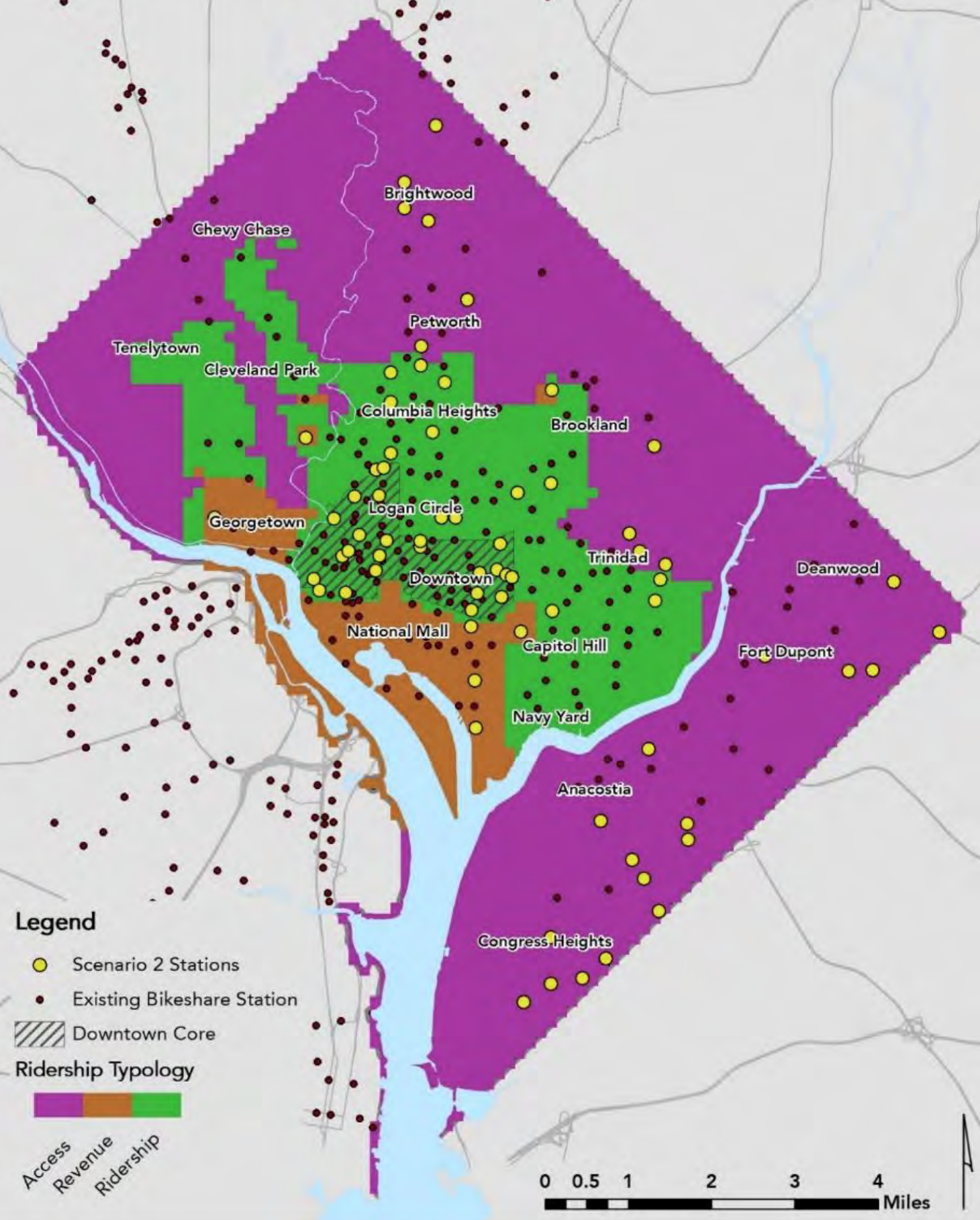
One final note: DDOt splits DC neighborhoods into three categories for this report: High Ridership, High Revenue, and Accessibility. High Ridership neighborhoods are neighborhoods with high ridership but with low revenue generation because most of the trips are under 30 minutes (and thus free). High Revenue Neighborhoods not surprisingly are neighborhoods that generate lots of trips over the 30 minute grace period. Accessibility is a euphemism for neighborhoods that don’t generate many trips at all (and hence expansion is more about providing accessibility to the people that live there). Georgetown is a High Revenue neighborhood:







 The Georgetown Metropolitan
The study definitely seems to show Georgetown as a destination, rather than an origin. Which is nice, because it puts Georgetown into the “core”, but not great, because it ignores the huge service gaps that are created by only having the Wisconsin and O station covering the great middle of Georgetown (and most stations on or south of M Street).
The station on Georgetown’s campus will serve some of the needs for expansion, as it will be a second station serving 5,000+ students who live on campus, plus several thousand university and hospital employees and patients. But depending on where it’s placed in the middle of campus, it may or may not add utility for west Georgetown and Burleith residents.
My initial reaction, more stations are better than nothing, but this still leaves some pretty big gaps in Georgetown.
Question: I know that some developers have paid into the Bikeshare program to have stations located nearby new building projects. (I don’t know the exact process by which that happens). Is this something that the BID, university, or others nearby might be willing to do? If so, it seems those external funds would allow for expansion beyond the 99 locations stated in the plan.