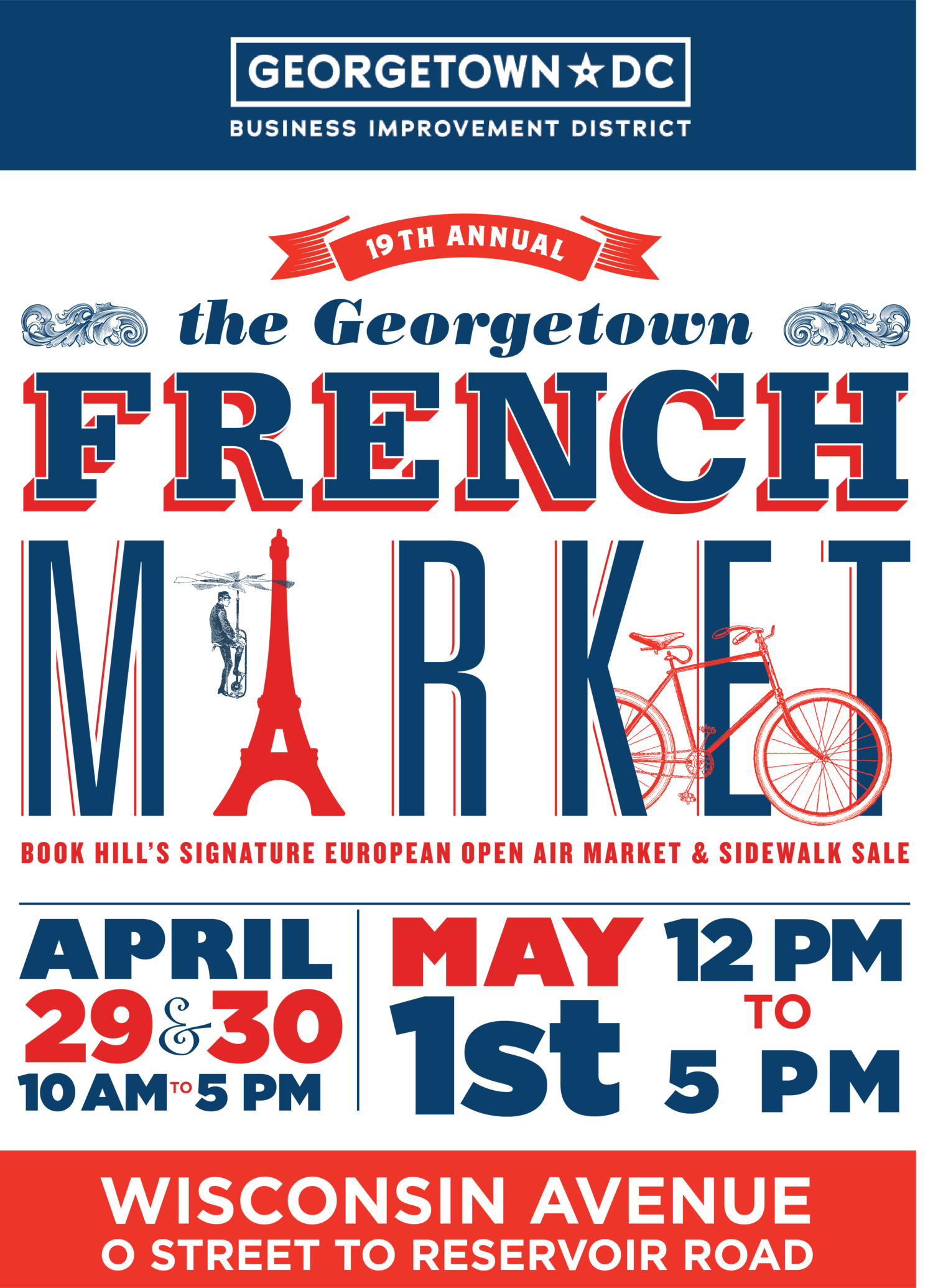
The French Market returns this weekend to Book Hill. The festivities start Friday and they run all the way till Sunday. Friday it is from 10 am to 5 pm, and on Saturday and Sunday it’s noon to 5:00.
This is always a great time and this is the first time since 2019 that it has been in its traditional early May time slot. Looks like Friday and Saturday will be beautiful weather, with a few rain clouds threatening on Sunday. So come out early and often!
This week for Where the Streets Had Old Names, GM is exploring the history of the east Village version of Dent Place and its previous name, Irving Place.
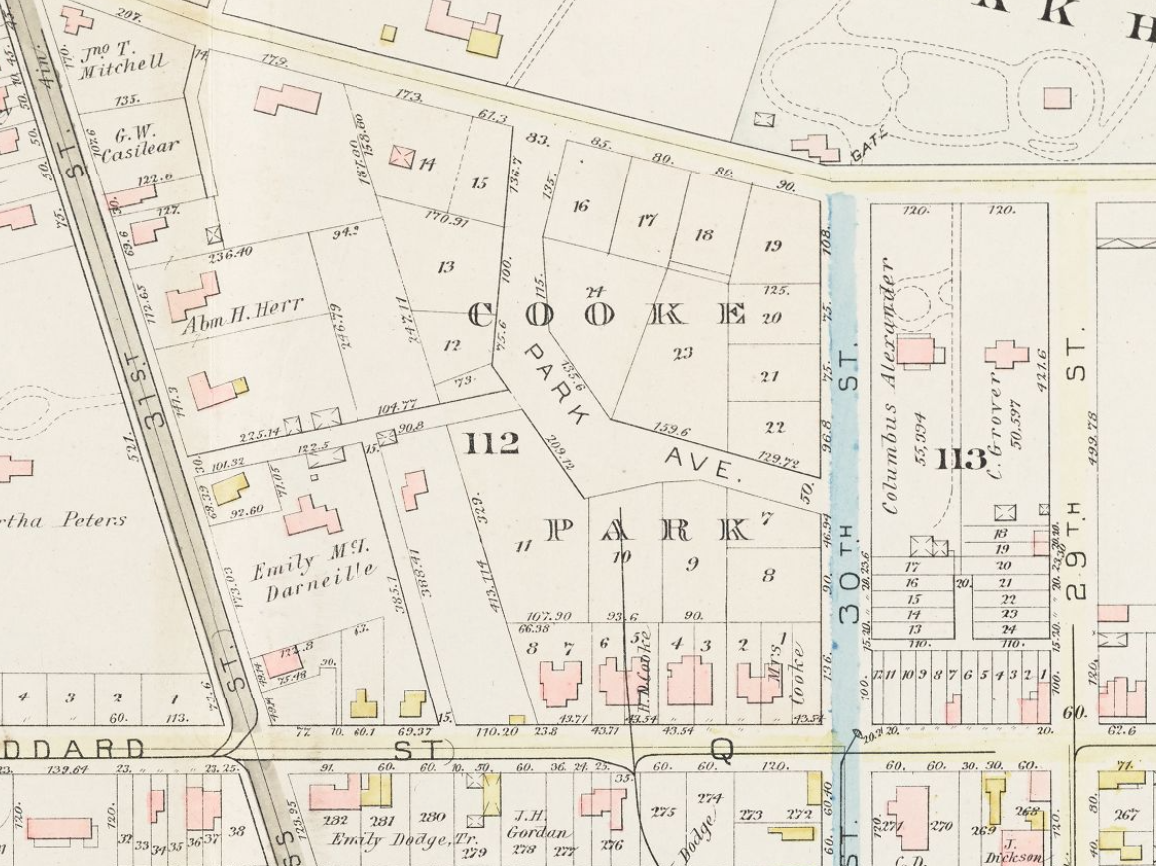
The road now known as Dent Place was carved out of a large plot of land known as Cooke Park. It ran from Q up to R St. west of 30th:
It was named after Henry Cooke, the first Governor of DC, who built the majestic homes along Q that exist today. The map above shows how the land appeared in 1887. At the time there was a jumble of smaller lots without structures built on them as well as a planned street to be called Park Ave.
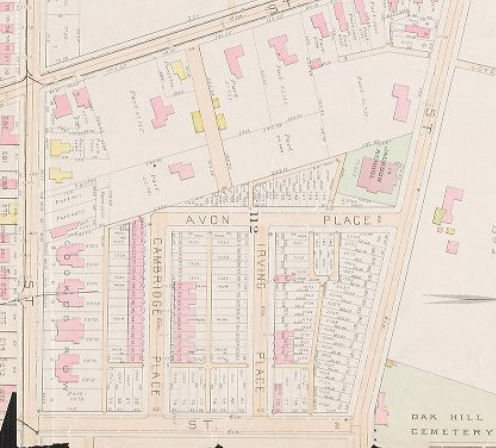
But before these lots could be developed and Park Ave. born, the land was subdivided into the more regular shape it has today. Here it is in 1894:
So the first question, where did the name Irving Place come from? Sadly GM could not get a firm answer but he can make an educated guess. Around the time the Irving Place was being laid out in Georgetown, Irving Place near Gramercy Park in New York City was enjoying a fashionable reputation. And it’s quite possible that that is what inspired the choice.
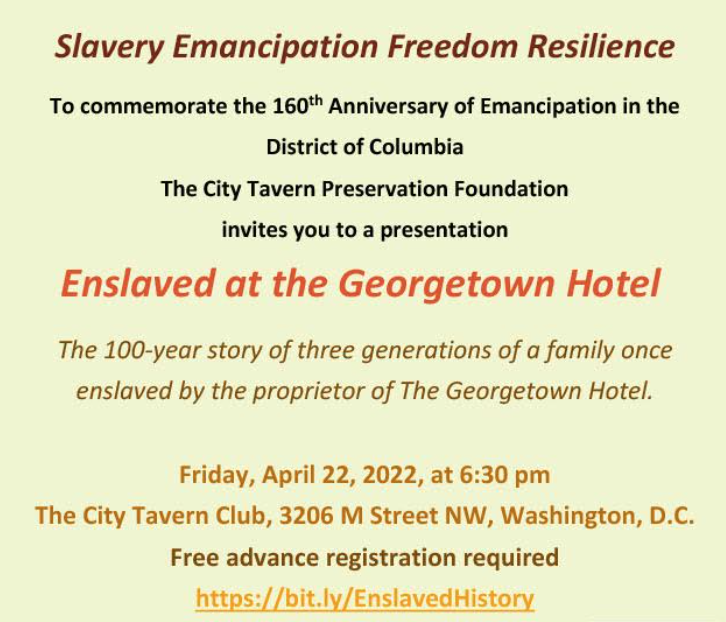
This Friday, Yvette LaGonterie will be giving an encore performance of her presentation on the history of slavery at the City Tavern and her family’s experience through it. LaGonterie gave this presentation during the last few -pre-Covid weeks we had back in 2020. It was a fascinating talk and GM highly recommends you attend this week. LaGonterie promises new and updated information, so even if you attended in 2020, you’ll have more to learn this time.
A group of investors is proposing to convert 1719 Wisconsin Ave. into a “ghost kitchen”. GM linked to an article on this proposal last week, but one aspect of the plan that that article did not delve into is the impact of delivery drivers.
A “ghost kitchen” is a restaurant that produces food for for one or more virtual restaurants that exist in name only. The idea is that hungry eaters look for, say, pizza restaurants in Uber Eats, or whatever, and up pops Pauli’s Neopolitan Pizza. From within the app it appears to be a completely real restaurant, but it doesn’t actually have a bricks and mortar location you could go and eat pizza at. It’s just a kitchen that will fulfill your order and send it to you. And along with your order they may be fulfilling order’s for “Saigon Sam’s” or “Joe’s Burgers” and none of those will be real either. In some cases the restaurants do have other, real bricks and mortar locations, but deliver from this virtual location instead.
Here is how the group behind the Georgetown ghost kitchen describe their business plan:








 The Georgetown Metropolitan
You must be logged in to post a comment.