They say eclipses can mess with wild animals’ heads. Perhaps that explains why this, frankly, giant fix showed up in my alley yesterday. Red foxes aren’t totally unheard of around DC, but my particular alley is many blocks from the type of forest you’d expect to find one.
Any they’re nimble guys! This one made its way to the top of the garages on the alley, necessitating quite the leap:
Keep your eye on your small pets if you live around Cashell Alley, I guess!
If you weren’t able to get out of town to see the total eclipse yesterday, don’t worry, DC will host it’s own total eclipse in a mere 176 years! Eat your veggies!
Spring is here. And while most trees haven’t started to leaf out for the season, they will sooner than you think. And once they do, it is critical for residents to water our street trees. So now is the time to make plans for it, especially if you have a young tree on the sidewalk in front of your house or apartment. This is especially true if it was newly planted this year. The basic goal you should have is to water young trees at least once a week, so long as you get a good 20-25 gallons of water. If you can’t water the new trees, try to find a neighbor who can.
The preferred watering device is the ooze tube (the bags that go around the bottom of the trees). You can differentiate them from the not-preferred gator bags because the gator bags have zippers. (They’re not preferred because they can create an unhealthy environment around the trunk and you have to remove them after each use.) With the ooze tube you can just fill it up and let it go.
If you don’t have an ooze tube, you can just leave a hose trickling into the tree box for 30 minutes to an hour.
Once a tree is mature, you can stop watering it. By then the roots are so spread out under the sidewalk that it doesn’t need your help anymore (although during any particularly dry periods, it can’t hurt to water it). At what point does a tree become “mature”? That depends on the tree. It’s better safe than sorry so you might as well do it for the first eight years or so.
At the ANC meeting this week, a plan was presented to renovate the group of properties between 1220 and 1234 31st St. For many years this complex has been called Hamilton Court and it was primarily used for offices. But in the middle part of the the 20th century, it was called the Hamilton Arms, and it was a truly wild and original place.
Hamilton Arms was created by a retired colonel named Milo Brinkley in 1939. Originally centered around a coffee shop, the property was home to dozens of dwellings that attracted a distinctly bohemian crowd. It was supposedly the location of DC’s first salad bar and pot party.
This Saturday, CAG is hosting its second annual architectural walking tour. I will be leading one of the groups around, trying to dispense what knowledge on architectural history I’ve picked up over the years. But to that end, last year I tried to distill that into a short document, which you can read above. Even if you can’t make the tour, I hope you enjoy this guide!
Keep in mind, I’m hardly a trained architectural historian. But I’ve tried to gather information from a wide variety of reliable sources to help you better tell the difference, for instance, between a Second Empire and a Richardsonian Romanesque. Think of it like a birders guide, but for houses.
Hello and welcome to the April Northwest Georgetown ANC update!
Alley Repaved
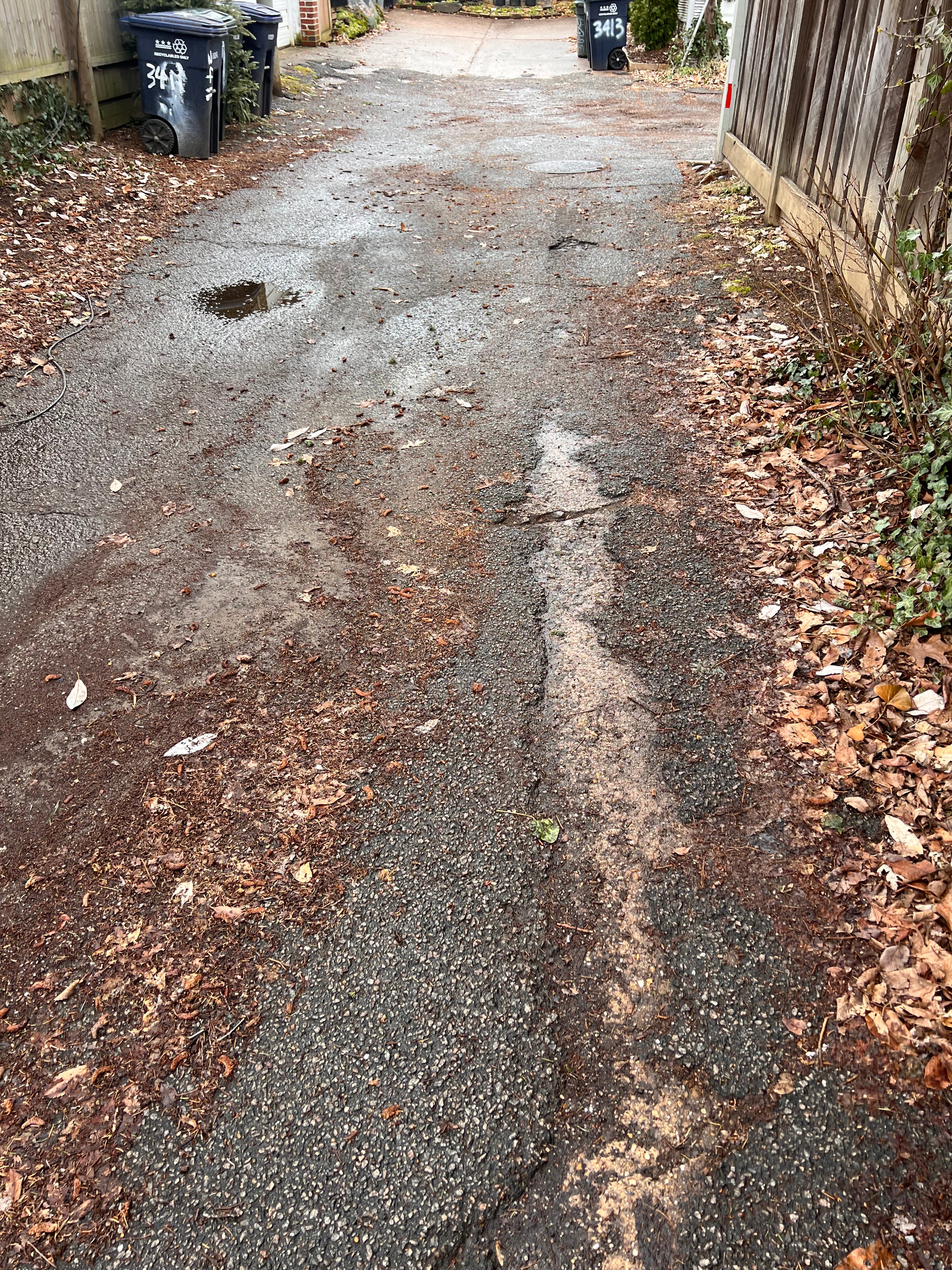
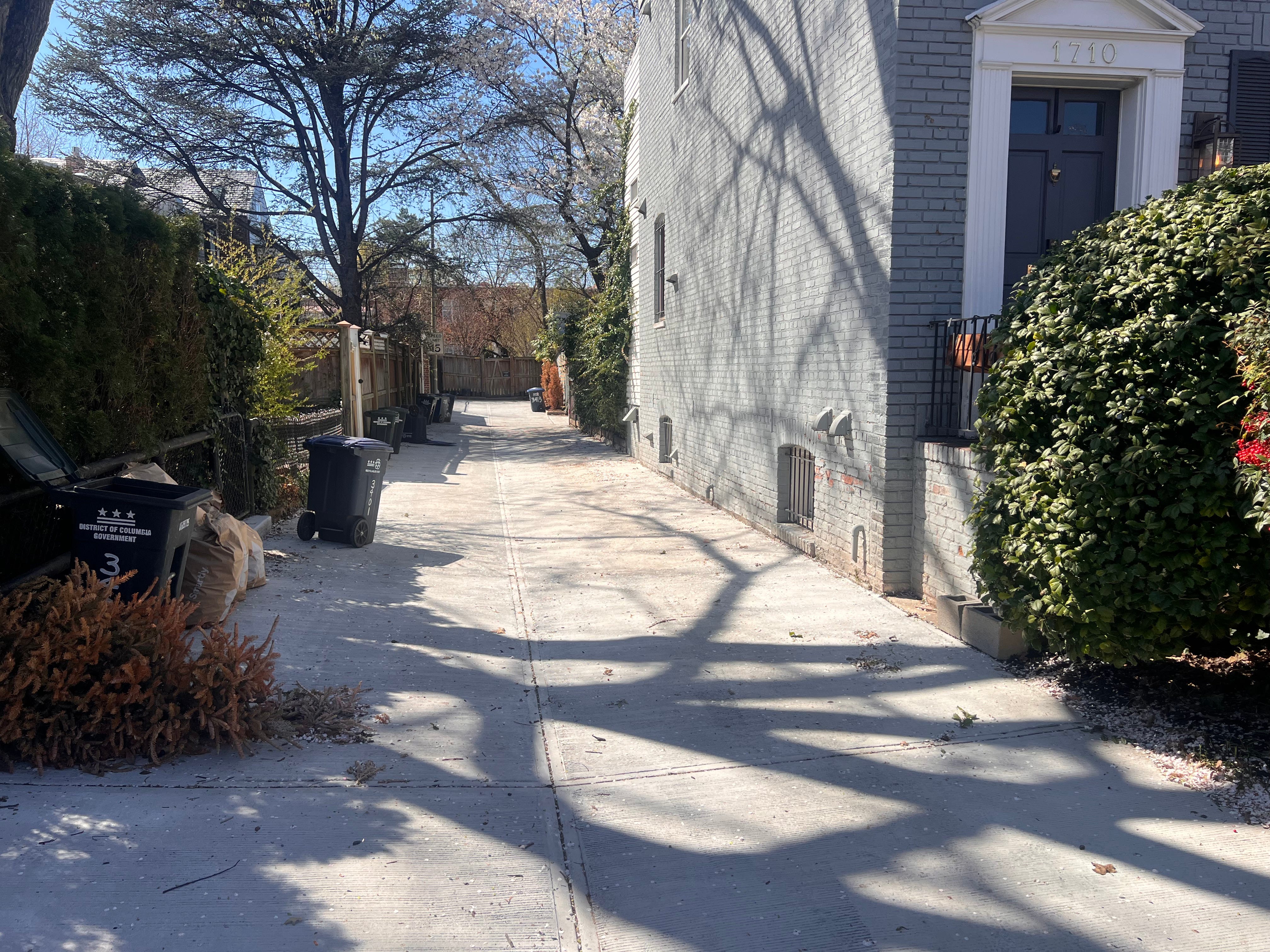
Thanks to years of lobbying from residents and at least one ANC commissioner, the city finally repaired the alley behind the westside of the 1700 block of 34th St. And rather than a simple asphalt patch job, the city came and poured a completely new concrete alley. It looks great compared with how it appeared before:
Before:
After:
As much as this is a great step forward, it is also somewhat a missed opportunity. After all this time, the city chose a concrete base instead of a permeable surface. I had been advocating with the city for the alley to be included in the Green Alley project, which would have used a permeable surface with a water retention feature. This would help keep a great deal of storm water out of the drains in the first place. Alas, the city chose a traditional solution. An improvement, no doubt, but less than what it could have been.
The poor state of this alley was literally the first constituent request I fielded after taking this position. And I’m glad that it was finally addressed. But it’s also a good lesson for how much of this job involves two steps forward and one step back.
Transportation Study Draft Recommendations Released and Public Meeting
The District Department of Transportation released its draft recommendations as part of the Access and Circulation Study that it has been conducting since last year. Hopes have been high that this study and its recommendations could make a significant dent in long-term transportation challenges faced in Georgetown.
The recommendations are listed by specific location. And there are several recommendations that touch directly on my Single Member District. They are as follow, with my personal response to each. (And before I get into them, I wanted to highlight up-front that there will be a public workshop presenting all of the study’s recommendation on Tuesday April 2nd at 6:30 at St. John’s. Please try to come out if you can!):
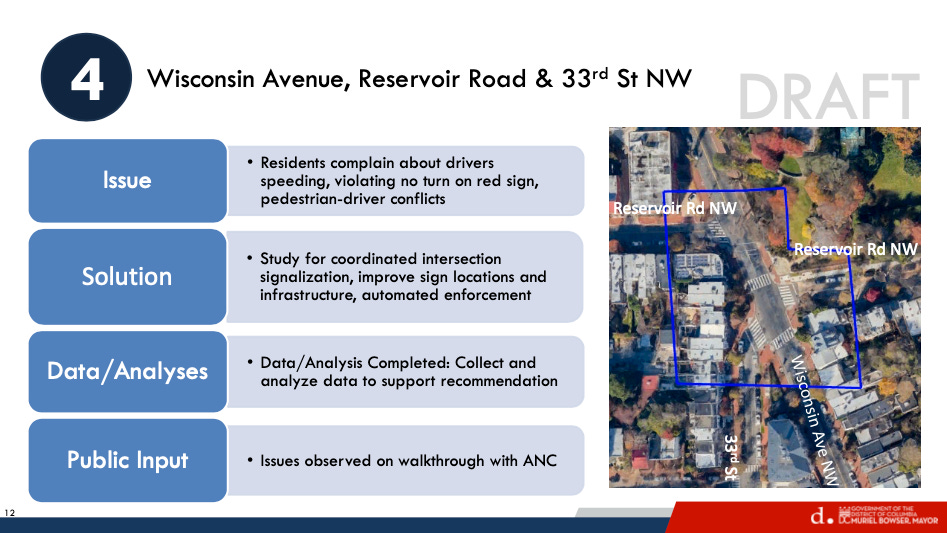
Intersection of Wisconsin Ave., Reservoir Rd. and 33rd St.
The intersection of Wisconsin, 33rd and Reservoir is an exceptionally dangerous one. When I did my walk with the DDOT representative, I asked to start here due to the hazardous conditions. The dangerous behavior I was concerned about occurred within minutes of our arrival, so much so that the DDOT representative joked that I had arranged for actors to play it out for him. I wish.
The dangerous behavior is familiar to anyone who walks through here. Drivers speed down Wisconsin, making crossing the street exceptionally risky, particularly at the marked crosswalk next to A Mano. Additionally drivers coming out of 33rd St. almost always end up blocking the crosswalk while they search for a break in traffic. Drivers also continue to make right turns on red at the intersection of Reservoir and Wisconsin, which is no longer permitted. This is exceptionally dangerous for pedestrians legally trying to cross Reservoir northbound because drivers on Reservoir inevitably only look left before hitting the gas the moment a gap in traffic appears. I have been nearly run over and killed in this manner multiple times at this intersection.
(It’s also a fair point that the new no-right-on-red has likely contributed to additional back-up of drivers on this road. I recommended that DDOT look into the signal timing to address this.)
Additionally, a great number of commuters come through this intersection to use Reservoir as a cut-through to 32nd St., in order to avoid traffic on Wisconsin.
The recommendations would address some, but not all, of these issues. It calls first for coordinated signalization. I believe this is largely about the signal timing, as I mentioned above.
It also calls for “improved sign locations and infrastructure”. I believe that means installing flex posts to make the turn from 33rd Street to Wisconsin Ave. more perpendicular. This forces drivers to take a more deliberate and, ideally, safe approach to Wisconsin. I agree with this goal, but I also know that flex posts are going to be contentious. Personally, I think the value and importance of making our roads safer is a higher priority than making sure they’re aesthetically pleasing. Safety should be the first and most important goal, aesthetics should be secondary. That is not to say aesthetics should be of no concern, just secondary. Perhaps a better structure or material is possible than flex posts. But we should not put safety on hold while we find one.











 The Georgetown Metropolitan
You must be logged in to post a comment.