

500 block of Nod Hill
This week GM has been delving into the varieties of historic architecture that we have around Georgetown. For the final installment he is going to highlight the odd ones out, in other words the homes that weren’t built in the dominant styles of Federal, Greek Revival, Italianate, Second Empire, Queen Anne and Romanesque.
First up: Neoclassical
The Neoclassical style was born at the 1893 Chicago’s World Columbian Exposition, where some of the greatest architects of the time gathered to design a grand city of monumental buildings based in the classical style. Since nearly 26 million people visited the “White City”, this new style had wide exposure and quickly became a dominant building style in the early 20th century. Downtown DC was basically rebuilt in the White City’s image.
But for some reason it simply did not make much of a dent in Georgetown. There is just one Neoclassical building that GM could find, the Hurt Home across from Montrose Park:

Up in the same neigborhood, you’ll find a row of French Eclectic homes at the corner of Q and 30th. They’re identifiable by their steeply pitched roofs and round towers. This style was popular from the 1910’s to the 1920’s:
Vodpod videos no longer available.Scattered throughout Georgetown are a couple examples of Gothic Revival. The most obvious example is Christ Church, but a couple of domestic examples of Gothic Revival are clustered at the top of 31st st.:
Vodpod videos no longer available.There’s a Dutch Colonial on S St. (you can tell them by their flared eaves):
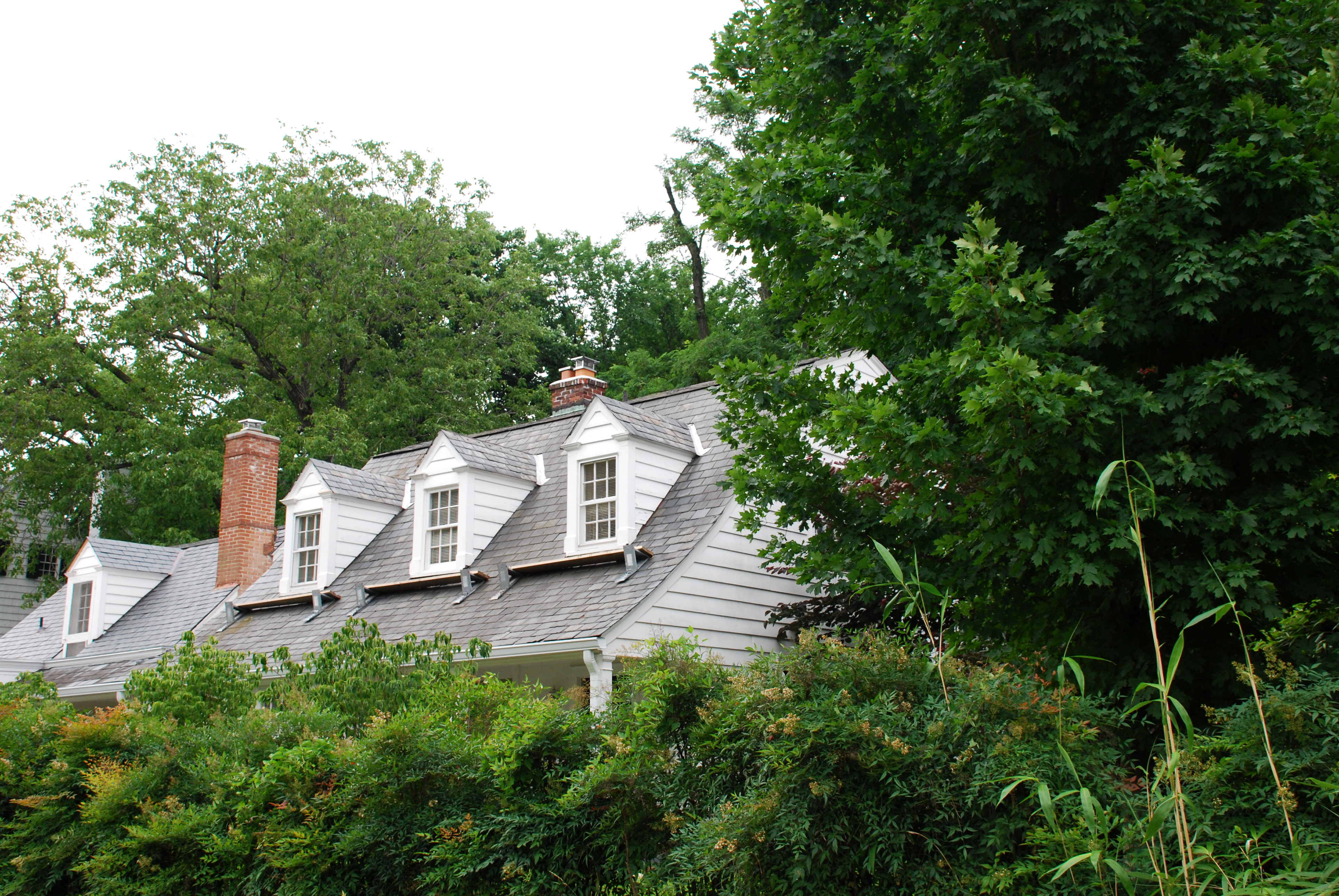
And surprisingly enough, there are even a couple straight up modern homes in Georgetown. An Art Moderne home on Reservoir:

and Joe Alsop’s home:
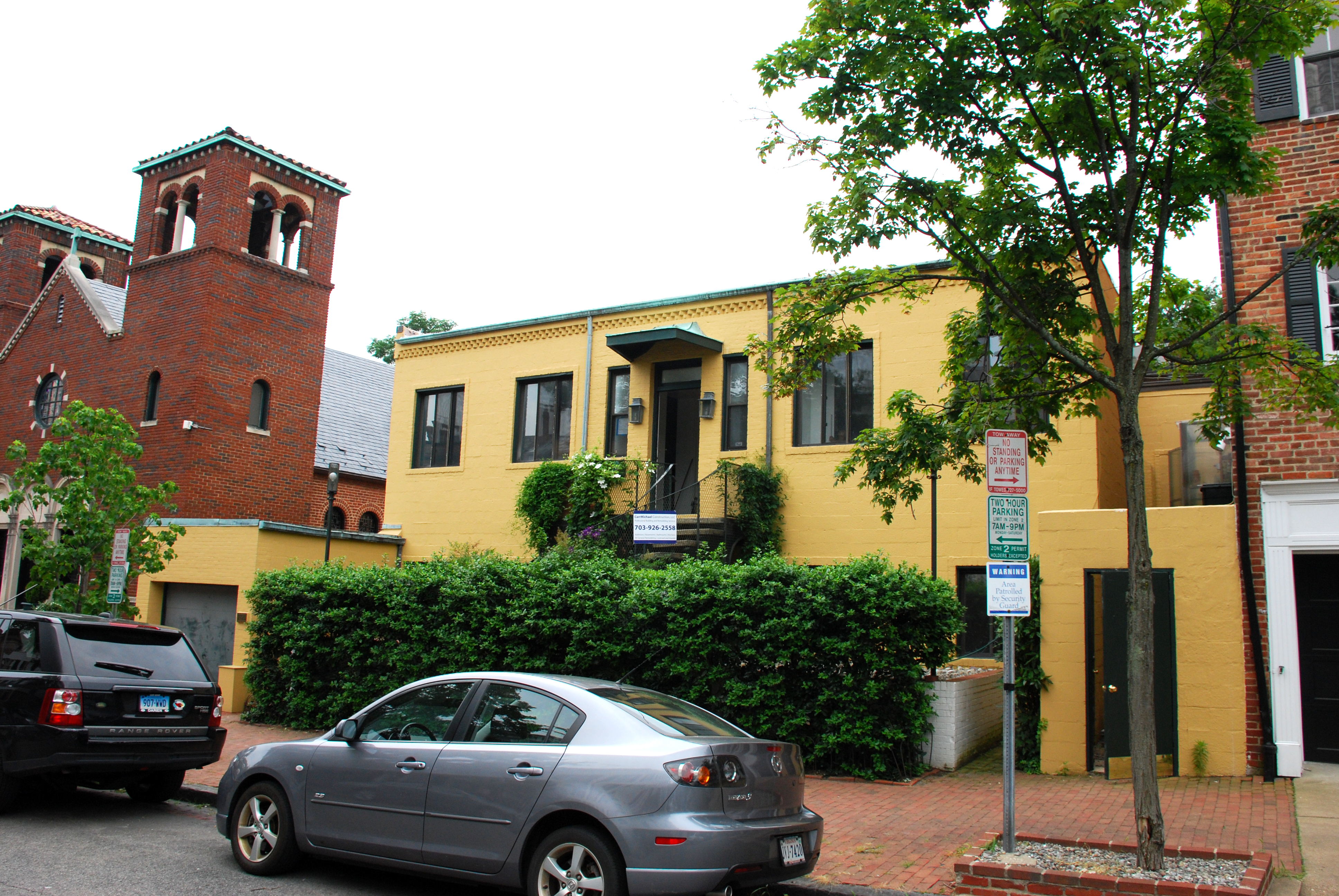
And last, but certainly not least, there’s a Japanese house on 28th st. Does anyone know the story about this house? It’s so cool:

Again, GM would like to credit Virginia and Lee McAlester’s “A Field Guide to American Houses“ for providing most of the historical information presented this week.
Filed under Architecture

Good morning Georgetown, here’s the latest:
Filed under The Morning Metropolitan
 Georgetown resident Jane Stanton Hitchcock’s newest book “Mortal Friends” hit the bookstands this week. The saucy thriller takes place right here in Georgetown and has already ruffled a few feathers of the real life people who have fictional counterparts in the book. Is your doppelganger in there? Pick up a copy and find out.
Hitchcock will sit down at the Q&A Cafe July 9th, reserve a spot by calling 338-2000.
After the jump, an interview with Hitchcock covering Georgetown, money, and Henry James: Continue reading
Filed under Literature
This week GM is exploring the variety of historic architecture around Georgetown. Today he explores the late Victorian Period. For Georgetown that means primarily two styles: Queen Anne and Richardsonian Romanesque.
First up: Queen Anne. The Queen Anne style was developed in England by a group of architects in the 1860s and 1870s. It was meant to evoke a medieval period of English architecture, although it was a bit of a misnomer since the architecture popular during the real Queen Anne was actually a formal renaissance style.
The Queen Anne style that dominated American homes during the 1880s is characterized by asymmetrical design with a variety of different towers and hipped roofs that form an irregular roof line. Also, the surface materials included a variety of textures such as scale shingles and the homes were often decorated with elaborate spindles and other fanciful woodwork. Basically, the classic “gingerbread” home that comes to your mind when you think of Victorian homes is probably a Queen Anne. Continue reading
Filed under Architecture

Good morning Georgetown, here’s the latest:
Filed under The Morning Metropolitan
This week GM is exploring the variety of historical architectural styles around Georgetown. Today GM explores the early Victorian period.
The two styles that dominated early Victorian architecture were Second Empire and Stick. However, there are no examples of Stick architecture in Georgetown that GM could find (the Stick style is not surprisingly tailored to wooden homes, which was not a popular building material in bricky Georgetown). So for Georgetown early Victorian architecture means only Second Empire. Continue reading
Filed under Architecture

Good morning Georgetown, here’s the latest:
Filed under The Morning Metropolitan








 The Georgetown Metropolitan
You must be logged in to post a comment.