Georgetown’s parks are often considered some of the greatest assets for the neighborhood. So much so that the term emerald necklace has been used to describe the only-slightly-broken chain of green wrapping around the neighborhood from Montrose, down Rose, across the waterfront, and back up Glover Archbold Park.
But have you ever wondered where those names come from? Well, even if you haven’t, here’s the answer:
The source of the name for the Georgetown Waterfront Park is self-evident. I’m unaware of any efforts to replace this perfunctory name with something with more character. If there were ever a candidate for that, it would have probably have been Sen. Charles Percy, the Illinois senator who was instrumental in securing funding for the creation of the park. He was honored instead with Percy Plaza, the ceremonial name of the intersection of Wisconsin and K St.
But the other parks’ names are not nearly as self-explanatory.
Let’s start with Montrose Park.
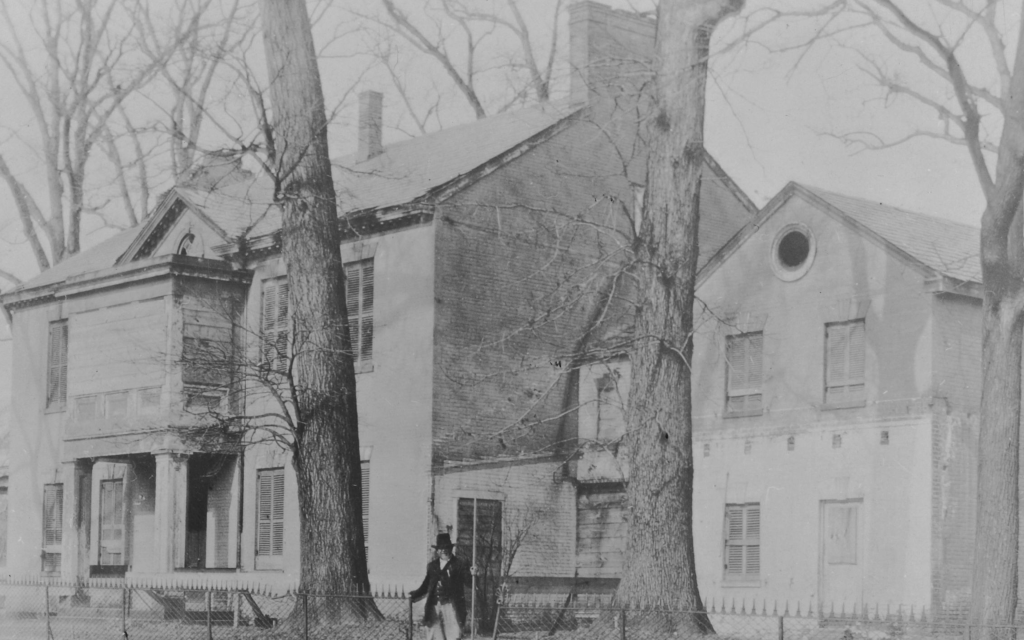
In a literal sense, the park is named after the former estate that once stood on R St. near the current rose garden. But where did the estate get the name? I answered this question back in 2020:
The rope factory burned down and Parrott abandoned the property. The estate became known as Parrott’s Woods at this point, and was a popular recreation spot for Georgetowners seeking some air. It was purchased by Clement Smith, a man who was the first cashier at the Farmers and Mechanics Bank (the bank which eventually occupied the building which is now the PNC at Wisconsin and M St.) and rose to be its president. He named the property Elderslie. In 1837 it was sold to William Boyce, who renamed it Montrose, in honor of his familial connections to the Scottish Earls of Montrose.
The fact the name has a Scottish origin dovetails nicely with Dumbarton Oaks, which derived its name from Scotsman Ninian Beall. He once owned a large portion of Georgetown, which he named the Rock of Dumbarton after a geographic feature in his native country. (In fact a lot of early Georgetowners were Scots, but perhaps due to easier assimilation with the English, they are not quite as often remembered.)
Moving around the necklace, so to speak, brings us to Rose Park.
This would seem to be another fairly self-evident name, and perhaps it is. This is what the Friends of Rose Park has to say about its history:
Although official records are scarce, Rose Park was originally established in 1918 by the Ancient Order of the Sons and Daughters of Moses when a plot of land was donated by the Ancient Order for African-American children in the neighborhood to use for recreation purposes. Rose Park, known at various earlier times as Pattersons Park, Jacobs Park, and Winships Lot, was remodeled by the Department of Recreation in the late 1930s and by the early 1940s was frequented by both the black and white Georgetown community.
Interestingly, I have found reference to the park as early as 1913, when it was referred to as “Early Rose Park”

In 1918, the following appeared in the Washington Star, which helps bridge the gap to the FORP history:

The Sons and Daughters of Moses was part of an African American fraternal society founded in 1868. This particular lodge was known as the Early Rose Lodge, Number 67 (or alternatively the Early Rose Tabernacle) and was founded about 1886. This was decades before the creation of the park, so it is reasonable to conclude that the name did not derive from the park itself.
And it might not be the case that the term “early rose” even refers to roses at all. It likely refers instead to a, now obscure, type of potato: the early rose potato, which was a popular variety in the late 19th century.
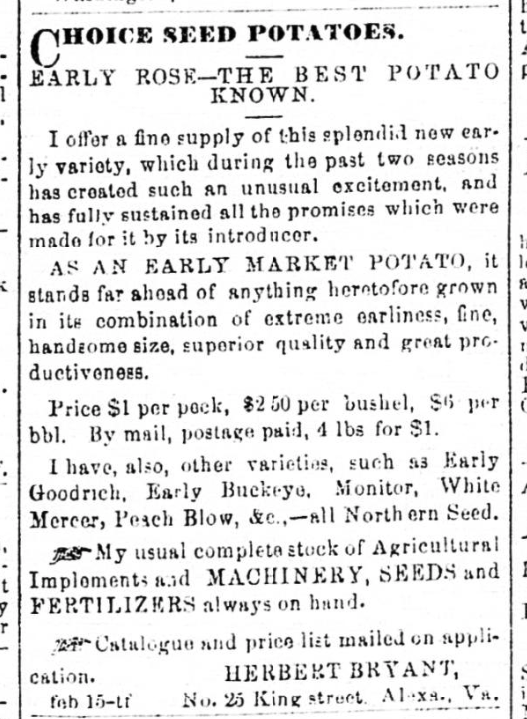
(Advertisement in the Alexandria Gazette from 1870).
Perhaps the association with potatoes was the reason the name for the park appears to have switched to simply Rose Park when it was officially founded in 1918 (although I found a reference to “Early Rose Park” in 1922). So it could be more a question of interpretation what the park is exactly named after. Perhaps the Early Rose Tabernacle suggested the name Rose Park not because of their own name but just because it’s a nice name for a park. It’s probably unknowable at this point.

While it isn’t really part of the emerald necklace, Volta has easily the most imperial of inspirations for its name. The source of its name is none other than emperor Napoleon Bonaparte (indirectly, of course).
That is because the park is named after the street. And the street was named after the Volta Bureau, which is located at Volta and 35th. And the Volta Bureau was created by former Volta Place resident Alexander Graham Bell and named in honor of Bell’s receipt of the Volta Prize in 1880. And the prize was named in honor of the inventor of the electric battery, Alessandro Volta. This is where some confusion takes over. Some sources attribute the creation of the Volta Prize to the 1801 decision by Napoleon I to give Volta a medal in honor of his scientific achievement. But others attribute it to Napoleon III, who more formally established the prize in 1852. So in either event, the source is indirectly a French emperor named Napoleon.
And finally Glover Archbold Park on the west boundary of Georgetown. This one is much clearer. It’s named for Charles Glover, who developed Glover Park, and Anne Archbold, an oil heiress. The two jointly donated the land that became the park.






 The Georgetown Metropolitan
I enjoyed reading this one — thank you for going through the archives to answer these questions!
Interesting! “Early rose” is another term for a primrose, it appears in several hymns. Seems more likely the potato and the lodge were separately named for this meaning.
There are other references in official reports from late 1910s of this group donating the land for the park. It’s easy to see how “early” would be dropped from the park’s name as the connection to the donors was lost and/or the lodge lost its prominence (though members were called out to in a 1957 obituary, so it still had some presence then).