
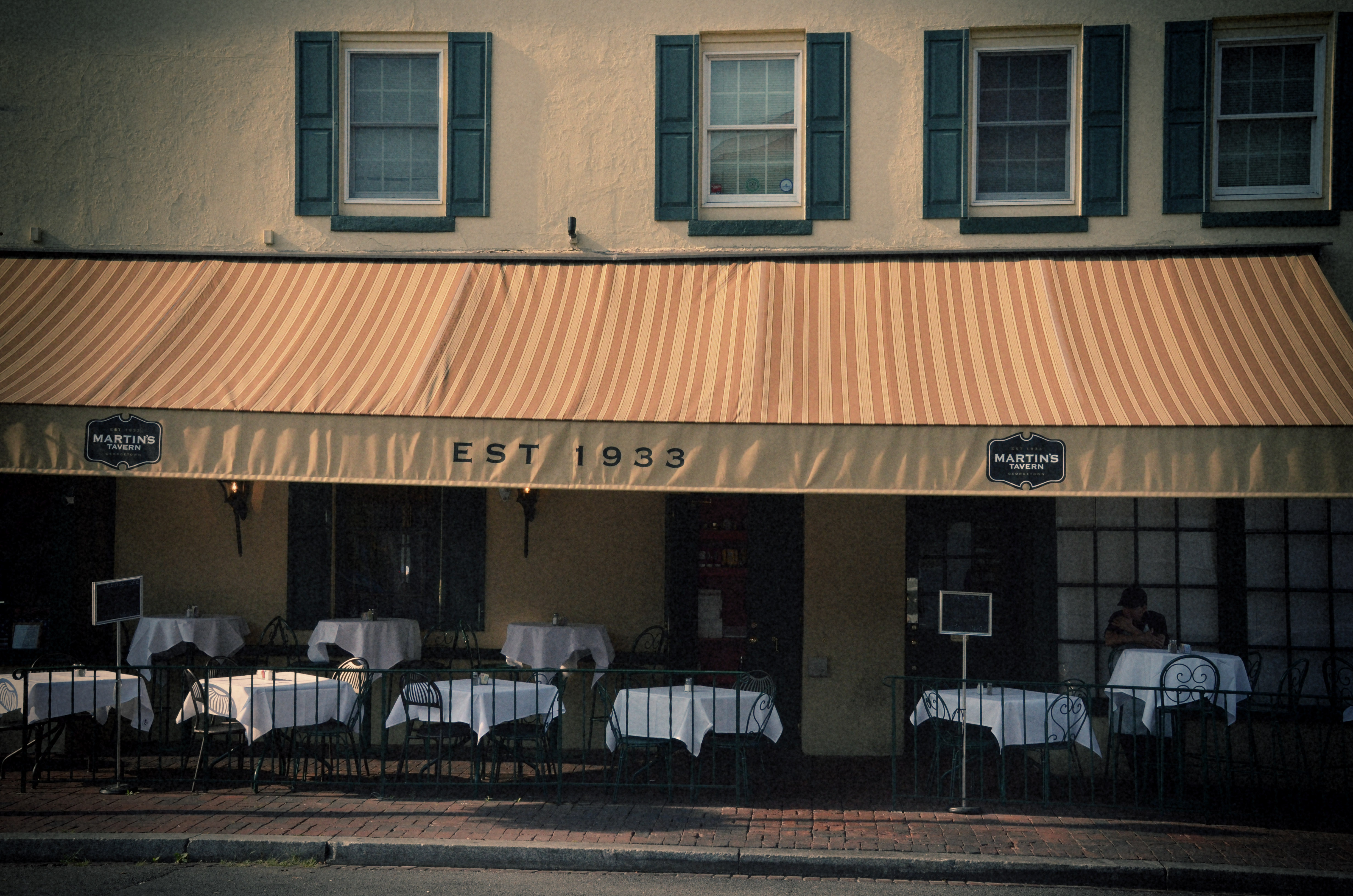
It’s St. Patrick’s Day again this Friday. And with the last of the pandemic measures relaxed, you can enjoy it like you (may have) used to! So without further ado, here is GM’s annual St. Pat’s article giving you a guide to enjoy the day around Georgetown:
As you may know, during the early 20th century, parts of Georgetown were heavily Irish. The center of it was on the west side, close to the Catholic landmarks of GU, Trinity and Visitation.
The Irish concentration is long gone, but with the help of old photos you can imagine the ghosts still walking the streets. In the 30s, photographer Carl Mydans walked through the poor and heavily Irish blocks of west Georgetown and captured the scene of children treating the sidewalks as their playroom:


These are all from the 3600 block of O St. (which is now mostly owned by GU).
And while you’re strolling through west Georgetown, it’s always nice to swing by Holy Trinity Church. And you know who else was been doing that recently? Our country’s second Irish Catholic president. If you’re really in for a walk, why not take this walking tour charting the first’s life in Georgetown.
Next you can walk up to Holy Rood Cemetery on Wisconsin. This lovely spot is the final resting place for generations of Georgetown’s Irish Catholics. Just stroll the rows of headstones and you’ll see dozens of Sullivans, O’Conners, Fitzgeralds, and so on. And after decades of shameful neglect, Georgetown University has poured a huge amount of effort into restoring the cemetery. If you haven’t visited recently, now’s a great time.
Finally, take a stroll back down Wisconsin to a living testament to Georgetown’s Irish past: Martin’s Tavern. Unlike the last couple years, you can finally raise a Guinness at the bar. Sláinte!







 The Georgetown Metropolitan
We live across the street from Holy Rood and it really is lovely, especially as the trees begin to blossom!
East G’town (Herring Hill) was once heavily African-American and largely poor. This GM article indicates that West G’town was once heavily Irish (and poor. The area south of M St. was a foul-smelling industrial zone. And yet there also was an affluent (mostly white Protestant) class of residents, as reflected in the many substantial townhouses/mansions here. So G’town in the past it was an highly varied melting pot–not the beautiful but homogeneously affluent zone it is today.
There’s been an excellent history written of the late 19th/early 20th century industrial evolution of the south of M St. area. But I wonder if there is any book or study about the overall social/racial changes over time in Georgetown? Might GM have the answer?
Black Georgetown Remembered certainly is a good source. The similarly titled “Remembering Georgetown” is another decent option.