From 1820 to 1837, a newspaper called the Georgetown Metropolitan was published in the city of Georgetown, DC. The copy above is from July 12, 1826, reporting on the deaths of Presidents Jefferson and Adams on July 4th, exactly fifty years after the signing of the Declaration of Independence. For a short while, it was published by John L. O’Sullivan and his brother-in-law Samuel Langtree. O’Sullivan faded into obscurity until the middle of the 20th century when the term “Manifest Destiny” was attributed to him.
So what does this have to do with 2008? Well, not much. But, basically I’ve realized that the neighborhood of Georgetown lacks a neighborhood blog. I’ve decided to give it a try. I looked through Georgetown’s history for a worthy name to resurrect and the Georgetown Metropolitan sounded perfect to me. And so I have reestablished the Georgetown Metropolitan, 171 years since it last was printed. With luck, the Georgetown Metropolitan will serve as a valuable information source for Georgetown residents.
I’m officially declaring the arrival of spring, and with that comes the best time to be at Dumbarton Oaks Gardens. So I am reprinting my guide from several years ago about how to make the most of it:
The gardens of Dumbarton Oaks are spectacular throughout the year. But during the spring, they are somehow even more beautiful. But the beauty comes in successive waves. Visit only once a season, and you might miss out. Or even if you do visit at a perfect moment, you might simply miss out on some corner of the gardens that are especially gorgeous that day.
I spend every spring carefully timing his visits to the gardens to maximize the best parts. And its only fair that he share this knowledge with the public. So without further ado, here is a Users Guide to Dumbarton Oaks in the spring.
The guide is broken down by the particular attraction and when to visit to see it. Weather obviously can affect the timing a great deal. So if you are really eager to see one or more of the vernal shows below, it’s best to check it out on the early side and come back again if you’re too early.
Refer to this map on the gardens’ website for where to find the exact locations of the scenes below.
Plum Walk
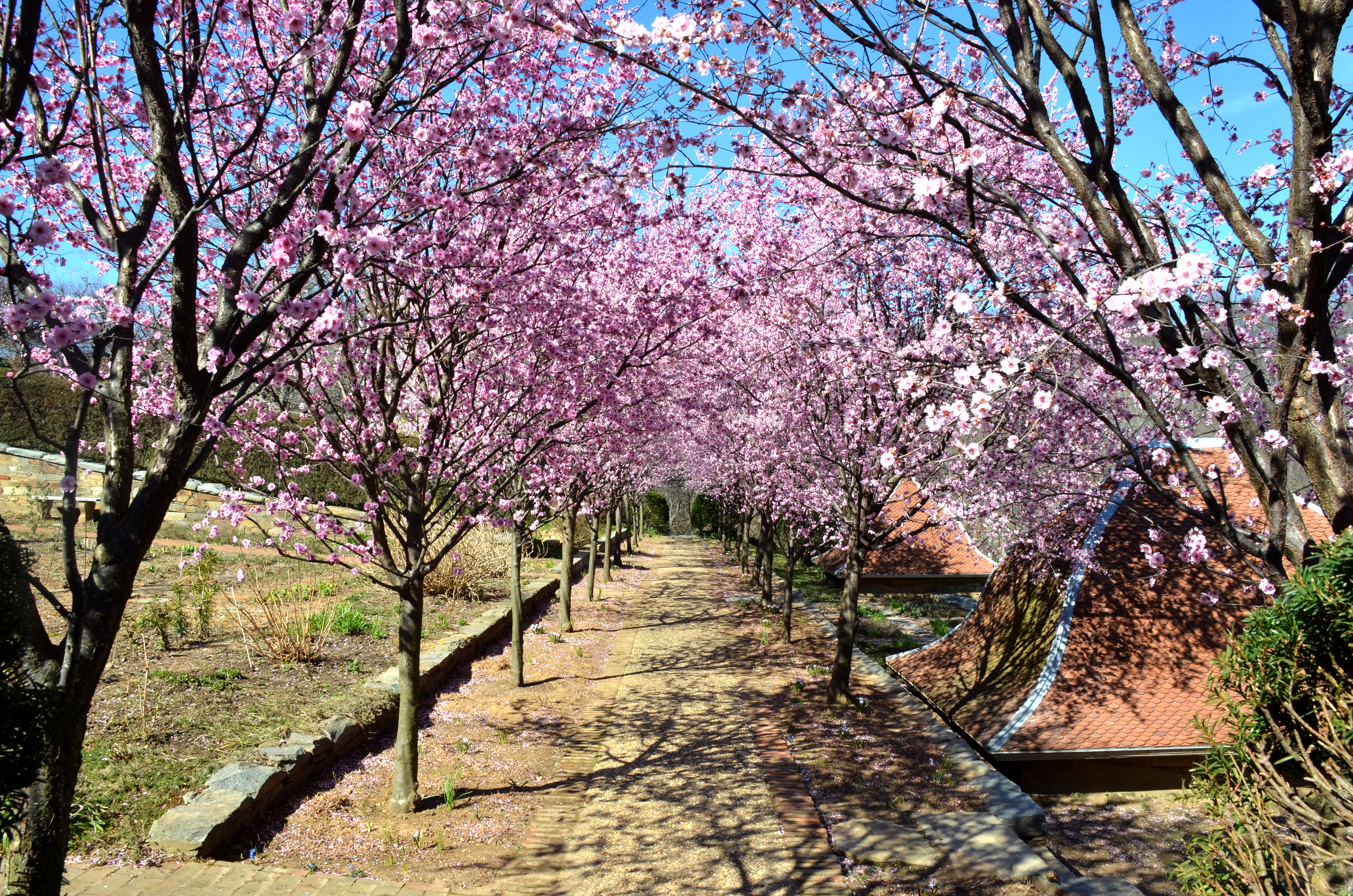
One of the first displays of spring in the gardens is the Plum Walk. It’s a row of about a dozen plum trees that blossom with strikingly purple flowers. Like many of the items on this list, it is perfect for portraits, particularly of couples. When it’s in bloom, you often find newly engaged couples posing along the walk.
It is typically in bloom early to mid March.
Forsythia Hill
At the far northwest corner of the gardens is a massive planting of forsythia. This shrub breaks out early in the spring with a lively display of yellow. With such a huge area covered with nothing but the plant, it creates a huge wall of the color.
Forsythia is subject to extremely early blooming in the DC area, if there is a stretch of warm weather. I have seen it blooming in sunny spots this year as early as January due to the heat. But Forsythia Hill in Dumbarton Oaks is somewhat tucked away from the sun. Expect it to be in bloom by the first week or two of April.
Saucer Magnolias
Saucer magnolias are one of the harbingers of true spring in DC. Walk on the right blocks at the right time, and your nose is filled with the intoxicating scent of the tree’s lovely pink and white flowers. (Of course, they are also delicate flowers that can be destroyed overnight if a frost hits).
Dumbarton Oaks has several large saucer magnolia trees, primarily along the Box Walk. Wander the gardens and it’s a toss up what will hit you first, the sight or the scent of these fragrant beauties.
The saucer magnolias bloom normally around mid March.
Cherry Blossoms on Cherry Hill
Dumbarton Oaks has one of the most impressive orchards of cherry trees in the area. It is located at the northeast corner of the gardens, overlooking the adjoining Dumbarton Oaks Park.
The gently sloping hillside is a perfect spot to lie on the grass and stare at the little puffs of flowers above. Even when the hill is crowded with people seeking the same serene experience, the grove is peaceful.
The cherries bloom the same time they do all over the area, which is generally late March into early April.
Cherry Blossom Snowfall
Catching the cherries at peak bloom is great. But the real show comes the week after, when the blossom come down in a blizzard of dropping petals.
It’s tough to time it just right, as it might fall midweek when you’re stuck at work, but if you catch it just right, it’s a real treat.
Tulips
The elegant herbaceous border garden comes alive in mid April, when its scores of tulips are on display.
Wisteria
I have been using a lot of superlatives here. And they’ve all been justified. But I struggle to come up with adequately intensified adjectives to describe the wisteria vines at Dumbarton Oaks. Words simply fail.
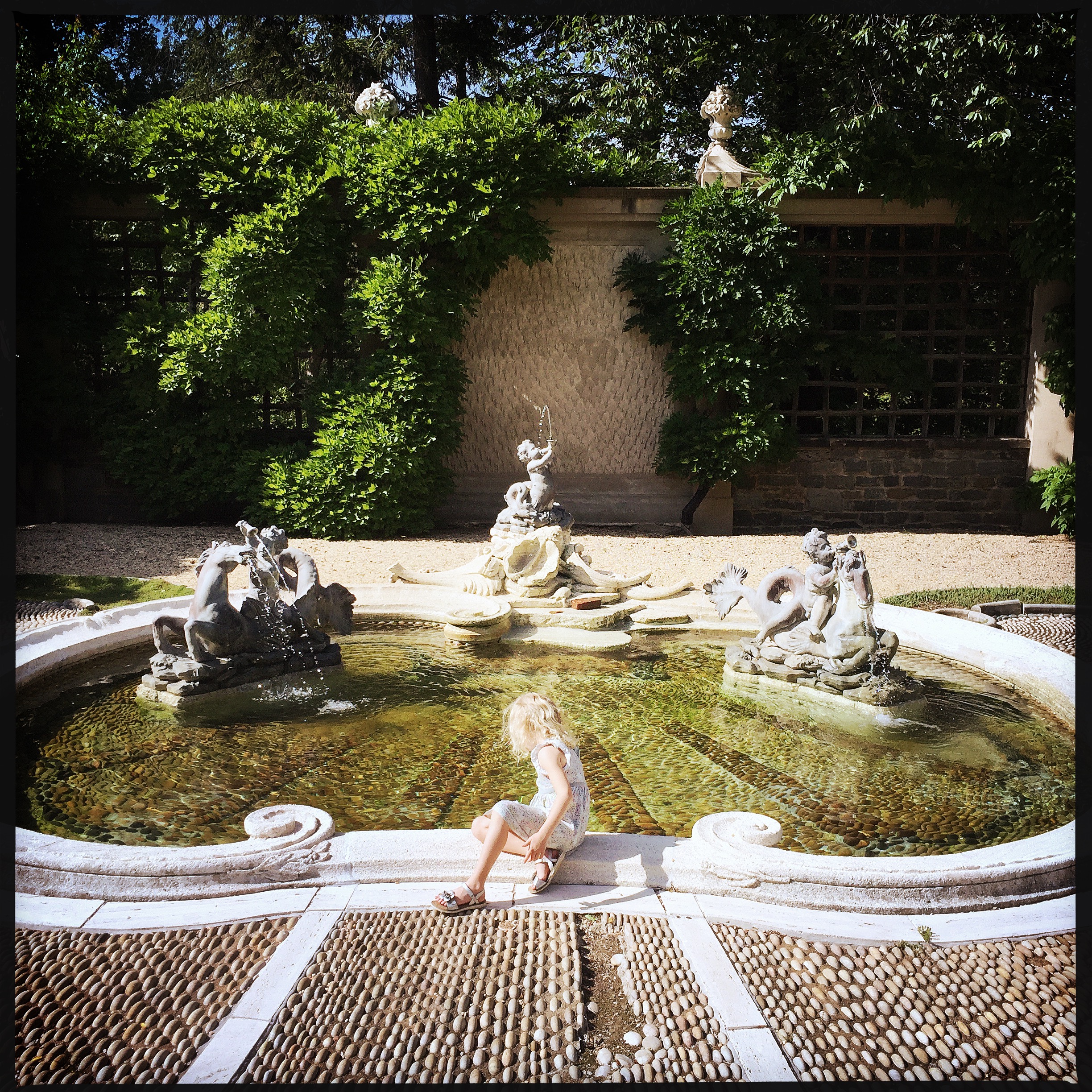
They appear at several spots around the garden, including outside the Orangery, and along the lawn directly behind the main house. But the densest grouping is in the Pebble Garden. Ancient, thick and gnarled vines weave through the garden’s screens and create a wall of purple, dangling grape-like clusters of flowers. The scent rivals the magnolias for sweetness. And swarms of bees descend to get drunk off the nectar.
The wisteria typically blooms in late April.
Hopefully this guide will help you take most advantage of the best that spring has to offer at Dumbarton Oaks. But really, any trip there will be worthwhile.
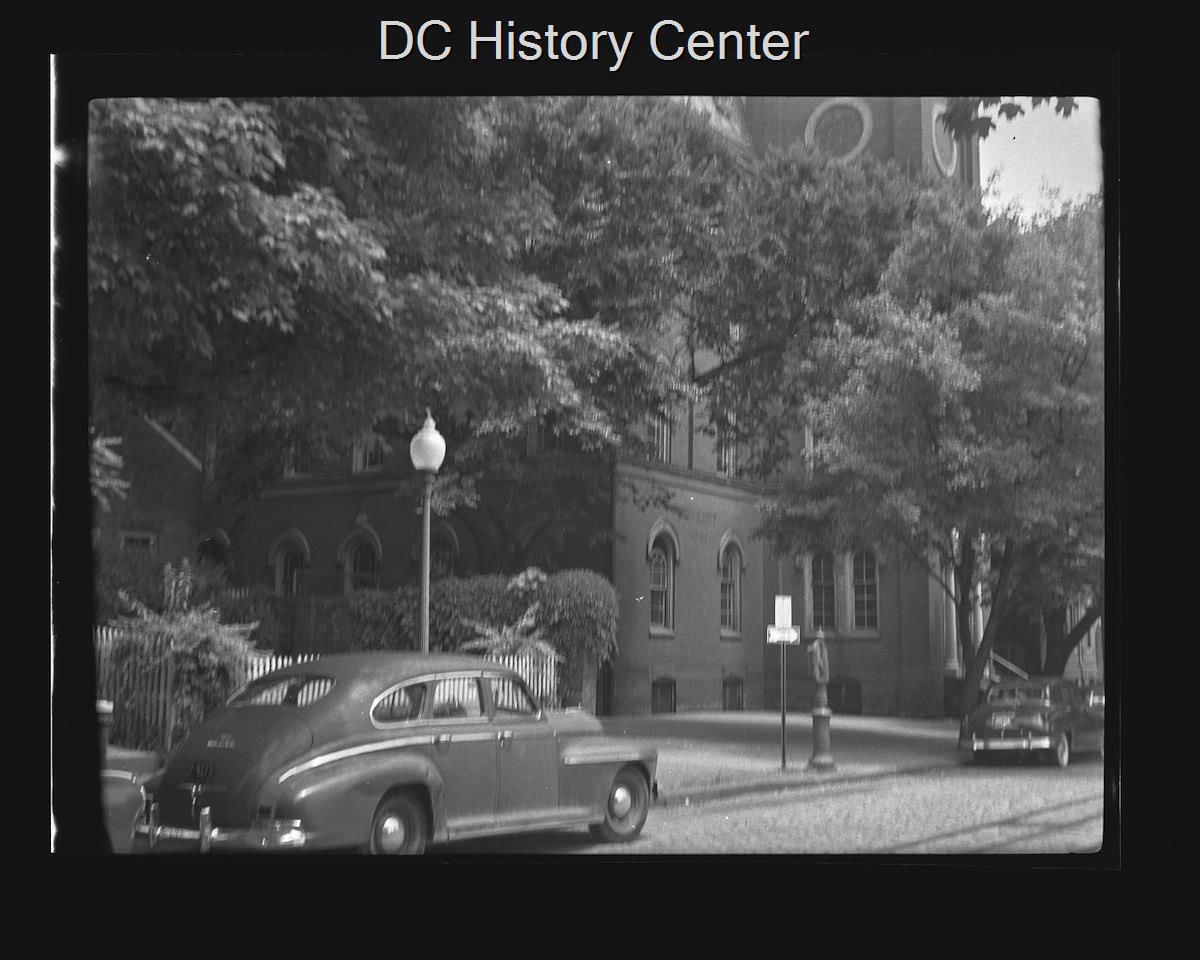
This week for Georgetown Time Machine, I’m checking out another photo from the DC Historical Society’s archives. Like last week, it’s a photo from the John Wymer collection. This is an incredible collection of street photos taken by Wymer all over DC around 1950. This particular shot is of the Hebrew Academy, which stood in the former Curtis School on O St.
I’ve discussed the Curtis School many times in the past as it’s probably the “lost” Georgetown building I miss most of all. It was the first school building built on the education campus between O and P Streets. It was constructed in 1875 and had a striking Second Empire design:
This is what I’ve written previously about the history of the building:
Curtis school was designed by the great Washington architect Adolph Cluss, who designed Eastern Market and thirteen other DC school buildings, including the historic Franklin School. It was named after William Wallace Curtis, who was president of the Board of Trustees for Georgetown (which ran Georgetown’s public schools when it was its own municipality).
It was quite large, as you can see in the photo above. It was three stories tall, plus an ample mansard roof. The tower rose even higher. And it was built to be more than just a school. It was built to be home to the Peabody Library, a public library funded by a $15,000 donation by George Peabody in 1867. This fund was supplemented by an even larger $50,000 donation from Edward Linthicum (the owner of Dumbarton Oaks). The city of Georgetown kicked in roughly $35,000 more to build the school building with the Peabody Library inside. You can even see the sign for the library on the left side of the building in the photo above.
But even with the library and all the classrooms, Curtis still had room. And the school administrators took up that space. Throughout the last part of the 19th century, Bernard T. Janney ran the fifth school division out of Curtis (Janney School is named after him).
And in 1890, the newly formed Western High School also took up space in Curtis. (If you’re wondering where the elementary school kids fit in, they probably got mostly switched over to the Addison School next door, which opened a few years earlier.) Western High School remained for eight years until its home on 35th St. was opened (the current Duke Ellington School).
Like all the other school buildings in Georgetown, Curtis ran into enrollment challenges in the 20th century. In the 1920s, it was merged with Addison and Hyde. Hyde taught the youngest kids, Addison the middle aged kids, and Curtis was converted into a vocational high school. That didn’t last. Addison was closed for being obsolete in 1944. And two years later Curtis was closed. It was briefly leased out to the Hebrew Academy. But it was torn down in 1951.
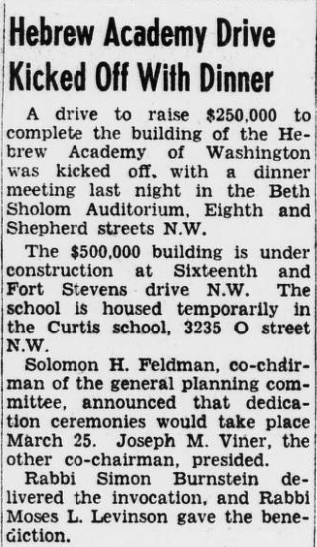
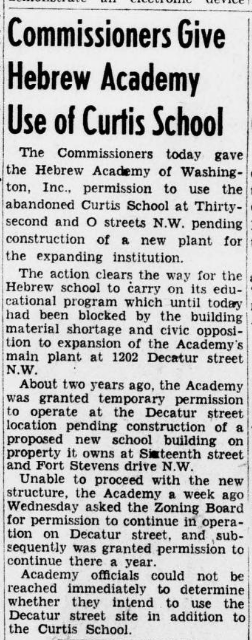
The Hebrew Academy is now known as the Berman Hebrew Academy, located in Rockville. It was founded in 1944. Here is an article from two years later, when the school took over the abandoned Curtis School:
The school next moved to a location in 16th St. Heights:
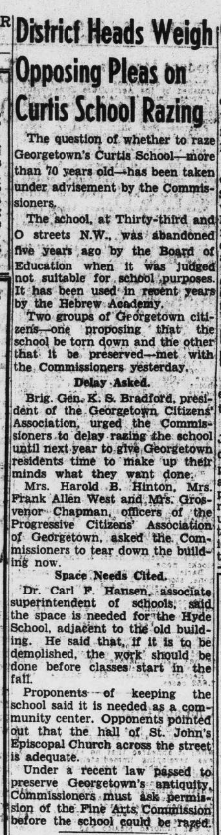
There was a debate in 1951 whether to keep the building:
But ultimately the decision was taken to tear it down. It stood where the Hyde-Addison playground is, so it should be said that generations of school children enjoyed a much larger playground than they would have if the school were saved. So I can’t be too sore about it….
Victoria’s Secret is coming to 1220 Wisconsin Ave., according to plans filed with the Old Georgetown Board. The building has been one of the longer term vacancies on this stretch. Massimo Dutti closed a location here around 2019 and it’s been vacant ever since.
Not much more to add here other than to note this is somewhat of an outlier for recent retail openings in Georgetown. For years now, retailers opening here have been overwhelmingly coming from the DTC (direct to consumer) field. These are companies that start off selling straight to customers via the internet before opening their own brick and mortar shops. Victoria’s Secret is classic mall fodder, i.e. the type of store Georgetown has been moving away from. It’s an improvement over a perennially vacant space, though, that’s for sure.
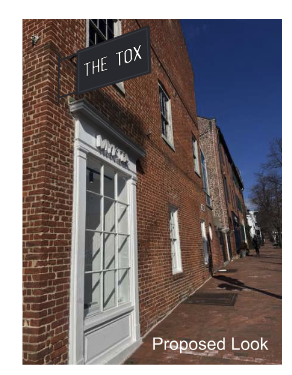
There is one more notable item from the OGB materials. Some store called “The Tox” is coming to 3001 M St.:
This appears to be a business that will occupy the second story of the property (with the Mykita store remaining). The company’s website says it provides “body sculpting through lymphatic drainage” which sounds genuinely sketchy to me. Honestly, it sounds like a service you should not be using without a thorough consultation with an actually licensed medical professional.
It’s St. Patrick’s Day again this Friday. And with the last of the pandemic measures relaxed, you can enjoy it like you (may have) used to! So without further ado, here is GM’s annual St. Pat’s article giving you a guide to enjoy the day around Georgetown:
As you may know, during the early 20th century, parts of Georgetown were heavily Irish. The center of it was on the west side, close to the Catholic landmarks of GU, Trinity and Visitation.
The Irish concentration is long gone, but with the help of old photos you can imagine the ghosts still walking the streets. In the 30s, photographer Carl Mydans walked through the poor and heavily Irish blocks of west Georgetown and captured the scene of children treating the sidewalks as their playroom:
Courtesy of the Library of Congress
These are all from the 3600 block of O St. (which is now mostly owned by GU).
And while you’re strolling through west Georgetown, it’s always nice to swing by Holy Trinity Church. And you know who else was been doing that recently? Our country’s second Irish Catholic president. If you’re really in for a walk, why not take this walking tour charting the first’s life in Georgetown.
Next you can walk up to Holy Rood Cemetery on Wisconsin. This lovely spot is the final resting place for generations of Georgetown’s Irish Catholics. Just stroll the rows of headstones and you’ll see dozens of Sullivans, O’Conners, Fitzgeralds, and so on. And after decades of shameful neglect, Georgetown University has poured a huge amount of effort into restoring the cemetery. If you haven’t visited recently, now’s a great time.
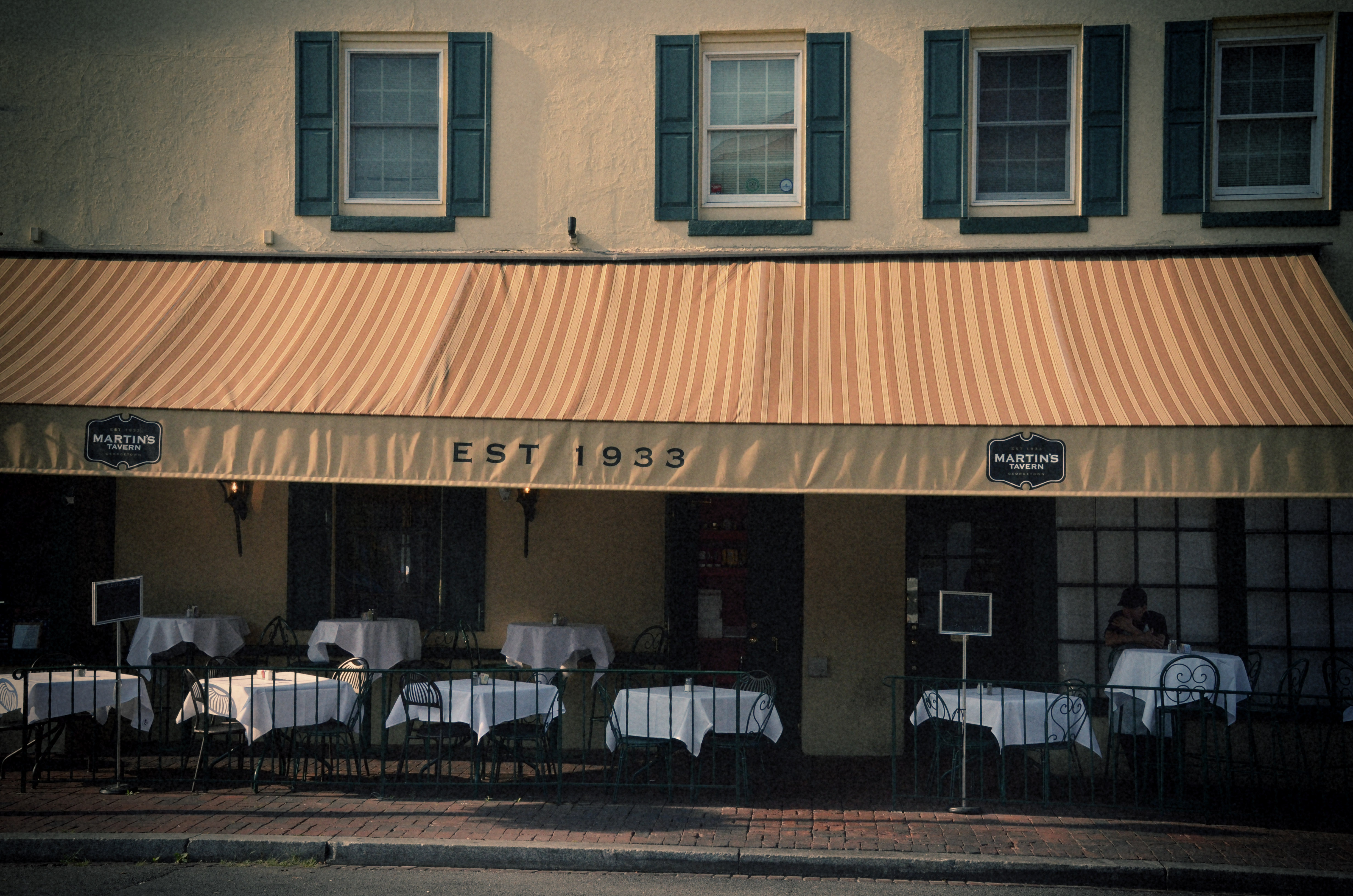
Finally, take a stroll back down Wisconsin to a living testament to Georgetown’s Irish past: Martin’s Tavern. Unlike the last couple years, you can finally raise a Guinness at the bar. Sláinte!
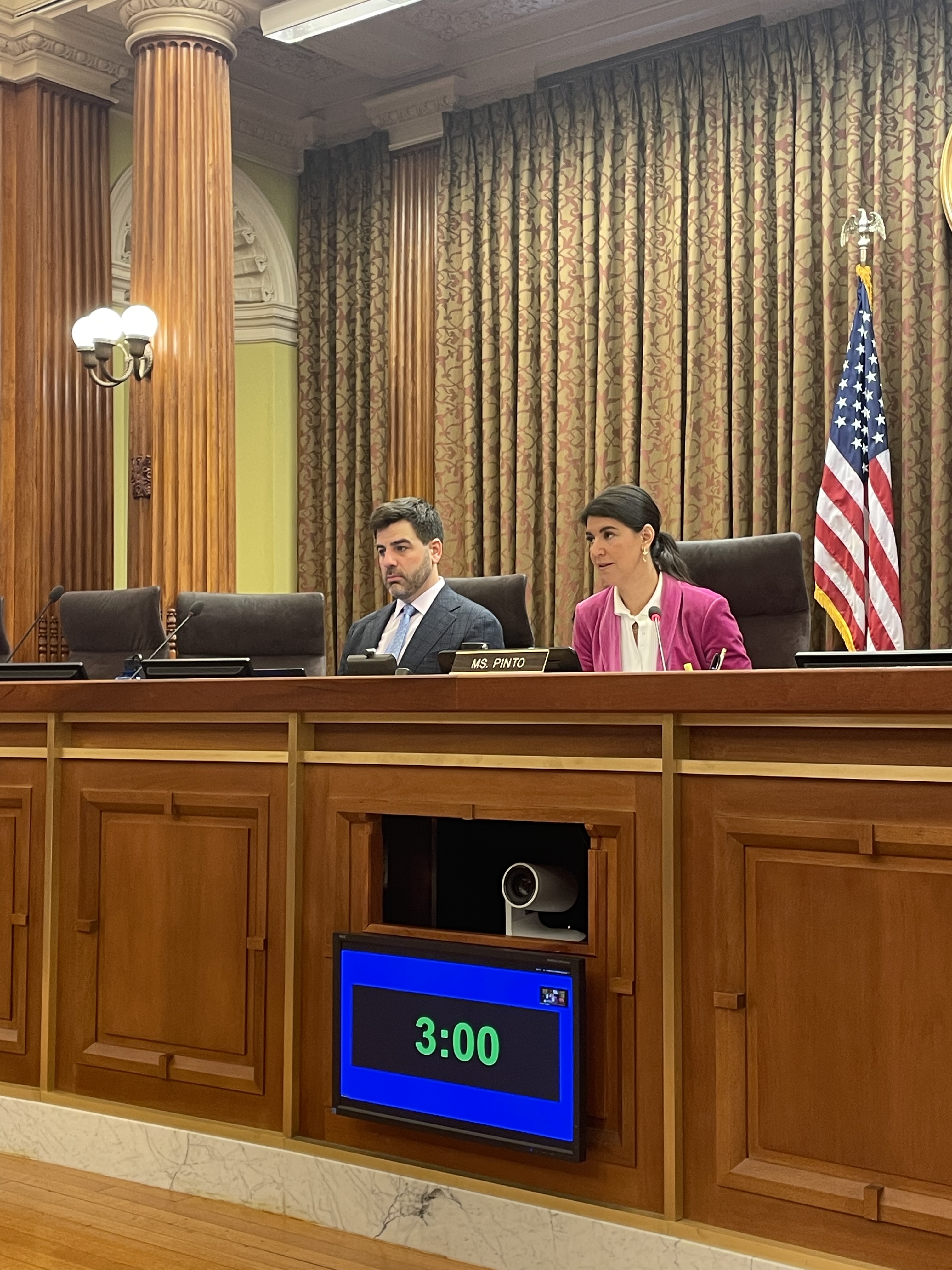
Ward Two Councilmember Brooke Pinto released her budget priority letter last week. And it contains multiple items to improve Georgetown specifically. I’ll describe those below.
But of course, before I do that, I have to address the elephant in the room (or rather the 200 or so elephants on Capitol Hill). The continuing resolution adopted by the House, which would avoid a federal shutdown starting on Saturday, would absolutely devastate the DC budget. In a move that can only be described as sadistic and spiteful, the House continuing resolution would force DC to revert to its fiscal year 2024 budget. That is the budget for the fiscal year that ended last October. We are already halfway through fiscal year 2025, operating on a completely balanced budget (as we have for 28 years straight). The budget is funded by local dollars, which is to say local taxes. By forcing us to revert to an earlier fiscal year’s budget, the city would have to immediately cut its spending by $1.1 billion. There is simply no way to do that without firing a whole bunch of police officers and teachers. It would be devastating and devastatingly stupid. And it would not send a single dime back to improve the federal budget deficit.
As I write this Wednesday night, the resolution is sitting in the Senate, and it’s unclear whether the Senate Democrats will successfully modify the resolution to prevent this monumentally moronic event from coming to pass.
So I have no idea what will happen with all that. But the process to create the fiscal year 2026 budget still must go on. Even if somehow we overcome this financial sabotage from the Hill, the city is still facing a fairly tight budget, so priorities must be chosen wisely. Here are the priorities from CM Pinto that directly relate to Georgetown:
Georgetown streetscape: The request asks for $5 million to pursue the model for a future Georgetown-specific streatery design. This is something I discussed recently. The money would go towards creating a much more attractive version of the streateries along the 1400 block of Wisconsin Ave. The goal is to develop a new surface made up of brick and granite that would much more closely mimic the sidewalk itself. Additionally, the Jersey barriers would be replaced with a more appealing design such as bollards.
Tour bus parking lot: It’s great for the Georgetown economy for large tour buses to deposit visitors in the neighborhood. But what to do with the buses while those visitors walk around and spend money has long been a challenge. A plan put forward would create a tour bus parking lot near 27th and K St. between Georgetown and Foggy Bottom. Pinto’s letter requests $1.9 million for this much needed project.
Wayfinding: Along those same lines, Pinto’s letter asks for $50,000 to erect better signage to encourage movement between Foggy Bottom (with its Metro station) and Georgetown.
Stairwell at 34th and Water St.: Pinto asks for $1.2 million for a new stairwell connecting Water St. up to the canal at 34th St. This particular stairwell is in pretty bad shape, and with the new hotel opening right next to it, it’s a good time to fix it up.
Volta Park Playground and splashpad: This one is near and dear to my heart. Volta Park’s playground is clearly long in the tooth and needs a serious overall. The last time it was improved was over 10 years ago. And at the time, the vast majority of the funds went towards water run-off issues, leaving less for the equipment itself. I hope this time we can get more fun and usable playground equipment. And I have long asked for a splash pad! Sadly my daughter is wayyyy past the age that she could use it (without causing a scene) but plenty of families would warmly welcome it!
There are plenty of other items on CM Pinto’s list, many of which would apply to Georgetown as much as any other place (such as investments in public safety). Check out her letter here.
Getting a request into a councilmember’s request letter is certainly no guarantee that the mayor will include it in her own budget proposal, but it’s much better to be in the letter than not, that’s for sure. We’ve got a lot of genuinely frightening uncertainty to fight through before we can really focus on FY 26, but I think given the circumstances, this is a good start.

















 The Georgetown Metropolitan
You must be logged in to post a comment.