From 1820 to 1837, a newspaper called the Georgetown Metropolitan was published in the city of Georgetown, DC. The copy above is from July 12, 1826, reporting on the deaths of Presidents Jefferson and Adams on July 4th, exactly fifty years after the signing of the Declaration of Independence. For a short while, it was published by John L. O’Sullivan and his brother-in-law Samuel Langtree. O’Sullivan faded into obscurity until the middle of the 20th century when the term “Manifest Destiny” was attributed to him.
So what does this have to do with 2008? Well, not much. But, basically I’ve realized that the neighborhood of Georgetown lacks a neighborhood blog. I’ve decided to give it a try. I looked through Georgetown’s history for a worthy name to resurrect and the Georgetown Metropolitan sounded perfect to me. And so I have reestablished the Georgetown Metropolitan, 171 years since it last was printed. With luck, the Georgetown Metropolitan will serve as a valuable information source for Georgetown residents.
The other day I noticed that one of my geranium plants in the planter in front of my house was gone. Due to a rash of package thefts in the past, we installed multiple cameras trained on the front. So it only took a few minutes of browsing to find the thief.
What is wrong with you? A small geranium plant like that costs like 8 bucks. Was it really worth it?
A neighbor told me that someone stole an anemone from the front of her house last week as well. And it’s the height of anemone bloom time, so it was especially annoying! Was it this same thief?
These are not the crimes of the century. But come on!! Why are you doing this???
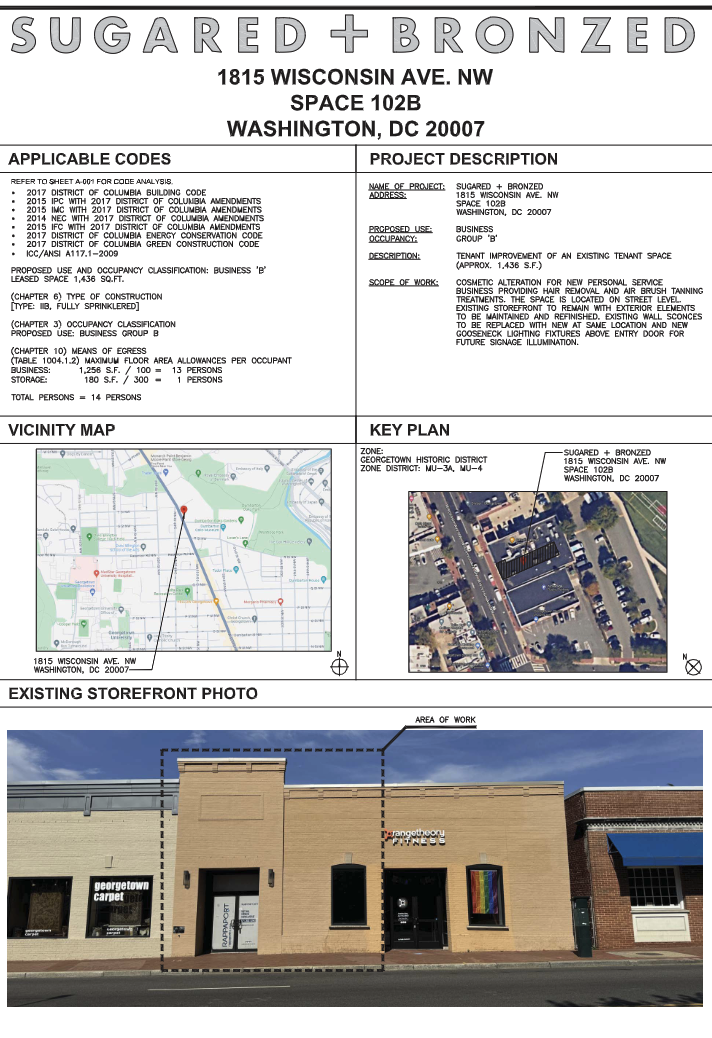
An establishment called Sugared and Bronzed appears to be destined for 1815 Wisconsin Ave., according to materials filed with the Old Georgetown Board.
When I first read that, I thought perhaps it was some sort of a cookie shop or the like. Sadly no. It’s about as far from a cookie store as you could get. It’s a waxing and tanning salon. Where does sugar come into it, you ask? Well according to their website, they use basically a big glob of sugar to tear the hairs from your nether regions:
What is Sugaring Hair Removal?
Sugaring is an all-natural method for body hair removal that has its roots in ancient Egypt — (oh hey Cleopatra)! Our organic hair removal technique is eco-friendly and the healthiest option for your skin. Our sugar paste is made in small batches using just three natural ingredients: lemons, sugar, and water. No chemicals, no preservatives, just nature’s best. Seeking a sustainable, and hypoallergenic solution to banish unwanted hair? Sounds like you’re ready to sugar! Unlike hot wax treatments, our sugar paste is applied at body temperature, so it won’t burn. It’s gentle on the skin, making it the perfect choice for those with sensitivity. Say farewell to painful ingrowns and hello to smoother skin. Results last 4-6 weeks, regular sugaring sessions lead to finer and sparser hair regrowth.
It might be natural, but it still looks and sounds pretty painful!
The “bronzing” part of the business actually involves airbrushing, not UV rays. So while that’s less “natural” it sounds a lot better for your skin, honestly!
Sadly it looks like Jaco Taco has closed. I’d hate to think that that illegal pot store next door contributed to its closure, but I’m sure it didn’t help.
On two previous occasions, I’ve tested the ability of AI to take the job of writing this website away from me. The results from the last experiment were so bad that I didn’t think I’d be able to slough off this job for a while.
But this technology is moving fast! Maybe it’s already good enough to give me a break! So I decided to ask Google’s AI to write just the sort of article I would write. In fact, I already wrote it! It’s one of my most read articles ever! But could AI do it as well?
So I decided to give it a try. I asked Google: Write an article in the style of the Georgetown Metropolitan where you discus the decline of college bars in Georgetown.
This is what it produced:
Once a bustling hub of college life, Georgetown’s iconic bars have seen a noticeable decline in recent years. The vibrant atmosphere that once characterized the neighborhood has been replaced by a more subdued, upscale vibe, leaving many students and alumni wondering what happened.
Several factors have contributed to this transformation. One significant reason is the rising cost of living in the District. As property values soar, businesses are forced to charge higher prices, making it increasingly difficult for students on limited budgets to afford a night out. This has led to a shift away from traditional bars towards more affordable options, such as house parties and BYOB events.
Moreover, the changing demographics of Georgetown have also played a role. The neighborhood has become increasingly affluent, attracting professionals and families who may have different preferences when it comes to nightlife. The demand for upscale restaurants and bars has grown, while the traditional college bar scene has diminished.
Finally, the emergence of social media and online platforms has altered the way young people socialize. In the past, bars were the primary gathering places for students to meet friends and have fun. Today, many young people prefer to connect online or through private events, reducing the need for traditional bars.
While the decline of college bars in Georgetown is a notable shift, it is important to note that the neighborhood still has a vibrant nightlife. The emergence of new bars and restaurants catering to a diverse clientele has helped to fill the void left by the disappearance of the traditional college bar scene. However, the loss of iconic establishments like the Tombs and the Bayou remains a bittersweet reminder of Georgetown’s changing landscape.
Still sounds like something someone would write when they didn’t do the required reading! Lots of BSing going on here. But still….not thaaaaaaat bad????
Can I outsource this soon? Probably not! And, of course, this is all just a joke anyway! Don’t worry, it’ll be flesh and blood writing this for a while still…
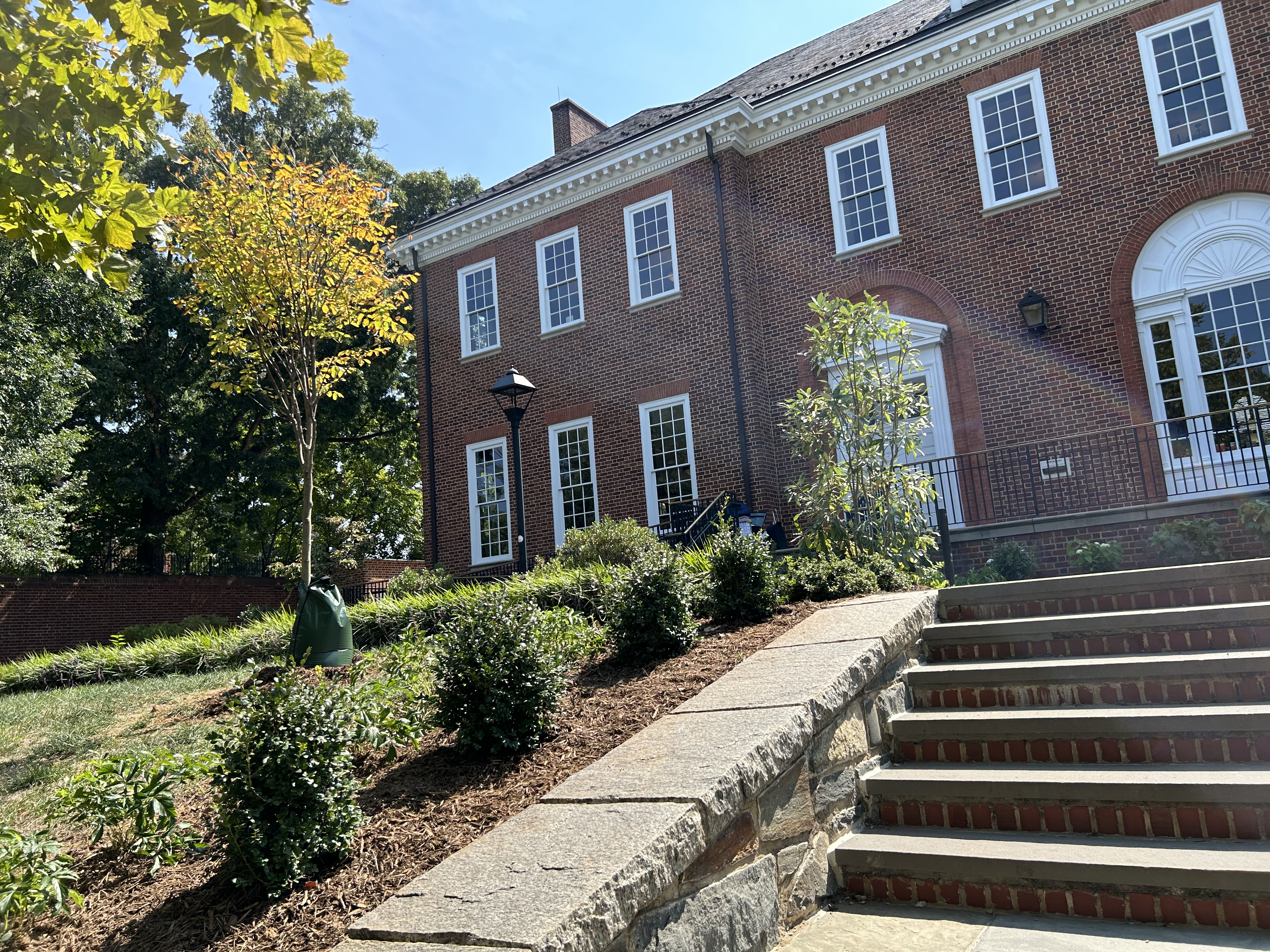
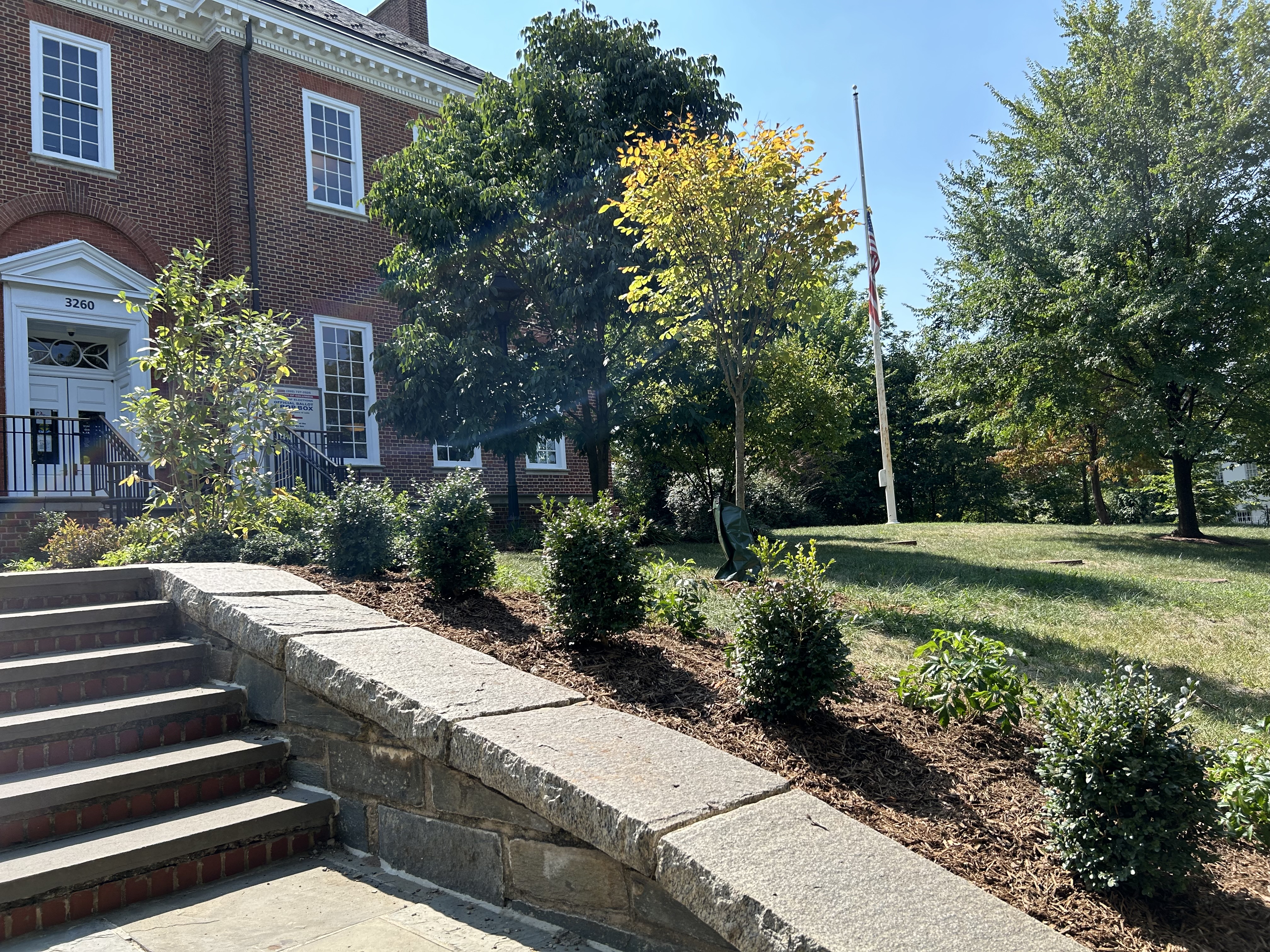
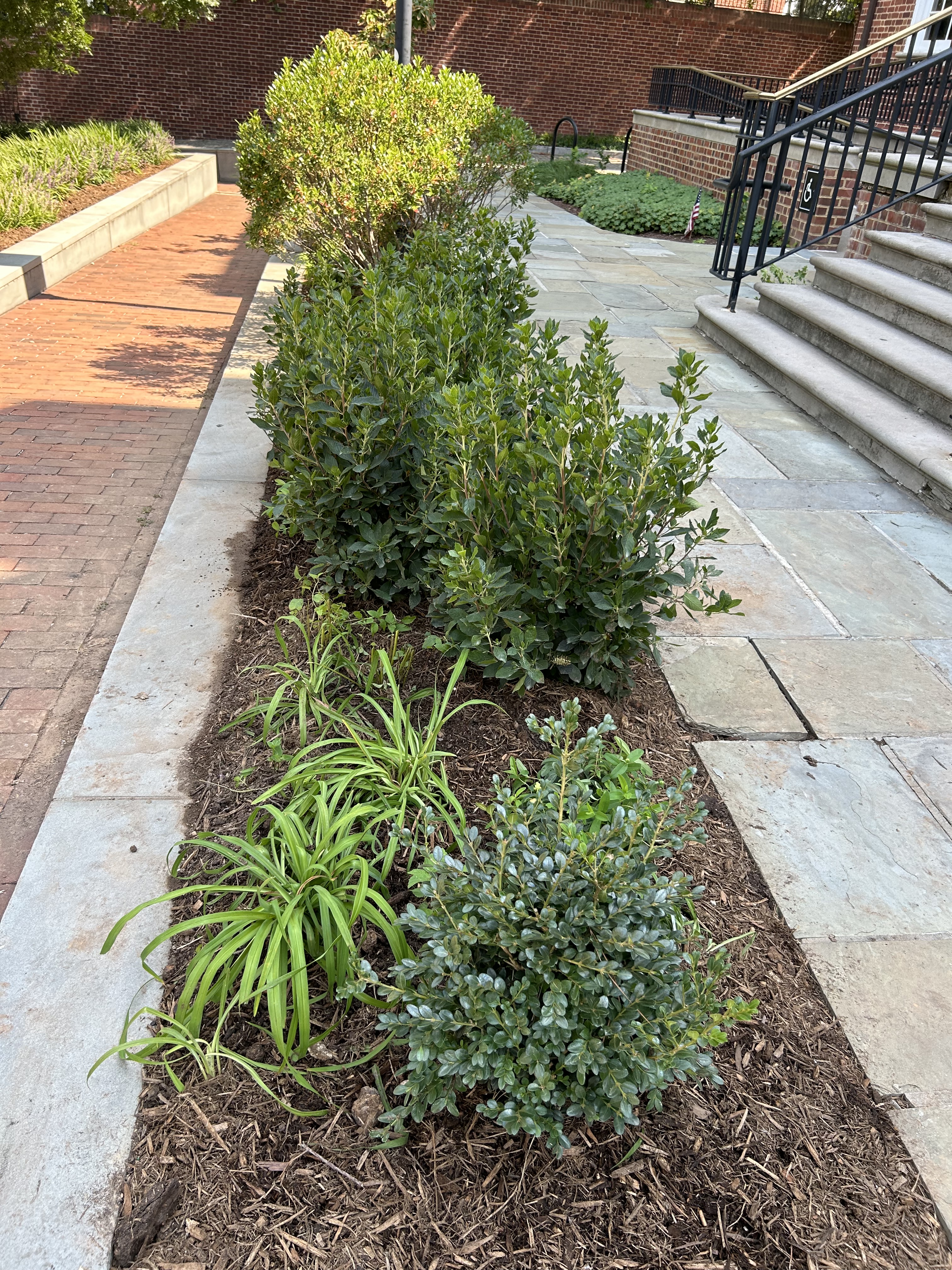
The front of the Georgetown Library received a boost recently. That’s due to the new plantings donated to the library by the Georgetown Garden Club. Here are some more pics:
Many thanks to the Garden Club for making the neighborhood a bit greener!
The Circulator is nearly dead. Long live the Circulator.
A victim of deep budget cuts (that apparently didn’t impact the mayor’s obsession with building a wasteful football stadium) the popular bus program is set to cease by the end of this year. Although popular, the system proved too expensive–at least as measured by cost-per-rider–to keep afloat. An alternative, which was pushed by the ANC and many others, was hinted at at the time the cuts became final: ask WMATA to pick up the difference.
The argument makes decent sense, although it is not without its flaws. Many of the Circulator routes overlapped with WMATA bus routes. For instance, the Georgetown-Union Station route is basically the same as the 30 series between Georgetown and downtown. Of course, the overlap is not perfect. The Circulator goes to Union Station from downtown DC. The 30s series simply ends downtown (these days).
Nonetheless, the city and WMATA put forward a plan this week outlining how the replacement service would roughly work. At this point, the plan is only short term. It’s meant to bridge the gap between the end of the Circulator service and the introduction of the Better Bus Network next year.
The details for the Georgetown Circulator routes are as follow:
-For the Dupont to Rosslyn route, WMATA will increase weekend peak hours for the 38B route to create 15 minute headways.
-For the Georgetown to Union Station route, WMATA will merge the 31 and 33 routes and essentially extend the 30 Series to Union Station
Neither of these solutions is sufficient to substantially replace the Circulator service being lost. For the Dupont to Rosslyn route, the 38B doesn’t get near to Dupont at all. The closest it gets is K and 18th, nearly half a mile from Dupont. (For what it’s worth, it goes right to the Farragut Metro stops, so to the extent the line is looking for a Metrorail connection, it would have one).
And while the modified 30 series route may offer a single seat ride to Union Station, it does not even begin to replace the service frequency that the Circulator provides. For the vast majority of riders catching a bus on Wisconsin Ave., the destination is somewhere that the 30 series already goes. Extending the 30 series to Union Station will only help out a small number of riders. The loss of the Circulator frequency, though, will be felt by all riders. This plan does nothing to address that.
And as it stands, the Better Bus Network that is following this temporary plan is no better in terms of addressing this frequency problem. An analysis of the total bus service before and after the end of Circulator and the introduction of the Better Bus Network showed a huge drop off of overall service for Wisconsin Ave. riders. This is something that the city still needs to address.











 The Georgetown Metropolitan
You must be logged in to post a comment.