
Good morning Georgetown, here’s the latest:
- Driver plows another car into a nail salon. (More on this later).
- Is it time to allow swimming in the Potomac and Anacostia rivers?
Good morning Georgetown, here’s the latest:
Filed under Uncategorized

Photo by Jon Hayes Photography.
Spring is here. And while most trees haven’t started to leaf out for the season, they will sooner than you think. And once they do, it is critical for residents to water our street trees. So now is the time to make plans for it, especially if you have a young tree on the sidewalk in front of your house or apartment. This is especially true if it was newly planted this year. The basic goal you should have is to water young trees at least once a week, so long as you get a good 20-25 gallons of water. If you can’t water the new trees, try to find a neighbor who can.
The preferred watering device is the ooze tube (the bags that go around the bottom of the trees). You can differentiate them from the not-preferred gator bags because the gator bags have zippers. (They’re not preferred because they can create an unhealthy environment around the trunk and you have to remove them after each use.) With the ooze tube you can just fill it up and let it go.
Continue readingFiled under Uncategorized

Good morning Georgetown, here’s the latest:
Filed under Uncategorized

This week for Where the Streets Had Old Names, GM is mixing it up a bit to explore the inspiration for an old street name that still is in use: Bank Alley.
As GM has written about a bunch in the past, when Georgetown was an independent city, it had a different street naming system from that used in the rest of the District of Columbia. But the independent municipality of Georgetown (and the city of Washington) came to an end in 1871. By the 1890s, Congress forced Georgetown to change most of its street names to comport with the DC system. So most of the old names went away.
But some streets didn’t fit in with the DC system and were left as is. These include Dumbarton, Olive, Prospect, etc. On this list included Bank St. (GM will get to the street versus alley question below).
So we’ve still got Bank Alley/Street. But where did the name come from?
Continue readingFiled under Uncategorized
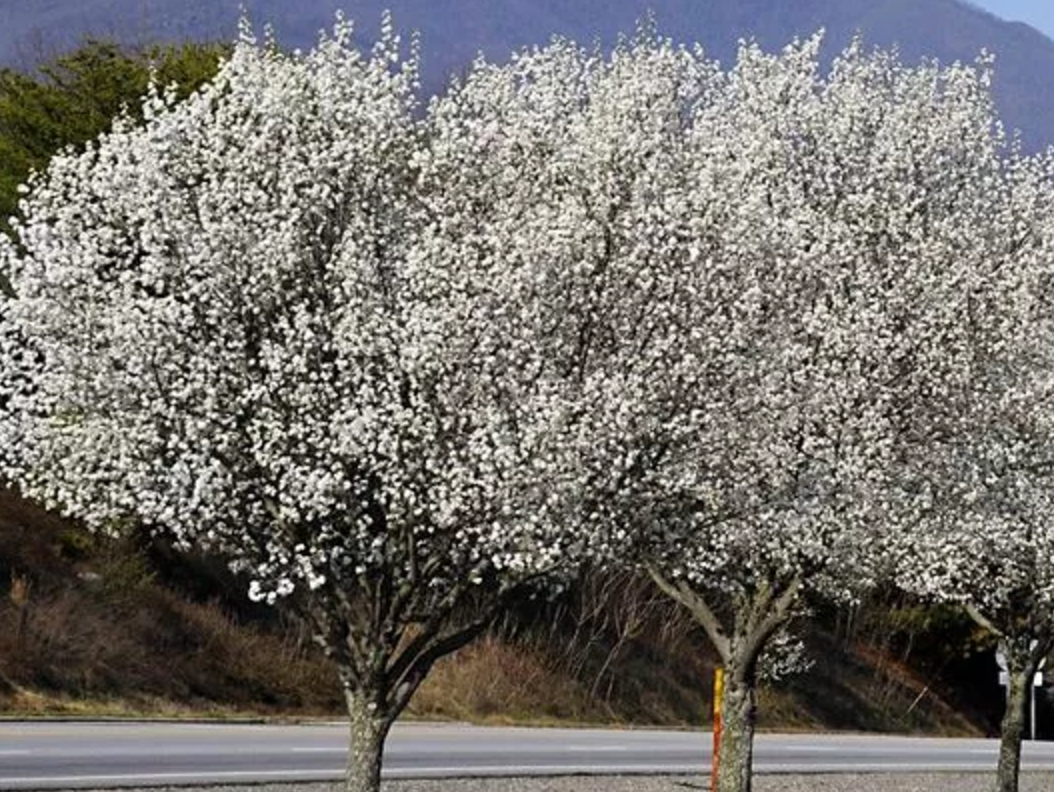
You may have noticed puffy white flowers on trees around the neighborhood. But these trees are not the beloved cherries; they are the dreaded bradford pear. GM wrote about them as part of his Know Your Trees series and here is that article again:
Today on Know Your Trees, GM explores a tree even worse than the ginkgo: the bradford pear.
Badford pear trees are trees that often get confused for cherry trees since they bloom with poofy white flowers around the same time that cherries do. But they are not cherries, and their flowers are not quite as attractive. They lack the subtle shade of pink and have small green leaves:

Once you realize how to distinguish a bradford pear from a cherry, you realize they are everywhere. Where once you thought you saw street after street lined with cherries, you now see pears.
And if the only distinguishing factor was that the flowers are not quite as attractive as cherries, it wouldn’t be a big deal. But that’s not the case.
Bradford pears are invasive. They were introduced in the 1960s as a sterile ornamental tree. But they turned out not to be sterile. And they started to spread like wildfire.
And the worst thing about bradford pears is that they grow so fast that their limbs are extremely weak and fragile. There was a lovely row of them on GM’s block a while ago, but after every slightly serious storm, the street would be littered with broken boughs. And the trees only have a lifespan of 20-25 years, which is extremely short for large trees.
Continue readingFiled under Uncategorized
Good morning Georgetown, here’s the latest:
Filed under Uncategorized
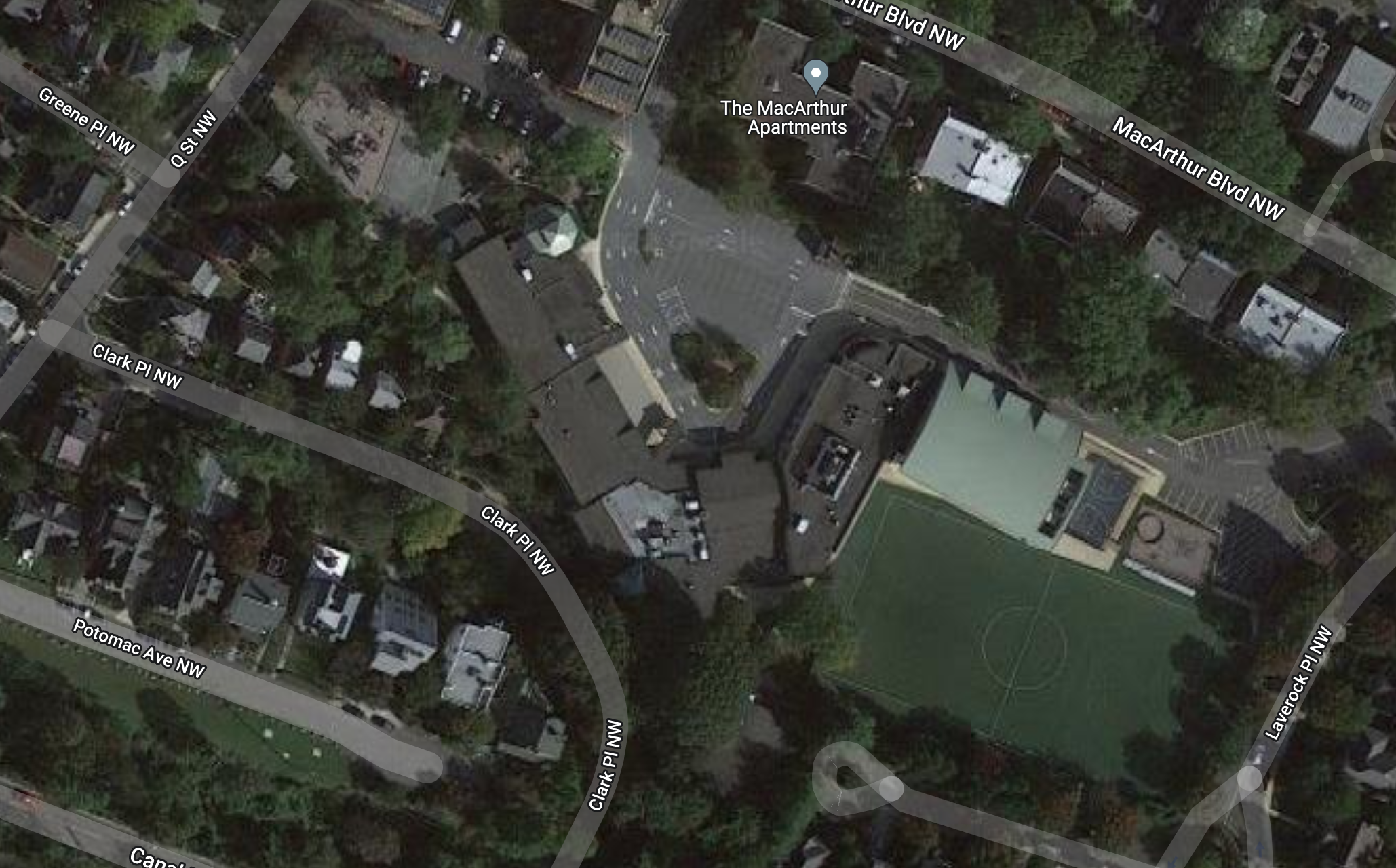
Yesterday, Mayor Muriel Bowser submitted her draft budget for 2023. In it was funding to move ahead with the proposal to build a new high school in Ward Three. If the project comes to fruition, it will be the in boundary high school for Georgetown students.
The location for the proposal is the former Georgetown Day School lower school on MacArthur Blvd, just west of Foxhall Rd. The private school consolidated its campuses together on Wisconsin Ave. in Tenleytown, so it put the MacArthur Blvd. property on the market. In 2020 the city stepped forward to buy it. Since then various proposals have floated for how to actually use the property. Last year, for instance, the idea of using it as a middle school while converting Hardy to a new high school was discussed.
Continue readingFiled under Uncategorized

Good morning Georgetown, here’s the latest:
Filed under Uncategorized

Stephen Starr’s planned Italian restaurant/market for the Georgetown Market building has been delayed as the restauranteur and the developer seek approval to take over the historic building. This is according to multiple sources familiar with the process. Despite the delay, however, the project does seem likely to proceed eventually.
The issue at the heart of the delay is one that GM has discussed many times before. As GM wrote in 2019 when he first reported the project:
The plans for the space were shown and described. As you can see from the floor plan above, the idea is that there would be a market/bakery/gelato/espresso area in the front of the building. And then the rest of the space would be taken up with space for the kitchen and seating areas for the restaurant. It would appear then that the market element of the plan would be rather small, one might say token. That’s notable since federal law actually requires the space to be used as a market.
In other words, in order to be approved as a tenant, the concept needs to satisfy the requirement that it actually be a market. The initial proposal apparently did not fully satisfy that. (GM reached out to Starr Restaurant Group and Jamestown Properties, which manages the property, but did not hear back.)
The DC government is required to sign off on the project, which it has not done yet. Additionally, the Citizens Association of Georgetown also needs to sign off on it. This is because CAG originally sued DC in the 1980’s to compel the city to actually enforce the market requirement (which itself is a product of a 1966 federal law). CAG’s suit came in response to the state of the market as it was run by Herb Miller’s Western Development since 1979. It alleged that Miller wasn’t operating the market as a true food market in the vein of Eastern Market but was instead hosting vendors selling snacks.
Continue readingFiled under Uncategorized









 The Georgetown Metropolitan
You must be logged in to post a comment.