
Good morning Georgetown, here’s the latest:
- This isn’t new, but GM just learned about it: a delectable sushi pop-up is located at Grace Street Coffee.
- Some study abroad programs are moving forward at GU this fall.
Good morning Georgetown, here’s the latest:
Filed under Uncategorized
In Georgetown, the major recipients of the federal government’s paycheck protection program were restaurants and hotels. This program, enacted in response to Covid, provided employers with low interest forgivable loans in return for them keeping employees on the payroll.
The recipients of the program were made public and there were fifty companies based in the 20007 zip code that participated. The break down by type of employers is as follows:
Restaurants and hotels were among the businesses most directly impacted by the pandemic. So it should come as no surprise that they are at the top. In fact, it’s a little surprising that more restaurants aren’t listed. (Possibly there were more, but the legal entity was outside the zip code.)
Not all the businesses reflected on this list are based in Georgetown, since the 20007 zip code covers a larger area. But eyeballing the list, it appears that most are. Among the more recognizable recipients were:
The overall average grant was $1.4 million in order to keep 92 people employed. This works out to about $15,000 per employee. Across DC the average loan was only $109k, with the average number of employees at 10. That works out to $10k per employee.
Filed under Uncategorized
GM is continuing with reprinting his series Seven Georgetowns. Today we visit the great north.
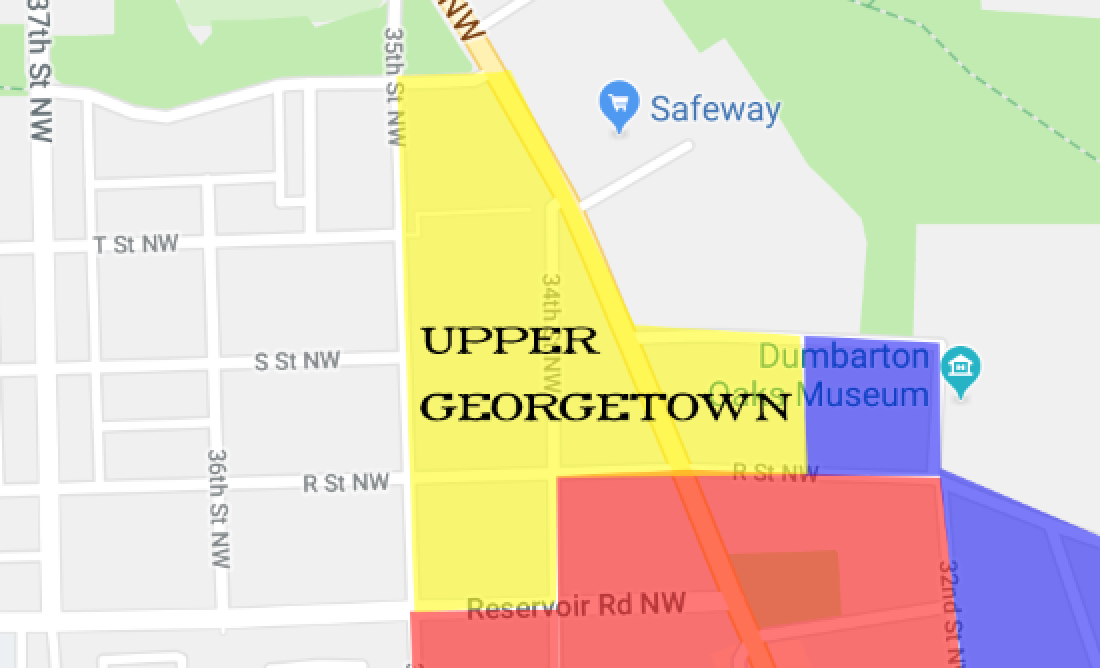
This week on Seven Georgetowns, GM is going to discuss the northern tip of Georgetown, which he uncreatively has dubbed: Upper Georgetown.
It probably makes sense to first describe the official northern boundaries of Georgetown itself, to help explain Upper Georgetown’s boundary. Georgetown is the only neighborhood in DC that is actually defined by federal law. (The definition is necessary to describe where exactly the Old Georgetown Act applies). The northern boundary of Georgetown, according to that definition, runs east along Reservoir Rd. from just west of the hospital. Then it heads north down the center of 35th St. to Whitehaven Parkway. From there it runs east of Wisconsin and meanders through the woods until it hits Rock Creek.
Upper Georgetown’s southern border is Book Hill, which comes to a natural northern end at the library. The eastern border is a bit fuzzier. GM figures that at some point between 32nd and Wisconsin, R St. and S St. stop being Georgetown Heights and start being Upper Georgetown, but it’s not a bright line.
Continue readingFiled under Uncategorized
Good morning Georgetown, here’s the latest:
Filed under Uncategorized
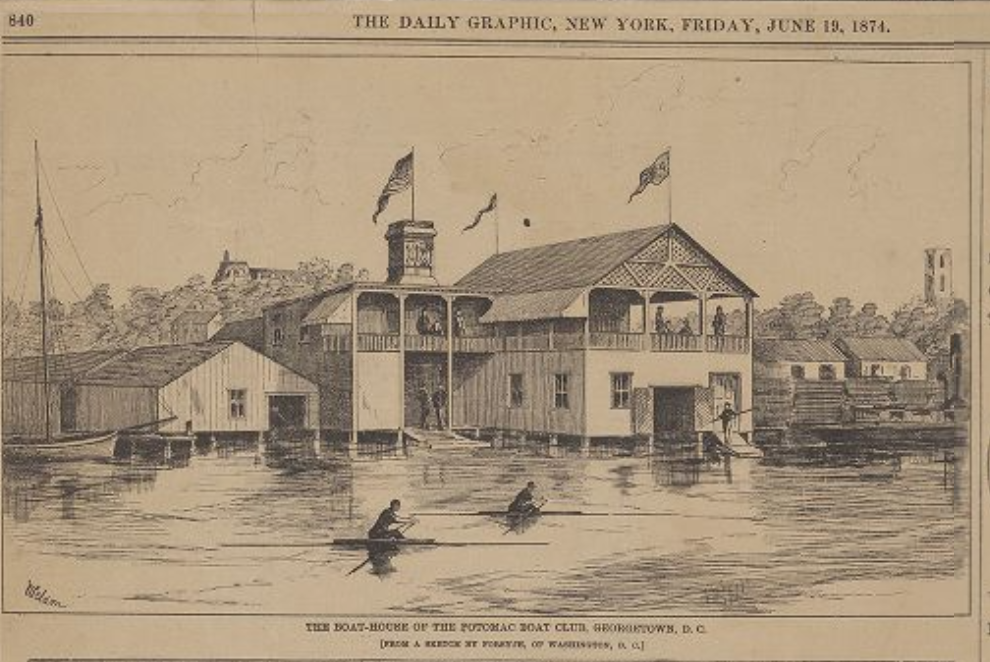
This week for Georgetown Time Machine, GM is exploring a long gone boathouse. The image above is from the Daily Graphic Newspaper out of New York from June 19, 1874. It is of the Potomac Boat Club.
The Potomac Boat Club (or PBC) was founded as a rowing club in the middle of the 19th century. Some sources, including Wikipedia, peg the club’s founding to 1859. But according to the club’s own history, what was founded in 1859 was somewhat of a precursor organization known as the Potomac Barge Club. PBC itself was formed July 6, 1869.
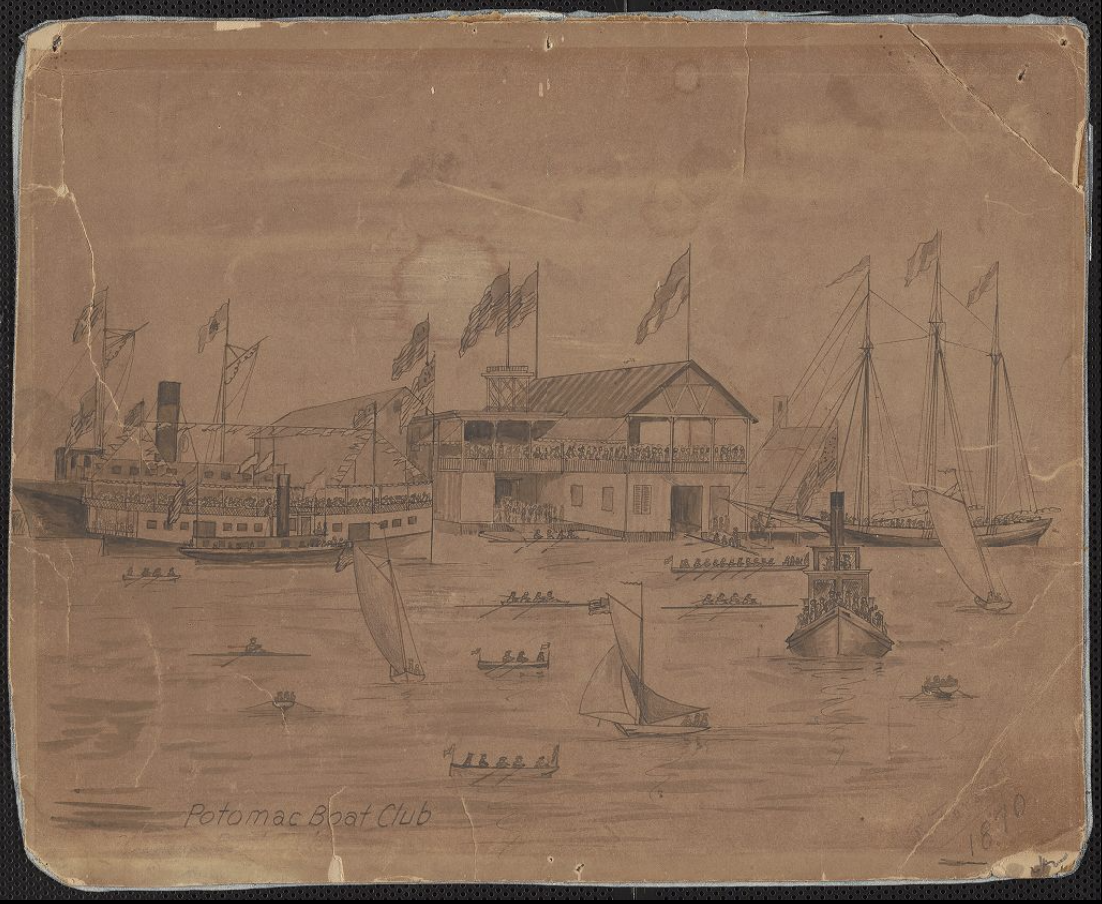
PBC built a small boathouse at the foot of Congress St. (which is now 31st St.) This structure was soon replaced with the structure seen above. Here is another sketch of the building from 1870:
This boathouse was replaced on the same spot in 1875 by this stunning building:
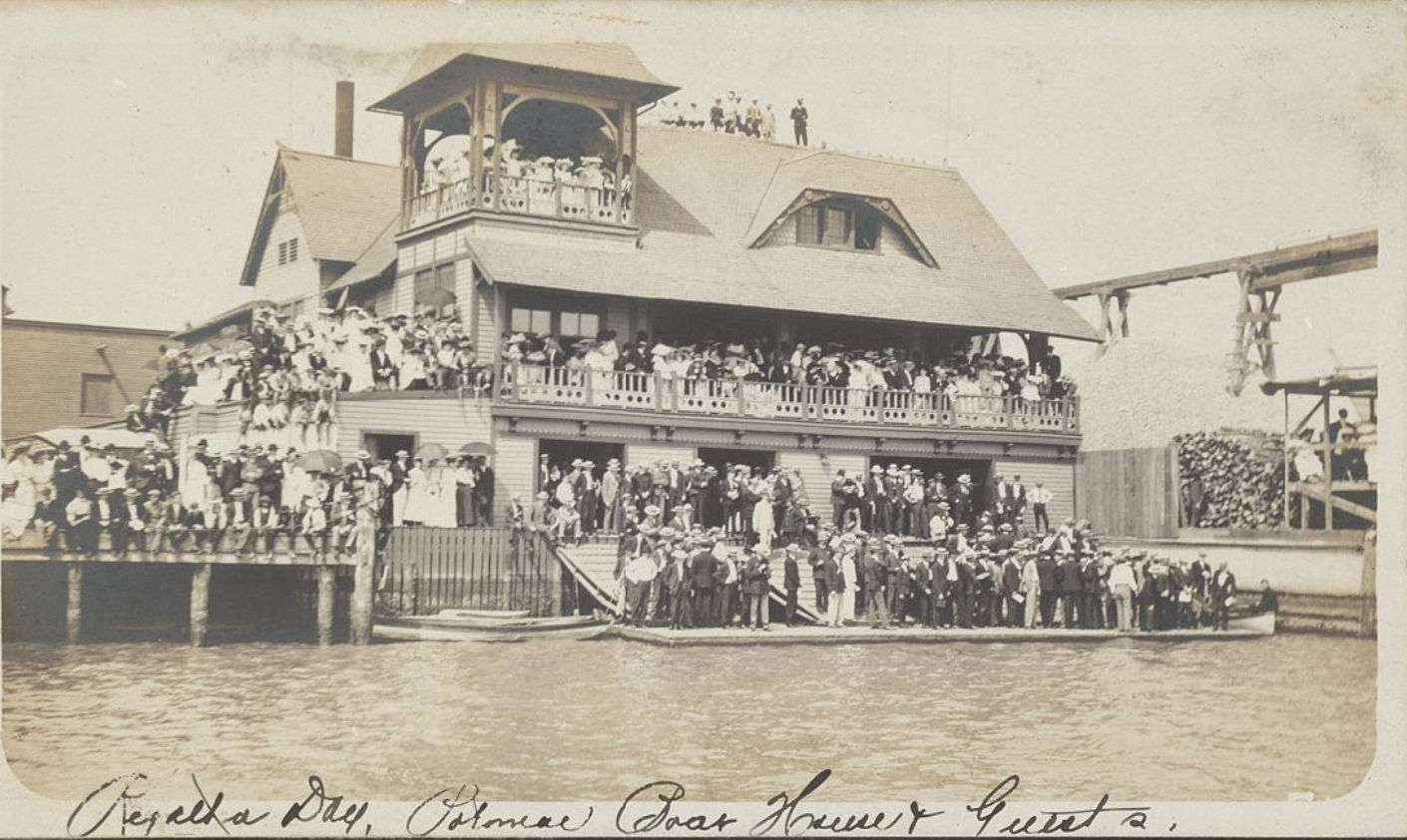
According to contemporary news accounts this new boathouse was:
a model of its kind in America, and even today is the envy of many of the rich clubs of the North….[it housed] seventy-three private crafts, thirty-three of which are the beautiful canoes that are now so popular on the river.
The last bit about canoes reflects the canoe-craze of the late 19th century. In fact, a group of PBC members broke away to help form the Washington Canoe Club in 1908 to pursue that interest.
While this boathouse was beautiful, as you can see from the photo, the location wasn’t. Industry surrounded the boathouse on both sides:
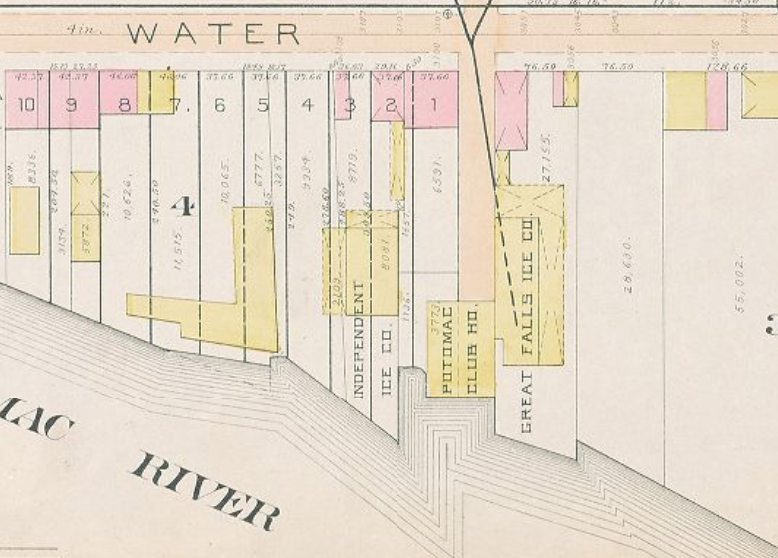
This situation may hep explain why the club was looking for a new home 30 years later. It settled on a lot just east of the aqueduct bridge:
Continue readingFiled under Uncategorized
Good morning Georgetown, here’s the latest:
Filed under Uncategorized








 The Georgetown Metropolitan
You must be logged in to post a comment.