

The Georgetown Household
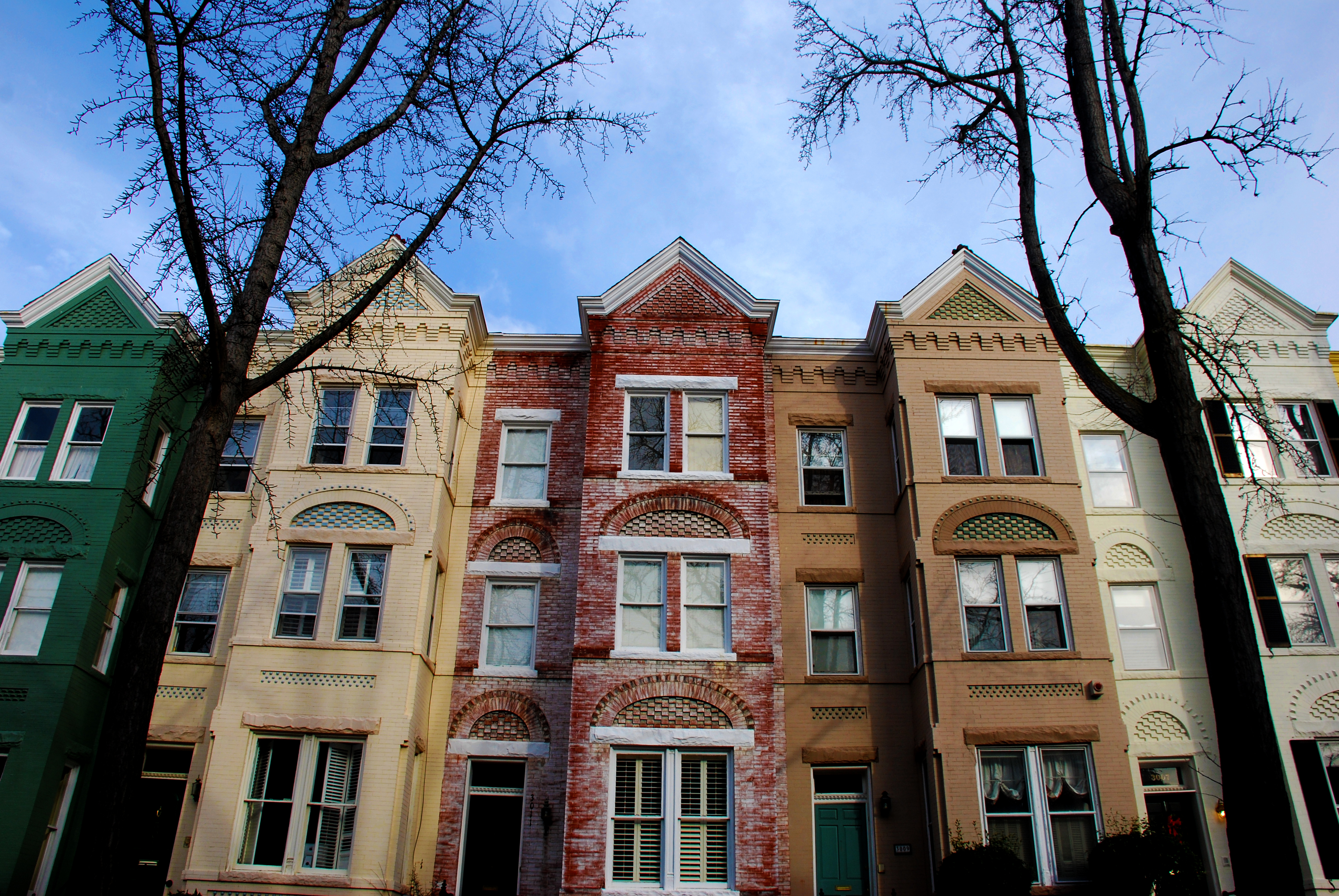
Last week GM explored the baby boom in Georgetown, or lack thereof. And this reminded him that he hasn’t run a piece on the overall picture of Georgetown households in quite some time. So here is a 2021 update!
First a caveat: This information comes from the American Community Survey five year estimates. As GM mentioned last week, this dataset does not attempt to create a snapshot at a particular moment, but rather makes an estimate of the respective data series over a five year time frame. So instead of saying, for example, that there are 10,000 people living in a particular area as of January 1st, it rather says that on average over the past five years there were 10,000 people living there. For relatively stable metrics it’s good enough (and all that is available for geographic areas as small as a Census tract).
Georgetown is now made up of four Census tracts, but for this purpose we can exclude two of them. The first is Census tract 2.01, which represents just Georgetown University. Secondly, we can ignore the fact that this year Census tract 1.00 (east Georgetown) was split into two tracts: 1.01 and 1.02. The data here reflects when it was just one tract.
A second caveat is that as GM also discussed last week, this data often comes with huge margins of error. GM will try to identify when that occurs.
That said, here is the data!
Continue readingFiled under Uncategorized
The Morning Metropolitan

Good morning Georgetown, here’s the latest:
- National memorial commemorating Georgetown’s role in the slave trade proposed by Del. Norton.
- Here’s a nice background on the organization behind the effort.
Filed under Uncategorized

Georgetown Time Machine: Dumbarton Club

The photo above is taken from the Washington Post on March 14, 1915. It accompanies an article hailing the growth at the Dumbarton Club. This was a club that once stood around Mount Hope, the mansion at the southwest corner of what is now R and Wisconsin.
The club was founded in February of 1900 by a group of Georgetowners wanting to build a country club for the community:

By the time it opened later that spring, the members had ambitious plans to construct tennis and croquette courts, and even a golf course:

Ultimately the club did build a nine hole course in Burleith:

The House of the Good Shepherd was an orpahnage that once stood where Washington International School is:

(It’s not clear from the contemporaneous sources, but it would seem that the golf course displaced the Black residents from using the area as a picnic grounds.)
Although golf appears to have been a big part of the club’s existence in its early years, that went away. It appears that the real estate development of Burleith pushed it out, as described in 1915:

By 1915 (the date of the first photo above) tennis was the primary focus on the club:

The courts appear to have taken up the south side of the property, essentially where the Long and Fosters is now:
Continue readingFiled under Uncategorized
The Morning Metropolitan

Good morning Georgetown, here’s the latest:
- Looks like someone built what appears to be an illegal EV charging station at Prospect and 33rd.
- Where to get an epic ice cream sandwich in Georgetown (and elsewhere).
Filed under Uncategorized

Weigh In on the Future of Expanded Sidewalks and Streateries

Love streateries? Hate them? Like them but want some tweaks? Have no idea what a streatery is? Well the BID has just the event(s) for you!
The BID is hosting these meetings to gather feedback from residents and businesses, report on early observations about the decks, and identify any modifications to the pilot project that may be necessary.
Staff from the Georgetown BID, the ANC, and CAG President Tara Sakraida Parker will participate in the meetings. A Q&A will follow the presentation and it’s important to make your voices heard!
If you are unable to attend, the BID invites you to send comments or questions to georgetowndecks@georgetowndc.com.
A survey will also be open for residents June 21-27, we need your participation!
Please see the meeting registration information below:
· Monday, June 21st at 6:30pm on Zoom. Click here to register. · Tuesday, June 22nd at 10:00am on Zoom. Click here to register.
Thank you for your time, input, and joining our sidewalk widening meeting and discussion. Your opinion matters and we look forward to seeing you!
The expanded sidewalks and streateries have transformed retail Georgetown, no doubt. In GM’s opinion, the transformation has been a net positive, although some tweaks are likely necessary. Ultimately permanent expanded sidewalks with outdoor cafes would be the best outcome, and this process may lead to that end. But what do you think? Log on to let the BID know.
Filed under Uncategorized

Update on the Baby Boom

In the first several years of the Georgetown Metropolitan, GM closely tracked what he dubbed to be a baby boom in Georgetown. It’s been, well, a long, long time since GM looked into the numbers. So where do we stand?
Back in 2014, GM looked at the American Community Survey for 2013 for age data. Although compiled by the Census Bureau, the ACS is not the capital ‘C’ Census. Like its name suggests, it is the result of surveys. And as such, is more of an estimate. For geographic areas as small as Georgetown, the estimates are for five trailing years. So if the ACS data says as of 2013 that there are 12,000 people in Georgetown, it means that on average from 2008 to 2013 there were roughly 12,000 people in Georgetown.
That throat clearing complete, the numbers GM highlighted in 2014 said the following:
2013:
- Under the age of 5: 605
- Between the age of 5 and 9: 257
- Between 10 and 14: 183
- Between 15 and 19: 553
The youngest cohort was the most striking since just three years earlier the Census has actually counted (not estimated) that only 400 children under the age of 5 lived in Georgetown. This is what GM cited as the boom.
Well what does the ACS say now? Well the talk of a boom might have been premature:
2019:
- Under 5: 373
- 5-9: 300
- 10-14: 200
- 15-19: 444
Those numbers are far more in line with the 2010 Census. And it may turn out that the supposed baby boom was nothing but a statistical blip. Which would not be surprising since the Census Bureau makes it clear that the ACS data for areas a small as Georgetown comes with really high margins of error. For instance, for 2019 the margin of error for the under 5 category is 217. Meaning that there are likely 373 little kids in Georgetown, plus or minus 217. It’s basically a complete crapshoot. We won’t know for certain what the demographics are for Georgetown until the complete 2020 Census is released.
So stay tuned…
Filed under Uncategorized







You must be logged in to post a comment.