
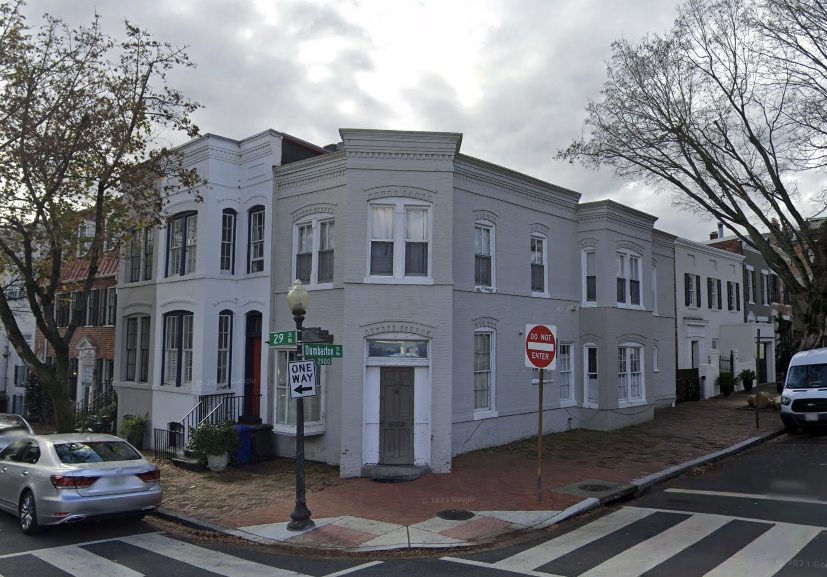
At our last ANC meeting, the house at 2900 Dumbarton St. came up for review. The owner is interested in converting it to several apartments. But what caught my eye about the property is that it is clearly another example of a former commercial building buried deep in the residential portions of Georgetown. I decided to resuscitate my long dormant series called Ghosts of Georgetown’s Market Past to dig into the history of the building!
But first: why did I instantly conclude that this was originally a commercial building? It’s due to the fact the door opens up horizontally on the corner. It is literally a corner shop. That almost always indicates that the building was constructed to host a shop on the first floor (often with the shop keeper living on the second). It’s also probably not a coincidence that the building is catty-corner to Scheele’s.
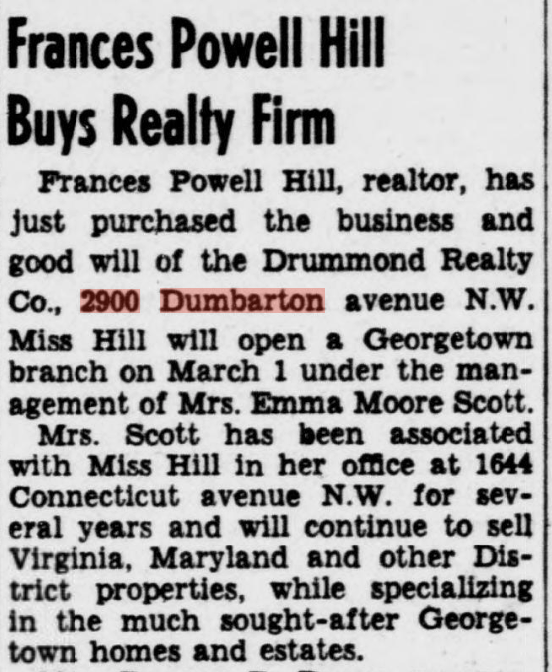
So I dove into the local newspaper archives to see what I could find. And right away I learned that while it was a commercial building, the business operating there was not a market. At least not during the period I could find evidence for. It was a real estate office:
Here is another announcement:
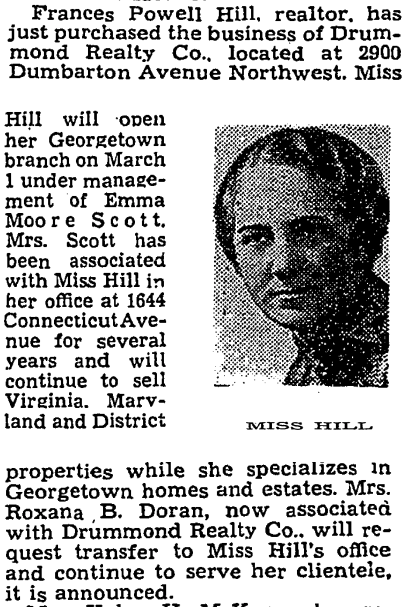
Hill bought the agency in 1942. I was able to find only a couple more ads listing this office’s address:
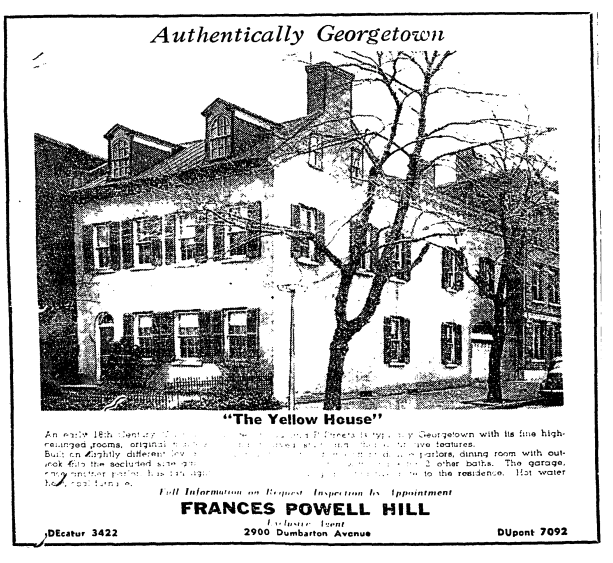
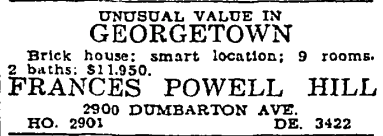
Perhaps the reason I only found a couple of ads using this office address is that Hill appears to have stopped using it only a year later:
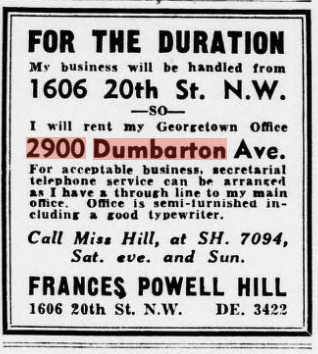
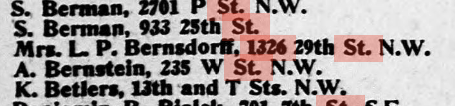
Oddly enough, I ran into a dead end trying to find older businesses at this address. But then I realized that Hill changed the address of the building. Previously it was 1326 29th St. Searching that address opened up the history. As I originally suspected, it did host a grocery store. At least as of 1918 when a Mrs. L.P. Bernsdorff operated a market there.
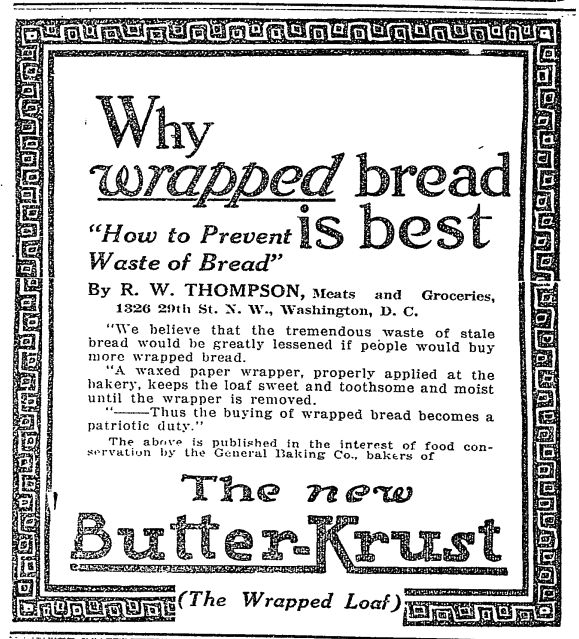
A year earlier it was apparently the R.W. Thompson grocery store:
But most of the hits I found for this property related to the rental apartment on the second story. And as this was near the hear of Georgetown’s Herring Hill district, the housing was used by Black families:
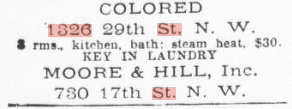
I could find no references to a commercial establishment at either address after the 1940s. So It appears the property was a grocery store in the early part of the 20th century, converted to a real estate office for a stretch around the 1940s, and then it either was used for an office or otherwise converted wholly to residential.
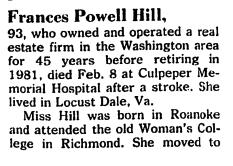
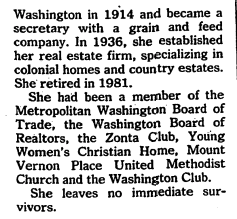
Hill lived into her nineties, dying in 1985:


















 The Georgetown Metropolitan

You must be logged in to post a comment.