
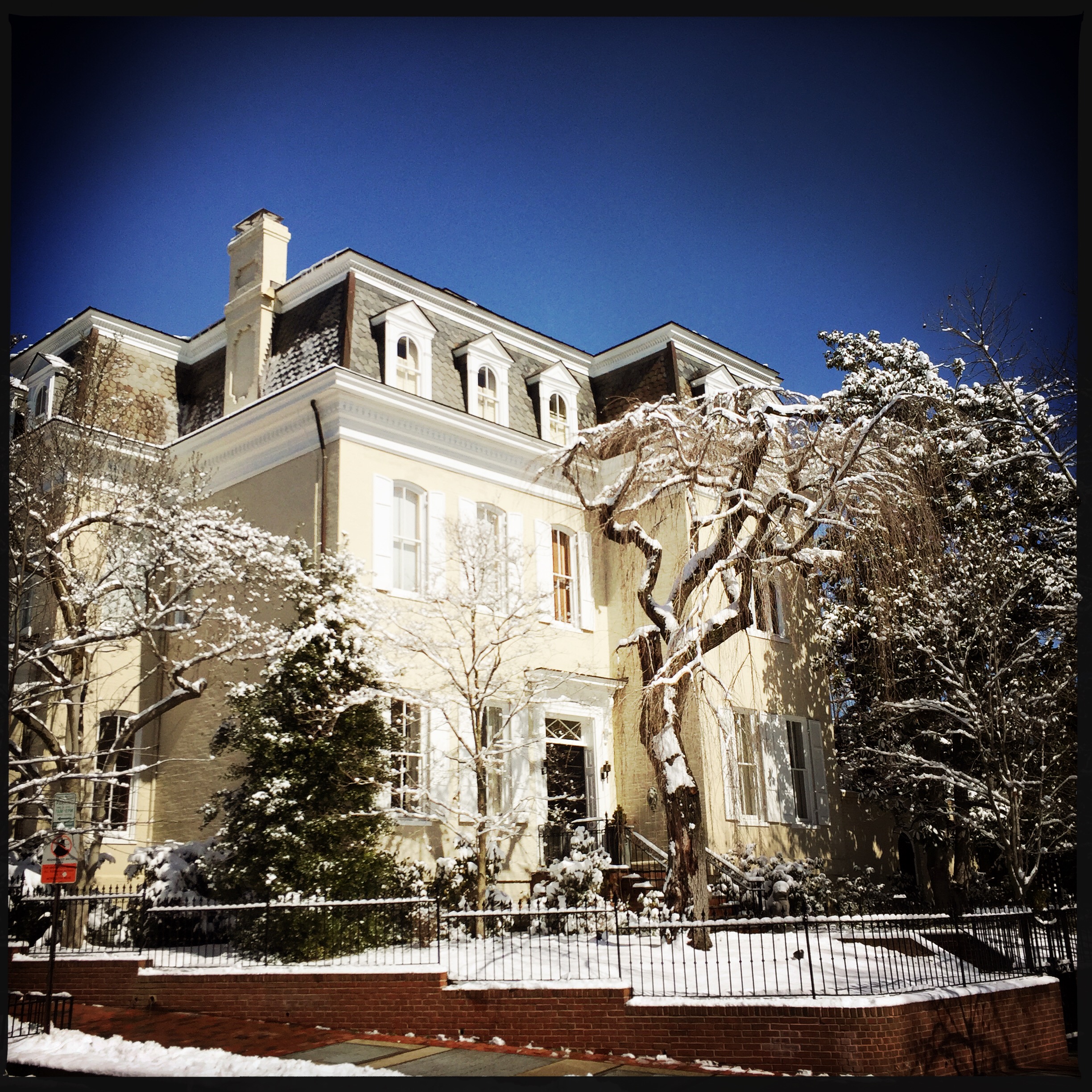
1500 block of 31st St.

At last week’s ANC meeting, the commission discussed the possibility of the development of the grounds of the Fillmore School, which is being sold by George Washington University right now. The general tone of the meeting, as reported by the Current, was one dismissive of much development of the property at all. Georgetown has some experience in the development of school parcels, and that experience should assuage the fears. But it probably won’t.
You could walk around the 1200 block of 27th and 28th streets a hundred times and never realize that the homes are less than 15 years old. They were built as part of the development of the Phillips School on Olive. There are 14 townhouses, specifically, that were constructed to mimic the variety of late-19th century homes that dominate the area. While it may be an anathema to the dominant historical preservation theory to build this way, in practice it’s seamless:
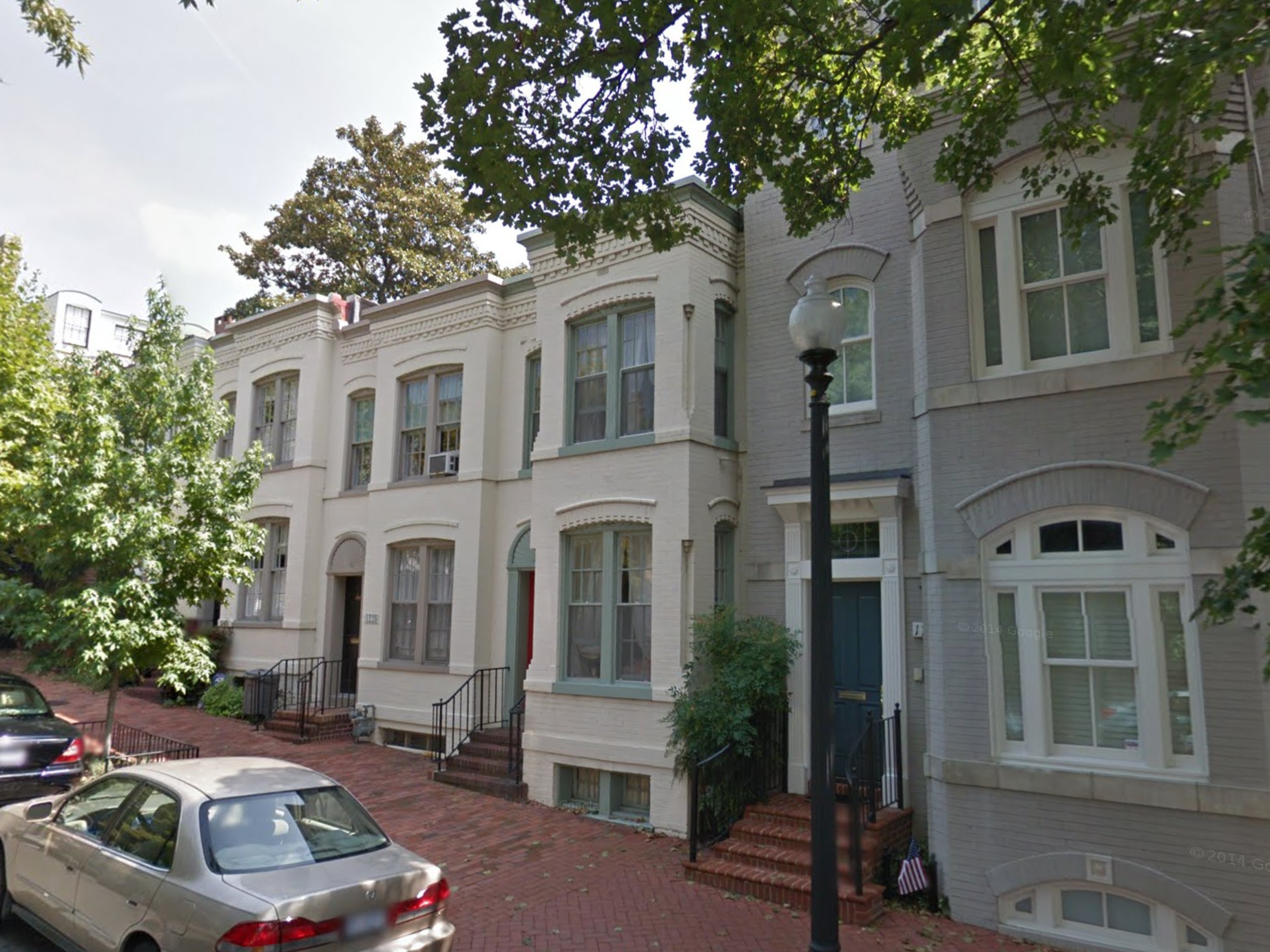
These properties came at the expense of “open space”, but they certainly contribute to consistent and pleasant streetscape of 28th St. now. Plus, they now are homes to 14 families (or singles), residences that have contributed probably hundreds of thousands of dollars to the District’s tax revenues. Continue reading
Filed under Uncategorized
 Photo by Street Sense.
Good morning Georgetown, here’s the latest:
Filed under Uncategorized

The other day, the Reddit page dedicated to DC had a link to GM’s old piece on the question of whether the proper suffix of the road called Dumbarton is St. or Ave. The original piece determined that the street was once called Dumbarton Ave., but at some point was changed to Dumbarton St. Nonetheless, the post office will deliver mail to addresses with Dumbarton Ave., and Google Maps contained both names, as you can see above.
It got GM curious, was Google still ambivalent on what the street is named? Continue reading
Filed under Uncategorized
 Photo by Joseph Gruber.
Good morning Georgetown, here’s the latest:
Filed under Uncategorized
 Photo by Ehpien.
Good morning Georgetown, here’s the latest:
Filed under Uncategorized

Last night at the ANC meeting, the often hidden, yet deep, relationship between African Americans and Georgetown was on display. The reason for this sadly infrequent foray was the decision to publicly recognize three notable Georgetown residents from the past.
As previewed yesterday by GM, the ANC took up the history of Yarrow Mamout. The discussion was one of unusual reverence for an ANC meeting. Chairman Ron Lewis pinned a copy of the famous Charles Wilson Peale portrait of Mamout to the wall, and recited Mamout’s stunning life story. As the book, From Slave Ship to Harvard, by Jim Johnson, depicted, Mamout came to America in chains, was brought to Georgetown, where he lived in bondage until he was 60. He became a master brick worker, and as mentioned last night, homes throughout Georgetown may contain his bricks.
When Charles Wilson Peale came to Georgetown to paint prominent residents, Mamout-then a freedman-was one chosen. As emphasized last night by Jim Johnson himself, there were approximately 9.2 million people stolen from Africa: Mamout is one of only two that we have a portrait of. That’s how special he is.
And the tie of Mamout to Georgetown is even deeper than the history told so far indicates. Mamout was owned by the Beall family. The Beall family was one of Georgetown’s founding families. And monuments to their wealth and influence dot Georgetown, whether it’s the Beall-Washington house, or the plaque at St. John’s to Ninian Beall. You cannot miss their place in Georgetown’s history.
Yet one of the men they owned, and whose labor they exploited to enrich themselves, has, for now, nothing but an empty lot and hope that the ground he once called home still contains his artifacts, if not his bones. It would be hypocritical and delusional to fret over that Beall-Washington house, as Georgetown currently is, and ignore the life of a remarkable man owned for decades by that same Beall family. And to the community’s credit (perhaps inspired by a Colbert King column) it is taking the matter seriously. The ANC passed a resolution asking the city to take steps necessary to preserve the status quo of the property. At the very least, the property needs to be fully excavated. Continue reading
Filed under Uncategorized










 The Georgetown Metropolitan
You must be logged in to post a comment.