 Georgetown Library fence by M.V. Jantzen.
Good morning Georgetown, here’s the latest:
- Is significant African-American history at risk on Dent Place?
- Hope Solomon is not happy that the BID still has Christmas decorations up.
Georgetown Library fence by M.V. Jantzen.
Good morning Georgetown, here’s the latest:
Filed under The Morning Metropolitan
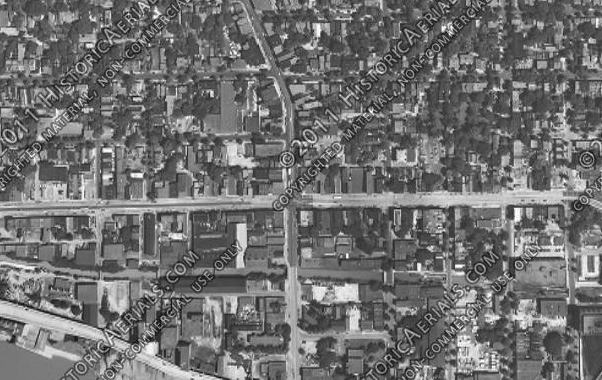
GM loves browsing around Google Maps. It’s a quick way to survey the city without leaving the couch. And GM was particularly excited to find out that a website called historicalaerials.com archives old aerial photos and enables you to browse around them. For Georgetown, the earliest shots are from 1951.
On one level, it’s simply fascinating to stare down at the shot above and know that it’s Georgetown frozen in a moment from 61 years ago. If you could zoom in close enough, you’d see bobby soxers and woodies on the streets. And more poignantly, it could be that somewhere down there a young Congressman Kennedy could be among the small dots on the sidewalk.
As for specific sites that GM noticed:

Here you can see the historic Curtis School still standing where the Hyde-Addison playground now is. This beautiful building was torn down in 1951, the year this shot was supposedly taken. Continue reading
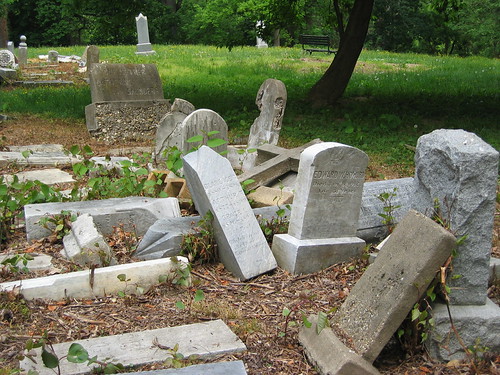 Photo by Rock Creek.
Good morning Georgetown, here’s the latest:
Filed under The Morning Metropolitan
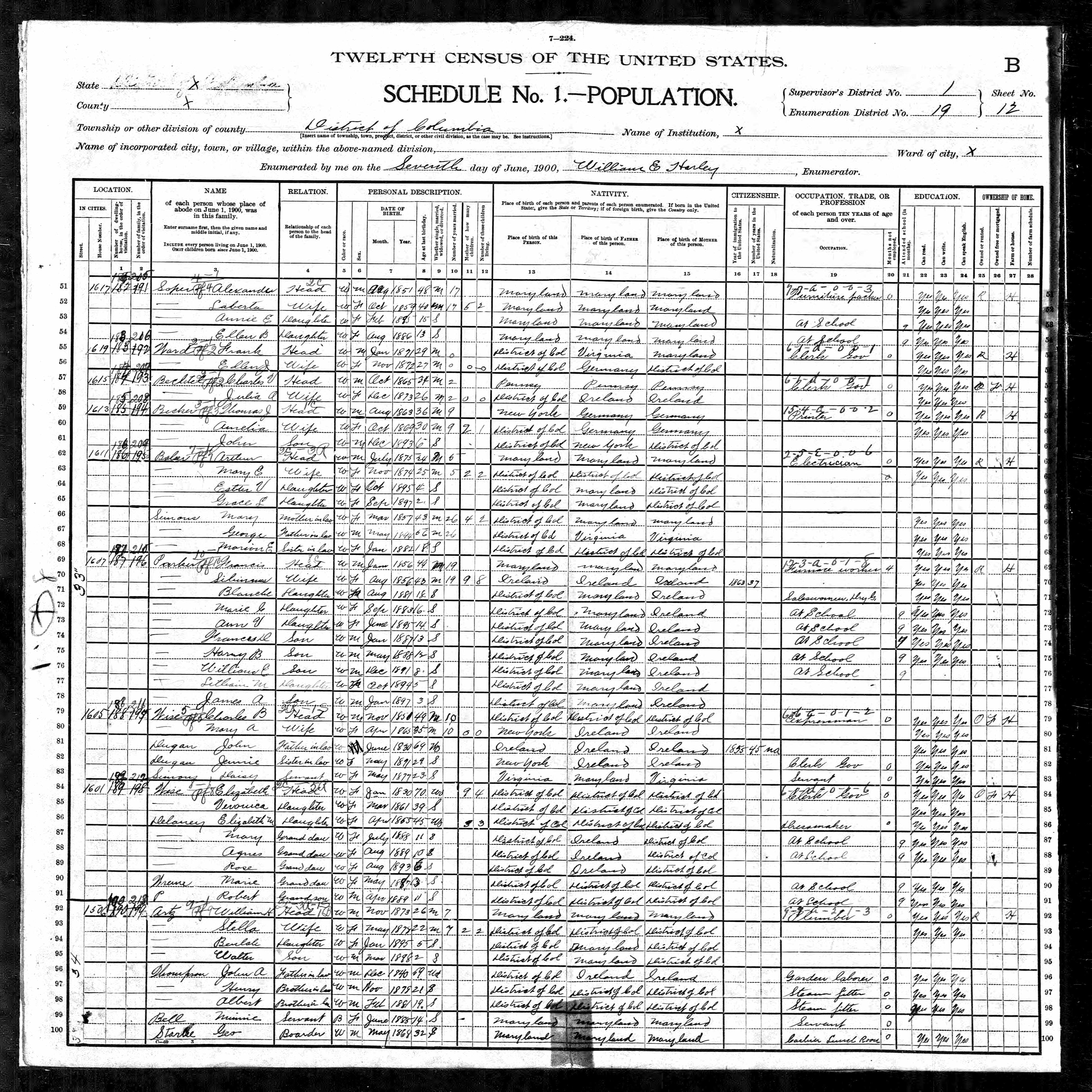
Last November, GM moved into a house on 33rd St. City records say the house was built in 1900, but that’s the default year the city lists when the house was built before 1877 or the city just doesn’t know when the building was built. But from a database GM has, he was able to identify that the original building permit was issued to a Mr. D. Haggerty in 1895 (if you’re curious when your house was built, drop GM a line). So GM’s home was built sometime around 1895, but what GM was really curious about was who actually lived there. And that’s where the Census comes in.
The Census records from 1930 and earlier are publicly available (responses to the Census are confidential for 70 years). Most of what these records get used for is to build family trees, which they can be invaluable for. And that’s why the best websites for accessing old census records are typically genealogical websites. GM uses a pay website, Ancestry.com, but a good free one is FamilySearch.org. The problem is that they don’t normally let you search the census records by address. So in order to find your house’s record, you need to learn how the forms work and how to browse them.
Start with this one from 1900. Right at the top is President William McKinley and his family. If you read down the left side you’ll see that the street is Pennsylvania Ave. The second column tells you what street number the house is (except that in this particular case, no address is listed, so maybe it’s not a great example, but you can see how President McKinley’s neighbors, the Morisi family at 1710 Pennsylvania Ave., have their house number listed). Continue reading
 Photo by DDOT.
Good morning Georgetown, here’s the latest:
Filed under The Morning Metropolitan
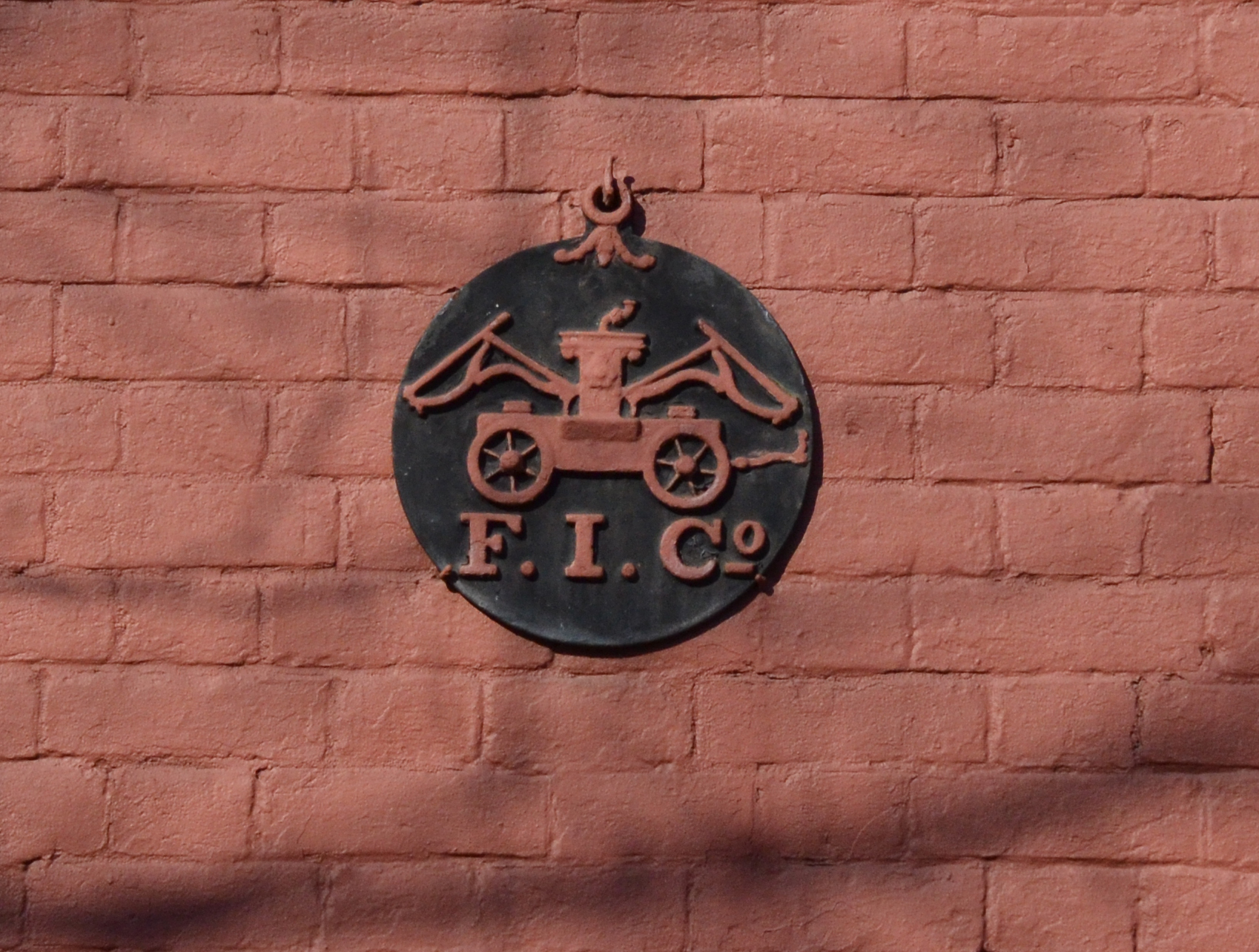
Scattered around on the front of many Georgetown homes, you’ll see plaques like the one above. What they are are fire insurance marks.
They worked basically like a big heavy insurance card. The reason you needed such a prominent proof of insurance was that there weren’t municipal fire departments. If you’re house was burning down, you would rely on the fire brigades run by the insurance companies themselves. Having the plaque ensured that they’d do the job. There were also independent fire brigades that would race to a fire and try to stake a claim on the fire, in order to get paid by the insurance company. (Like in Gangs of New York).
The mark above was for the Fireman’s Insurance Co. of Baltimore.

This one is for the Associated Firemen’s Insurance Company, also of Baltimore.
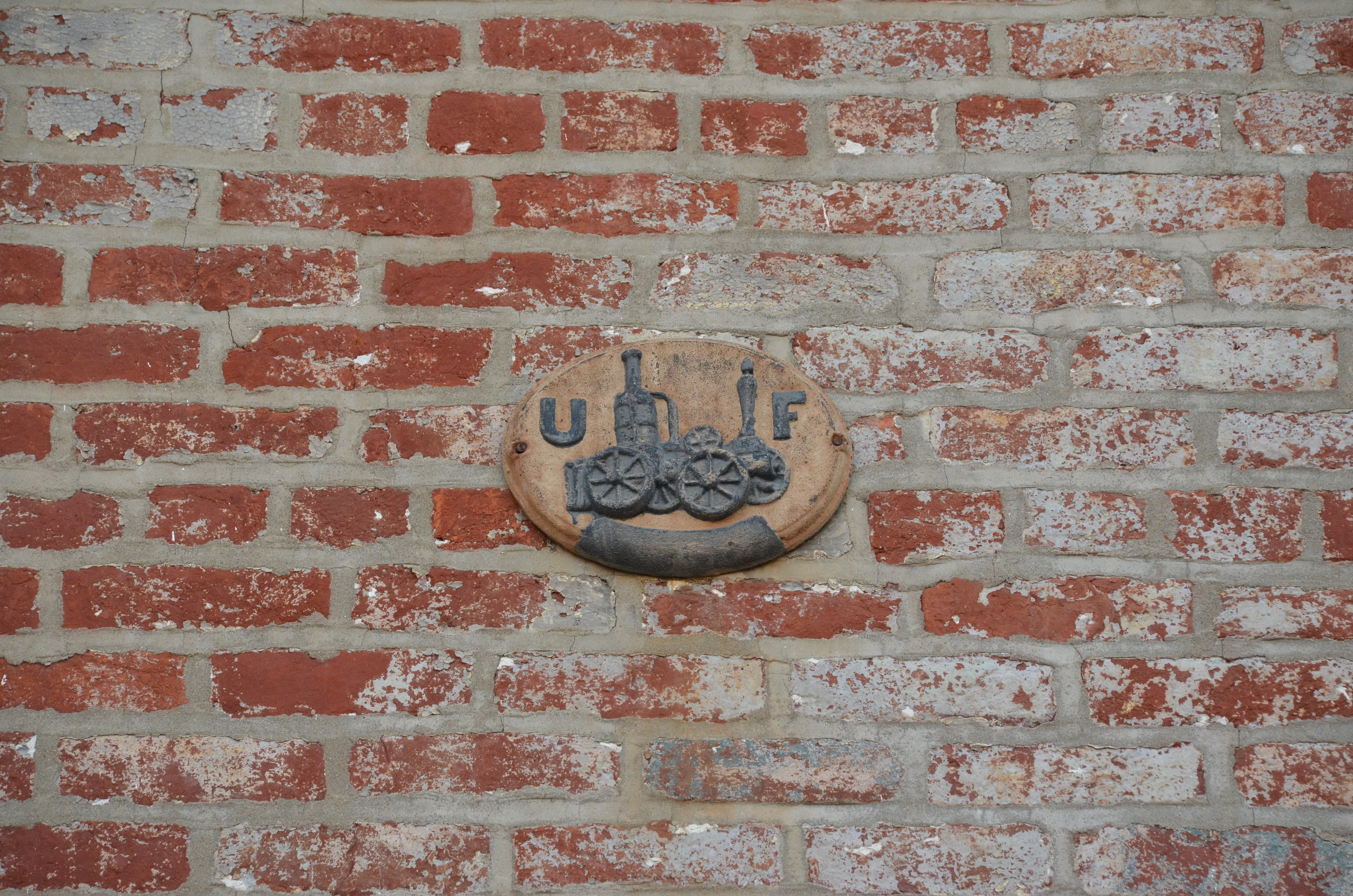
This one is for the United Firemen’s Insurance Company of Philadelphia. Continue reading
Filed under History
 Photo by Nakeva.
Good morning Georgetown, here’s the latest:
Filed under The Morning Metropolitan
 Photo by Streets of Washington.
Good morning Georgetown, here’s the latest:
Filed under The Morning Metropolitan

Being a proud District resident and a new father*, GM recently picked up a copy of the classic “This is Washington, D.C.” by M. Sasek. Browsing the book, GM saw that Georgetown gets a couple pages, and it’s pretty funny:
Georgetown is the oldest part of Washington, a district of beautiful old houses as well as of cozy small taverns and bookshops; an exclusive residential area and also an artists’ quarter. Georgetown used to be a port. It is the eastern terminus of the Chesapeake and Ohio Canel. By the way, it is named for George II, the British king, not George Washington, the American president.
Some of this was true and still is, some was true and isn’t anymore, and some may never have been true (historians can’t decide whether Georgetown was named after George II or George Beale or George Gordon, or all three). There still are some “cozy taverns” but there are probably fewer than there used to be. We all know the sad state of Georgetown bookshops…
It’s the “artists’ quarter” that caught GM’s eye. GM went into this a bit a while back when he wrote about the infamous Hamilton Arms:
According to written accounts, in its salad days the property contained the Hamilton Arms Coffee House. The coffee shop was built in 1939 by Milo Brinkley, Mary’s father. He wanted to recreate a European-style village and thought it needed a gathering place. The community and the coffee shop eventually attracted early beatniks. And speaking of salad, the coffee shop was supposedly the site of the first salad bar in the District.
Oh, and in the 1950′s it was supposedly the location of Georgetown’s first pot-party. Continue reading
Filed under History
 Photo by Ehpien.
Good morning Georgetown, here’s the latest:
Filed under The Morning Metropolitan






 The Georgetown Metropolitan
You must be logged in to post a comment.