
How could the opening of a massive stadium on the other side of DC eventually transform Georgetown?
The answer is gold. Gold Line, the be precise. But we need to start with the stadium.
Like all publicly financed stadiums sold to a gullible public by guileful billionaires, the new Commanders stadium hasn’t even broke ground before it’s become clear it was a massive bait-and-switch. Leading up to the approval to give a billion of your public dollars to billionaire and Florida-resident Josh Harris, the mayor and others said that the transit around the stadium could be handled by a new Metrorail station.
The ink was barely dry before Metro did a study and decided that a new station isn’t feasible. But it concluded that the existing Stadium-Armory station is woefully inadequate to handle the crowds. It estimated that it would take hours for the crowds to file through to their trains on game days. (Which comes to a staggering 10 times a year. Did I mention the city abolished the Circulator program before it handed over your money for this?)
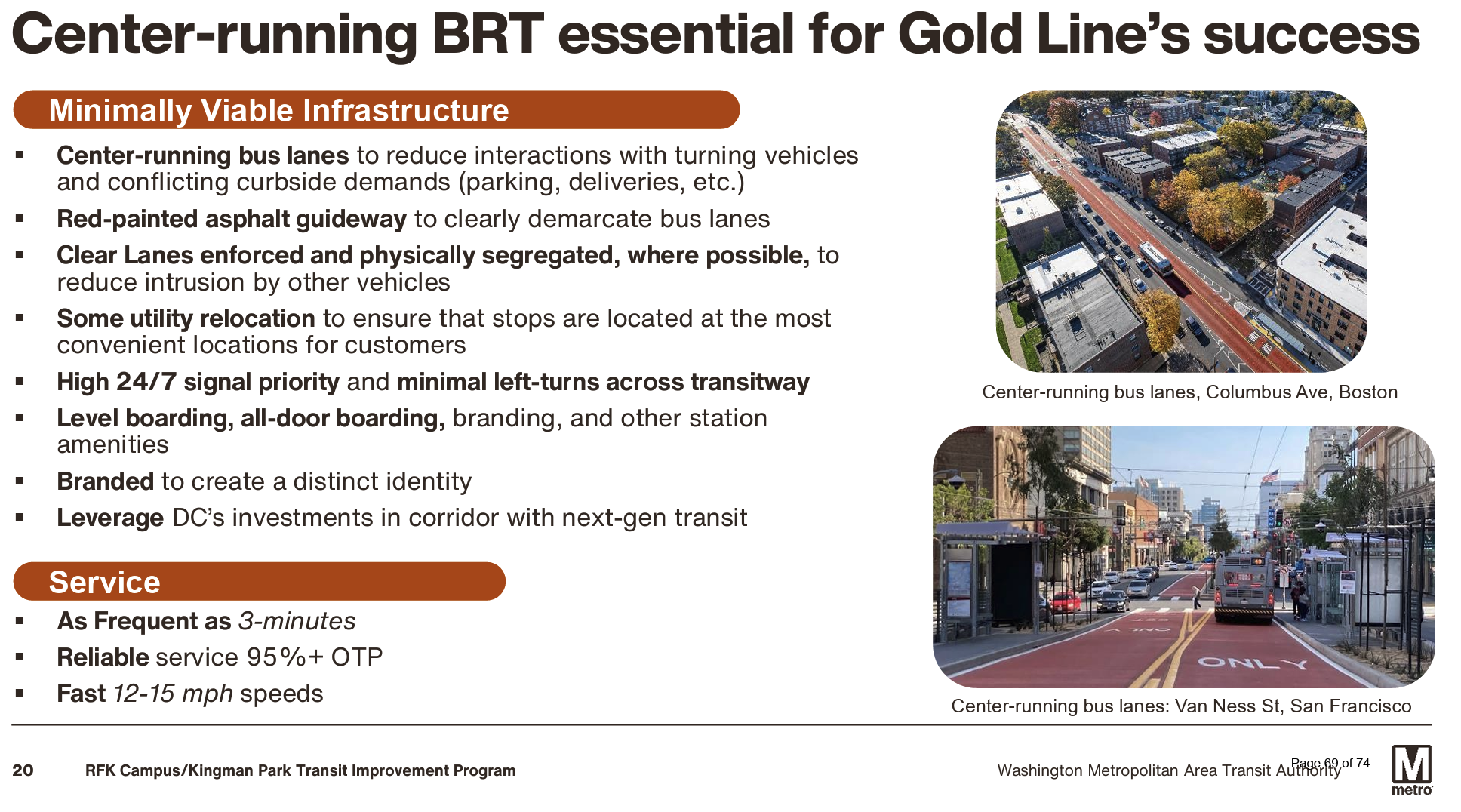
The solution that Metro has come up with is about the first good idea to come from this daylight robbery: the Gold Line.
Despite the colorful name, this would not be a new subway line like the Red line, etc. This would be a new bus. But more specifically it would be a new bus rapid transit, or BRT.
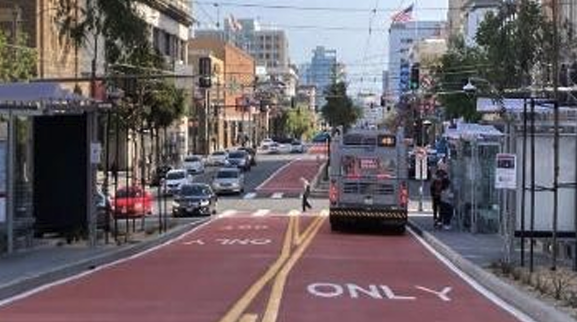
BRT is a contentious term in transit circles. When done right, it marries the ease of use and speed of a subway with the dramatically cheaper overhead of a bus network. But that’s only when it’s done right. And right means the bus having lanes entirely to themselves that physically cannot be blocked by people in their cars. The generally are in the middle of the road to avoid conflicts from parked cars. The photo above gives you a decent idea of a well designed BRT.
The problem is that often transit systems start off planning for BRT and then start making compromise after compromise (either to budget realities or entitled drivers). Eventually you end up with a BRT being nothing but a normal bus, operating on normal streets, with maybe a slightly shorter headway and a fancy paint job.
To WMATA’s credit, they appears committed to doing BRT correctly.
And this is the cocktail napkin-style map they’ve issued so far:
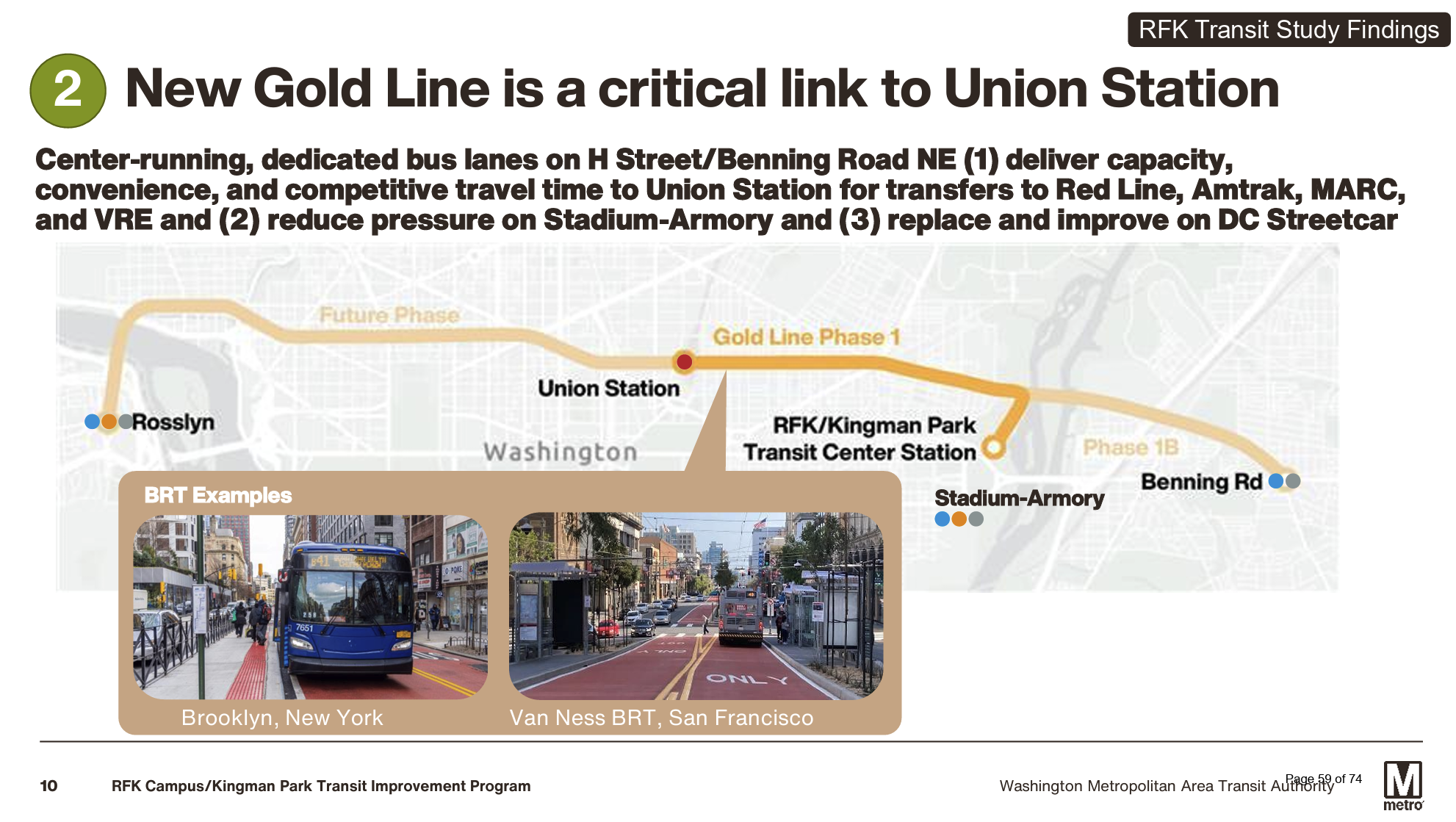
The map shows three phases. The first phase is a line from the stadium up to Benning Road, down H St. to Union Station. The second phase would bring the buses east from the stadium to the Benning Road Metro. And the third a final phase is the one that would impact Georgetown: it would run west from Union Station all the way through Georgetown to Rosslyn.
The map isn’t absolutely clear, but it appears to show the bus line travels down K St. to Pennsylvania Ave. to M St. Although the system would be designed for game days, it would run the rest of the time too.
The multibillion dollar question is this: would Metro stay committed to the full BRT model all the way through Georgetown? This would mean a new bus-only lane, separated by some sort of fencing, all the way down M St. to the Key Bridge. Does Metro have the stomach to push for (and pay for) that?
Or would they compromise like the other “BRT” systems and just turn it into another bus trundling down M St. stuck in the same traffic?
Along those lines, the map above may be familiar to long time readers because it’s an awful lot like this:
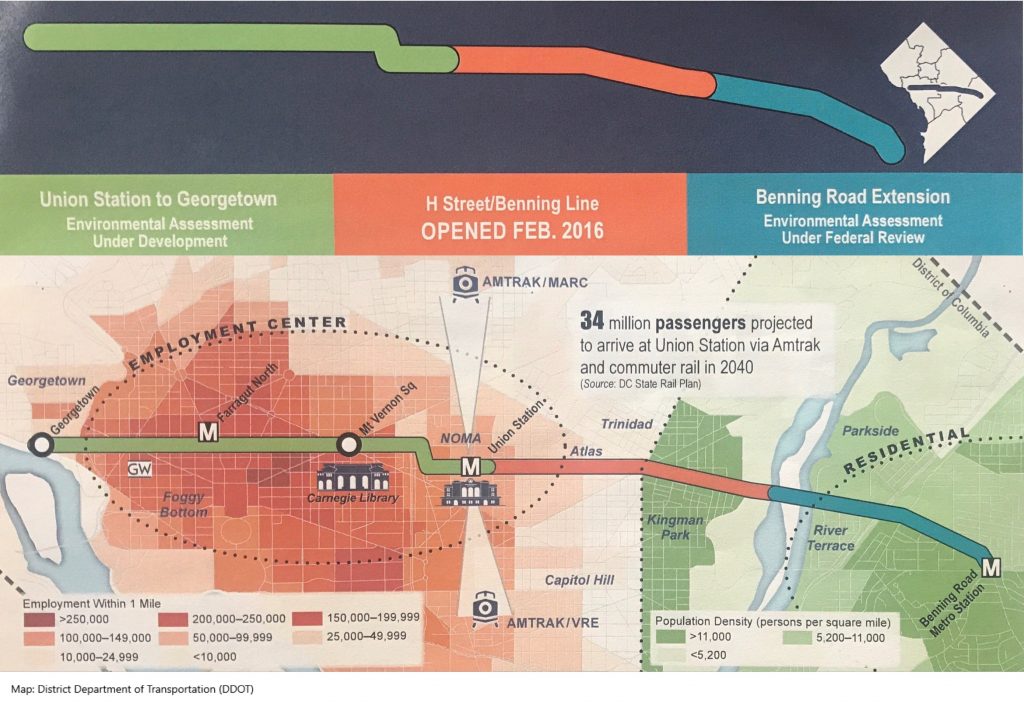
This, of course, was an early map of what the DC Streetcar was hoping to become. It’s even broken up in the same three sections! But like poor BRT systems, the DC Streetcar was victim to compromise after compromise. It was built in the traffic lane. The traffic lane was next to the parking lane. It didn’t really connect point a to b. It was, at best, a kernel of what a good system could have been built off of. But by the time it arrived the hope of a bigger system was already gone. It would stand alone and eventually die alone.
Will WMATA learn from those mistakes or repeat them?
It’s clear that the challenge of getting tens of thousands of fans home from the stadium needs a solution and some form of this will likely be it. But if it then becomes the backbone of a true BRT system is a completely different question.
But if it does actually deliver a true BRT system all the way to Georgetown it would be revolutionary for the neighborhood. It would, in theory, bring Metrorail like service finally to Georgetown, without the endless escalator rides no less. And it would completely reshape the physical form of M St. (and potentially Key Bridge). Are people ready for that? Well you’ve probably got years and years to prepare for it. Even the first phase is not scheduled to be open until the stadium opens in 2030. No word on the timing of the future segments.






Nope.