
Georgetown Time Machine: Masonic Hall

This week on Georgetown Time Machine, GM is donning a fez and visiting the old Masonic Hall on Wisconsin Ave. just above M st.
The photo comes from the Willard R. Ross Postcard collection. The photo is dated from 1911 and shows 1212 Wisconsin Ave. On the first floor is the venerable Weaver hardware store. The building dates to 1858, but this family-owned business has operated there since 1889. The family continues to operate at this same location, which it continues to own.

The hardware store operated on the first floor at the time of this photo. On the second floor was the meeting hall of Potomac Lodge No. 5 of the freemasons. (Freemason halls were always on the second floor to prevent eavesdroppers). This is the oldest masonic lodge in DC, and even predates the formation of DC.
Continue readingFiled under Uncategorized
The Morning Metropolitan

Good morning Georgetown, here’s the latest:
- How a Book Hill boutique is dealing with Covid.
- The Sandlot opened in Georgetown over the weekend, anyone go?
Filed under Uncategorized

ANC Votes to Support Water St. Improvements
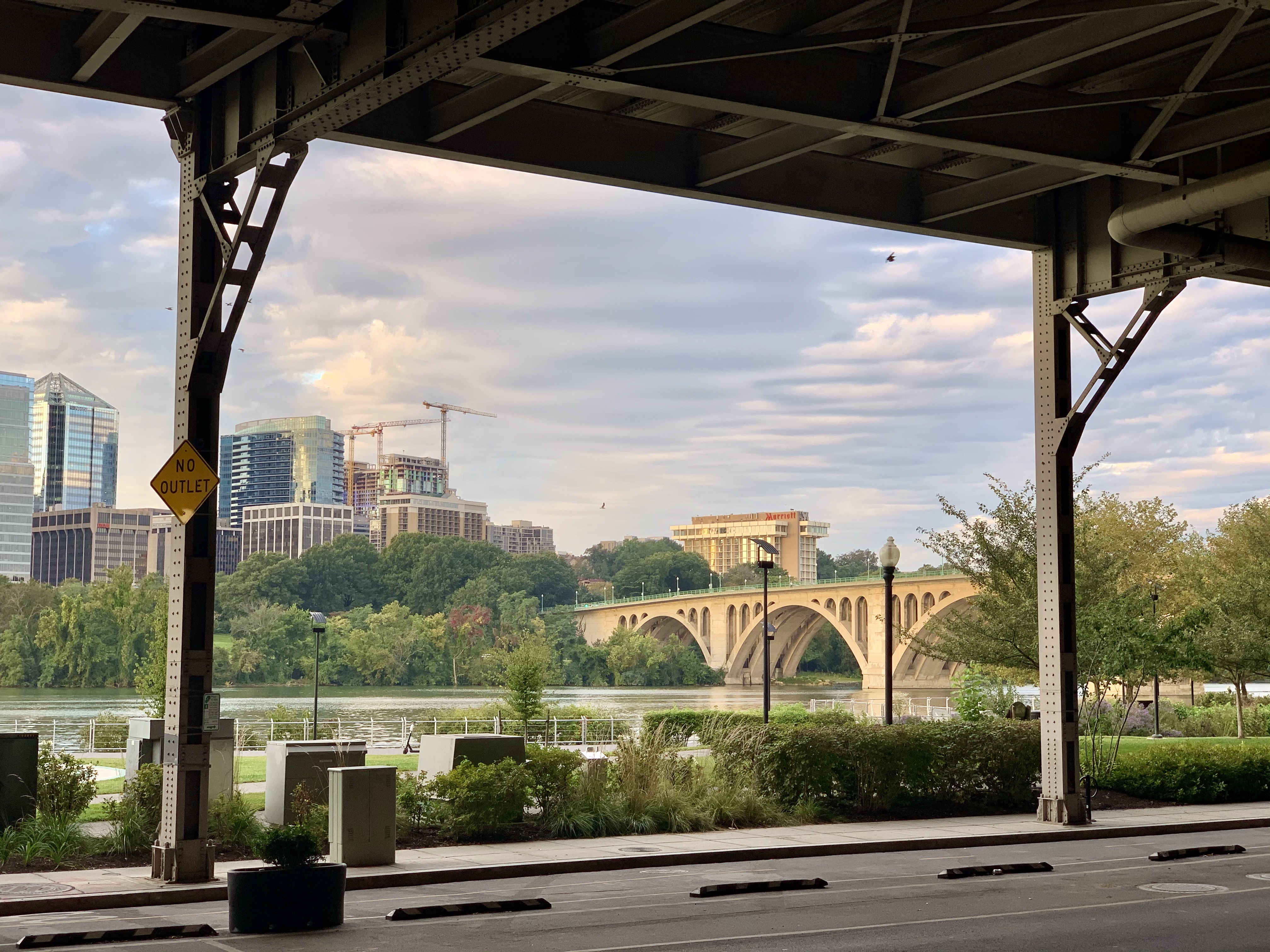
Monday night, ANC2E voted to support a proposal from DDOT to continue the improvements along Water St., including the extension of the separated bike lane.
Serious efforts to improve Water St. stretch back to (at least) 2015. That’s when the BID, led by its transportation director Will Handsfield, hired Toole Design to create a plan to improve pedestrian and bicycle safety along Water St., as well as improve the traffic management.
Central to the plan that Toole came up with was a separated bike lane on the south side of Water St. After some contentious discussions, this proposal was implemented by DDOT in 2017, and the results can be seen today.
However, two elements of the plan Toole created were not initially adopted by DDOT: the extension of the bike lane to the Capital Crescent Trailhead and the creation of a small traffic circle at 34th st. Both of these proposals were put on the back burner due to the imminent Key Bridge rehabilitation project, which needed the space.
With the rehab project complete, DDOT is now moving to complete the vision created by Toole.
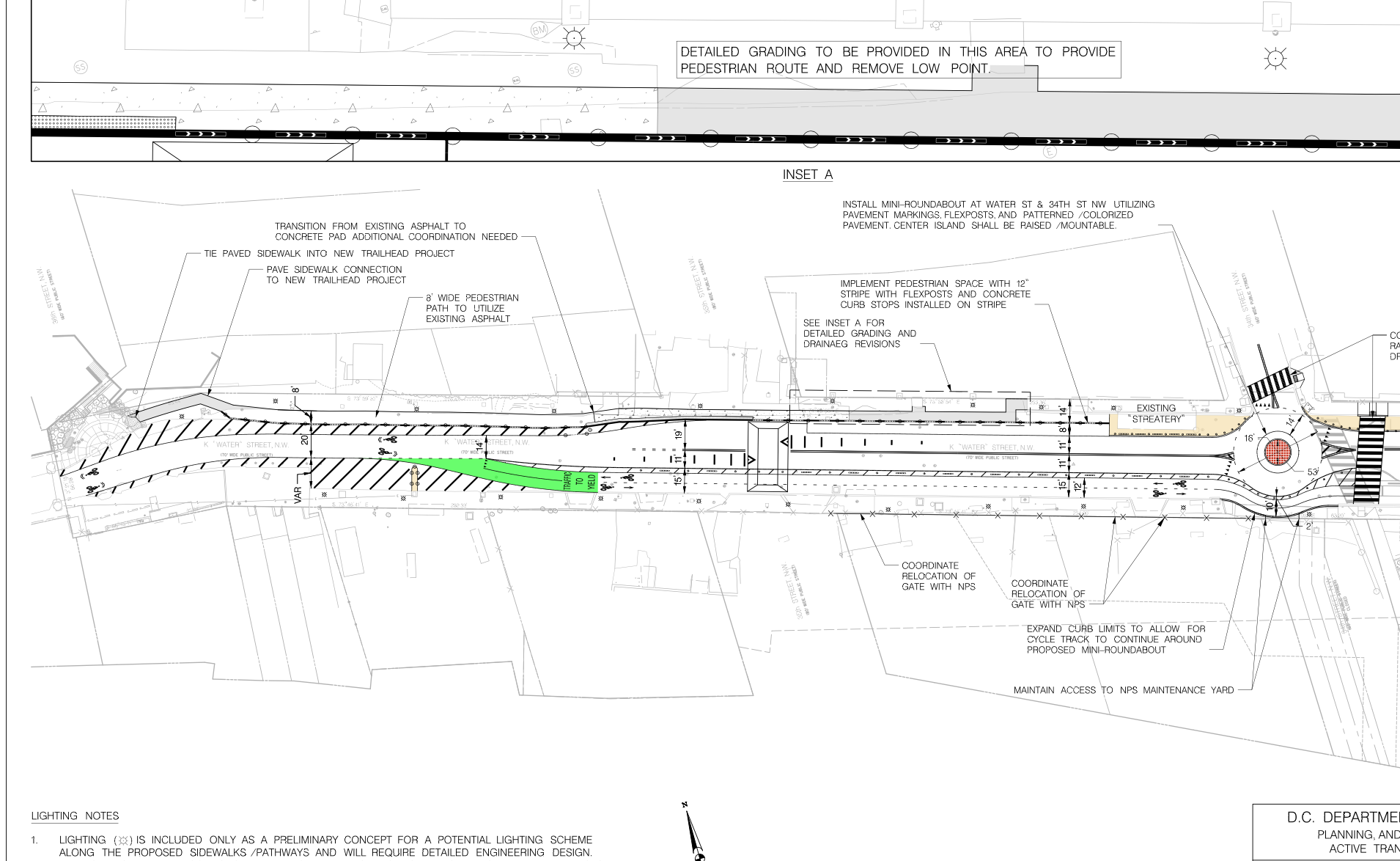
The overarching goal with this last piece is to discourage cars from heading west of 34th St. Take a trip down to Water St. on a Saturday afternoon and you can see immediately how unsafe it is. Cars come driving all the way down Water St. looking for free parking, and then need to turn around when they don’t find it. Pedestrians and cyclists are also forced to walk down the center of the street since there are no sidewalks. It’s a combustible mix and it is only a matter a time before someone gets killed or maimed.
Continue readingFiled under Uncategorized
The Morning Metropolitan

Good morning Georgetown, here’s the latest:
- Another look at the fight over the Transformers.
- How the comprehensive plan is charting DC’s future, including a future where Georgetown’s waterfront sinks below the river.
Filed under Uncategorized
The Morning Metropolitan
Good morning Georgetown, here’s the latest:
- The new beer garden at the intersection of M and Pennsylvania opens this weekend.
- GU continues to record lower Covid cases week-over-week.
Filed under Uncategorized
What’s Going On Down At The Canal
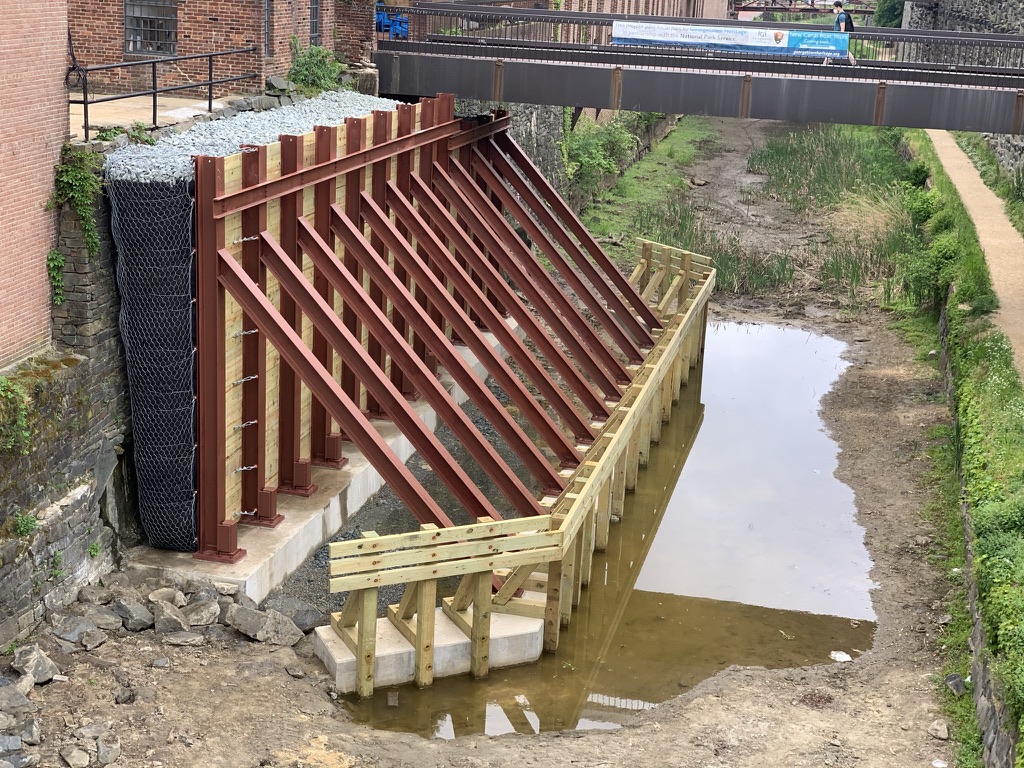
You may have noticed the construction of the above unusual looking structure along the canal recently (GM jokingly called them flying buttresses). What is it about and what’s going on with the canal generally? GM is here to help!
Like real flying buttresses, this structure (which is in the canal just west of Wisconsin Ave.) was put up in order to stabilize the adjoining wall. Last year, Georgetown Heritage, the non-profit that is leading the effort to restore the canal through Georgetown, became alarmed at the state of the old stone wall on the south side of the canal and the way it was bulging out. With the help of structural engineers, it determined that the wall was at risk of a catastrophic failure. It alerted NPS to the crisis and even commissioned blueprints for this support structure.
Continue readingFiled under Uncategorized
The Morning Metropolitan
Good morning Georgetown, here’s the latest:
- Georgetown a good place to be old!
- They finally released a trailer for that movie about the Drath murder. (The way they’ve held back this movie makes GM think it’s pretty bad!)
Filed under Uncategorized






 The Georgetown Metropolitan
You must be logged in to post a comment.