

Good morning Georgetown, here’s the latest:
- Tudor Place has reopened its gardens on the weekends.
- Someone keeps leaving gifts at the Georgetown gravestone of a girl who died in the 1850s, and nobody knows who.
Good morning Georgetown, here’s the latest:
Filed under Uncategorized
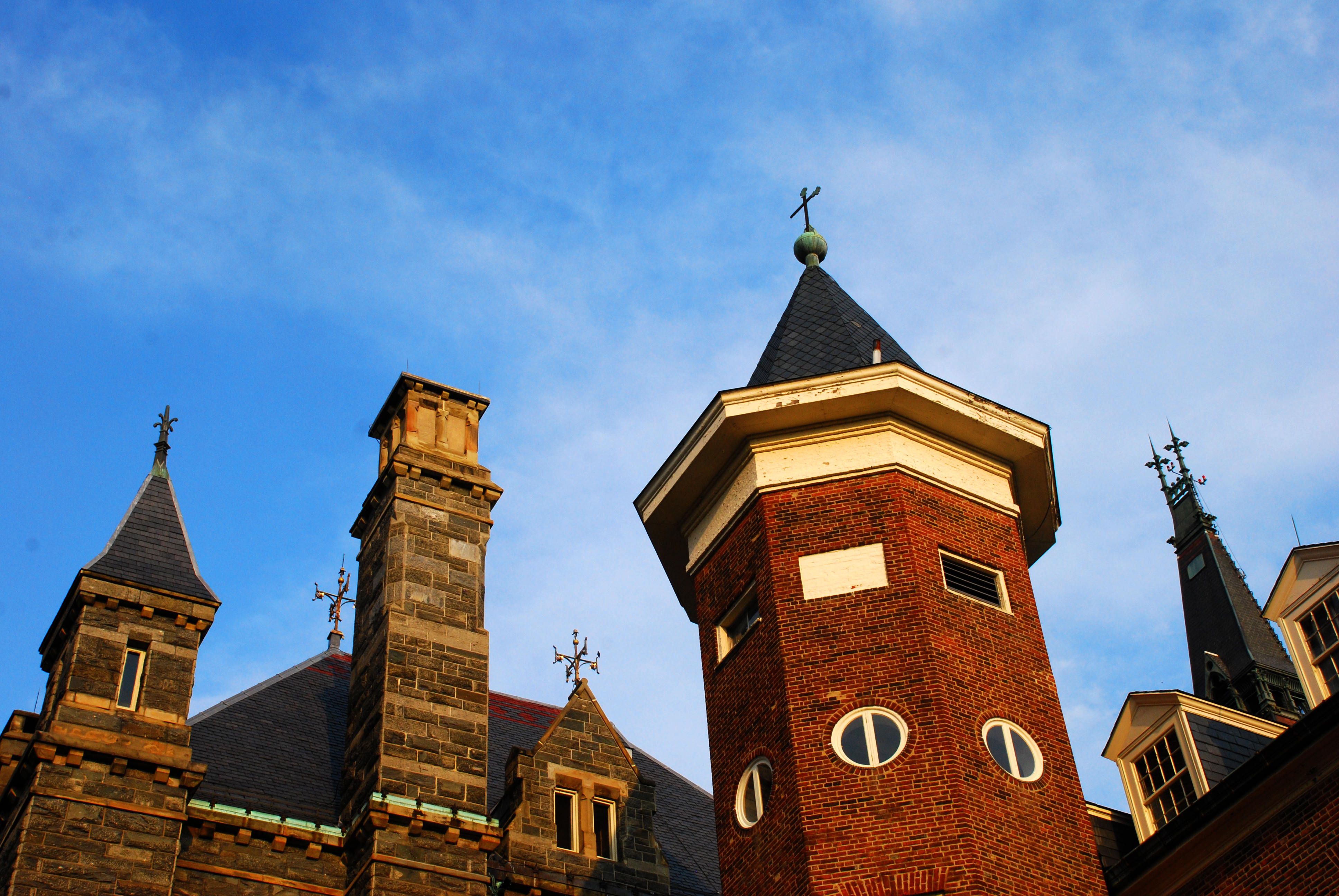
Last week, Georgetown University announced that the school any student wishing to return to campus next fall will be required to be vaccinated first.
It is far too early to predict with much confidence exactly what the Covid situation will look like in DC come this fall, but this should be welcome news for nearby residents. As GM wrote recently, Georgetown students appeared to be the primary drivers of a spike in positive Covid tests in west Georgetown in January and February. It is likely that that spike came as a result of students returning to the area following holiday travels. And such a dynamic would be at play much more severely come this fall if all or substantially all of the students weren’t vaccinated.
Again, hopefully the whole country will be largely beyond the pandemic by then. But it’s encouraging to see GU take steps to make sure they don’t become a locus of last minute flare ups for the disease.
Filed under Uncategorized

Several weeks ago, GM looked into the disparity of vaccination rates between east Georgetown and west Georgetown. Those on the east side appeared to be getting vaccines at a noticeably higher rate than their western neighbors. Since then, the disparity has only grown. In fact, on the face of it, west Georgetown has among the worst vaccination rates across the entire city. But could that be a statistical error, and if not, why does it persist?
When GM looked at it last month, about 13% of all east Georgetown residents (and this includes parts of west Dupont) had received at least one shot. Only about 6% of west Georgetowners had at that point.
As of last week, according to data compiled by the invaluable DCCovid.com site, east Georgetown had reached a level of about 21% at least partially vaccinated. West Georgetown is still mired at 9%. That is not just bad relative to East Georgetown. It’s bad compared with the entire city. Look at the map above, this shows vaccination rates by neighborhood, with darker shades reflecting higher rates. West Georgetown is among the lightest shaded neighborhoods. The overall District average is 15%, which is over 50% higher than what west Georgetown is achieving.
Continue readingFiled under Uncategorized

Good morning Georgetown, here’s the latest:
Filed under Uncategorized
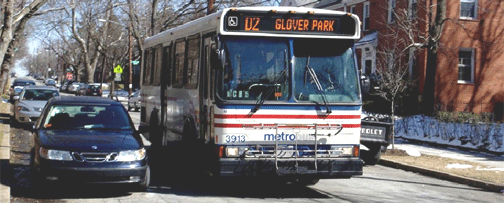
Last week WMATA announced that due largely to the money made available to it under the American Rescue Plan Act it would be able to avoid enacting the drastic service cuts it had earlier proposed.
The most dramatic of the proposed cuts affected Metrorail. They would have called for the elimination of weekend service and peak frequencies of only 30 minutes on the weekdays. But the cuts to bus service were deep and wide as well. And for a neighborhood so reliant on bus service, Georgetown would have been deeply affected.
As GM wrote earlier this month, the proposals would have:
Now all of those cuts are off the table. Although, the D1 and the D5, both of which have not been running during the pandemic, will continue to be temporarily suspended. Once demand on the D2 and the D6 returns to pre-pandemic levels, WMATA promises to restore them.
Filed under Uncategorized

Good morning Georgetown, here’s the latest:
Filed under Uncategorized

This week for Georgetown Time Machine, GM is exploring a photo of Dumbarton House from 1913. It comes from the Willard R. Ross postcard collection in the DCPL archives.
While this photo might seem not so different from how the building appears today, there are some rather huge differences!
But first, the small differences. For one, the building was not called Dumbarton House yet. It was called Bellevue and it was owned at the time by John L. Newbold. Newbold had purchased the home just the year before from Howard Hinckley.
Although the home was built in the federal period, and had many distinctive features of that style, such as the Palladian windows and the bowed rear wall, Newbold added some Georgian features. You can see these in the picture above, particularly the quoins (the blocky white parts attached along the corners) and the parapet across the top of the roofline. Since the Society of the Colonial Dames, who currently own the building, want to highlight the original federal features of the house, these additions were removed.
The house was also known as the Rittenhouse home (as mentioned in the photo). In fact Hinckley bought the house from Sarah Louise Rittenhouse, who grew up there. Rittenhouse was a prominent Georgetown leader who was instrumental in the creation of Montrose Park (the sculpture in the rose garden is dedicated to her). Rittenhouse also was instrumental in another significant act that came from the same legislation that created Montrose Park: the construction Dumbarton Bridge.
Continue readingFiled under Uncategorized

Good morning Georgetown, here’s the latest:
Filed under Uncategorized







You must be logged in to post a comment.