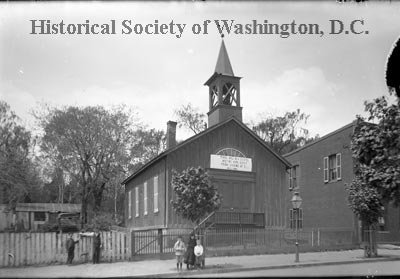
3100 block of Blues Alley
The Georgetown Metropolis
Filed under Uncategorized
Jack Evans Relinquishes Councilmember Plates
If there’s one thing people complained most about Jack Evans, it was his parking habits (it even inspired an Instragram account). And if there was anything that got Evans upset most to hear, it was complaints about his parking.
Relying on legal immunity, Evans often parked his iconic blue Chrysler Seabring on 32nd St. and P, just past the no parking sign. That immunity is no more. He has relinquished his Ward 2 Councilmember plates and now sports generic plates (apparently not ponying up for vanity plates, or specialty plates). Continue reading
Filed under Uncategorized
The Morning Metropolitan
Photo by Thomas Hawk.
Good morning Georgetown, here’s the latest:
- Turns out the Papyrus closing is part of a chain-wide closure.
- On the positive side for that block, apparently 1254 Wisconsin Ave. finally has a tenant. It’s a women’s clothing store, which used to be something GM would complain about, but now anything that’s not a bank seems like a godsend.
Filed under Uncategorized
The Morning Metropolitan
Photo by the Joint Chiefs of Staff.
Good morning Georgetown, here’s the latest:
- A more in-depth history of why streetcar to Georgetown is dead (for now).
- The Harper Macaw store is open now.
Filed under Uncategorized
ICYMI: When Wootten Met Thompson at Jelleff

In light of the passing of the great Morgan Wootten, GM wanted to revisit the time Wootten faced off with the also great John Thompson in the Greatest Game Never Played:
GM was reminded of a fantastic article from Deadspin a few years ago by the great DC writer Dave McKenna. It is all about the decades-long grudge between John Thompson Jr., the legendary Hoya basketball coach, and Morgan Wootten, the equally legendary basketball coach from Dematha high school. And perhaps the most pointed moment of the rivalry took place at the Jelleff Boys and Girls Club here in Georgetown.
As the article explains, Wootten was already a legend when Thompson, a DC native, took over the coaching job at St. Anthony’s high school in the late 1960s. Thompson was quickly successful at building a program at St. Anthony’s, and Wootten allegedly wasn’t interested in doing anything to help Thompson. The story goes that Wootten actively undermined Thompson and took steps to avoid playing St. Anthony’s. Continue reading
Filed under Uncategorized
The Morning Metropolitan
Photo by Angela N.
Good morning Georgetown, here’s the latest:
- DDOT’s really on a roll killing projects that could actually help reduce car trips to Georgetown: now it says streetcar won’t be extended here. Bet you they had super supportive Facebook posts about Greta Thunberg though.
- DC Council Chair Mendelson says that until a new Ward 2 councilmember is elected, he will handle constituent concerns.
Filed under Uncategorized
The Vast Majority of Georgetown Homes Are Victorian, Not Federal
Last week, the Washington Post published an article on living in Georgetown. It was a fairly anodyne piece focused on the real estate perspective. But it repeated a fairly common trope that GM tries (and fails) to dispel, from time to time:
Housing types range from condominiums and attached rowhouses to grand estates, many in the Federal and Georgian architectural styles.
This is wrong! There are very few Federal homes in Georgetown, and even fewer (if any) Georgian homes. You can re-read GM’s old series on architectural styles to understand what those terms really mean, but here’s a quick recap:
- Georgian: a style of architecture that was popular in the late 18th century. It is characterized by (among other things) dentil moldings, square lights (i.e. small windows) over the front door, pilasters beside the door, and double-hung windows with many small panels of glass.
- Federal: a variation on the Georgian style that arose in America after the Revolution. Shares many of the same features as Georgian, but it distinguished by Palladian windows and fan lights over the door.
You don’t have to have understood anything about those two paragraphs to grasp this more salient point: the Georgian and federal period of architecture ended by 1820. So any home built after 1820 is by definition not either Georgian or federal. And more over, it is almost certainly not stylistically of those groups either. Continue reading
Filed under Uncategorized


You must be logged in to post a comment.