
In 2011, the Dumbarton Oaks Park Conservancy was formed. The organization, inspired in part by the successful Central Park Conversancy, seeks to restore the magnificent park back to its original state as conceived by the legendary Beatrix Farrand.
Three years on, and the group has begun to display significant progress towards that goal. GM took a walking tour last week with the conservancy’s outreach director, Lindsey Milstein, and learned a great deal about what has been done, and what’s in store.
There are hugely ambitious plans for the park. But the immediate challenge-and one that threads through most of the the discussions of the park-is that presented by the invasive plants that have a foothold throughout the park.
The bulk of the visible progress against this challenge can be seen just past the park’s gate at the bottom of Lover’s Lane. As you can see above, great swaths of brush have been cleared on the hillside below Dumbarton Oaks gardens. Those tubular shapes on the hillside will remain and the plants and vegetation will grow up and over them, giving the slope ridges. This will be both attractive and prevent further erosion.
Planted among the tubes are saplings of native trees, which will eventually replace the invasive Norway maples that were reduced to stumps.
Across the stream from this hillside is the historic pump house. It has been restored, in part thanks to the Partners in Preservation grant. GM even got a peak through the newly restored door.:

The conservancy is right now highlighting its “signature project”, which is the restoration of the historic beech grove just south of the gate. There are about a dozen stately beeches in the grove, but a lot of invasive undergrowth had spring up underneath. The conservancy is clearing out that growth and planting more beeches. (If you’re not familiar with beeches, they’re the giant silver trees with a smooth bark.)
This project will take a good deal of time to complete. But the conservancy has nonetheless begun developing plans for the future. Near the top is the restoration of the historic meadows. You might not notice it, but if you cross the stone bridge and walk along the path, you ultimately pass through about 5-6 different meadows.
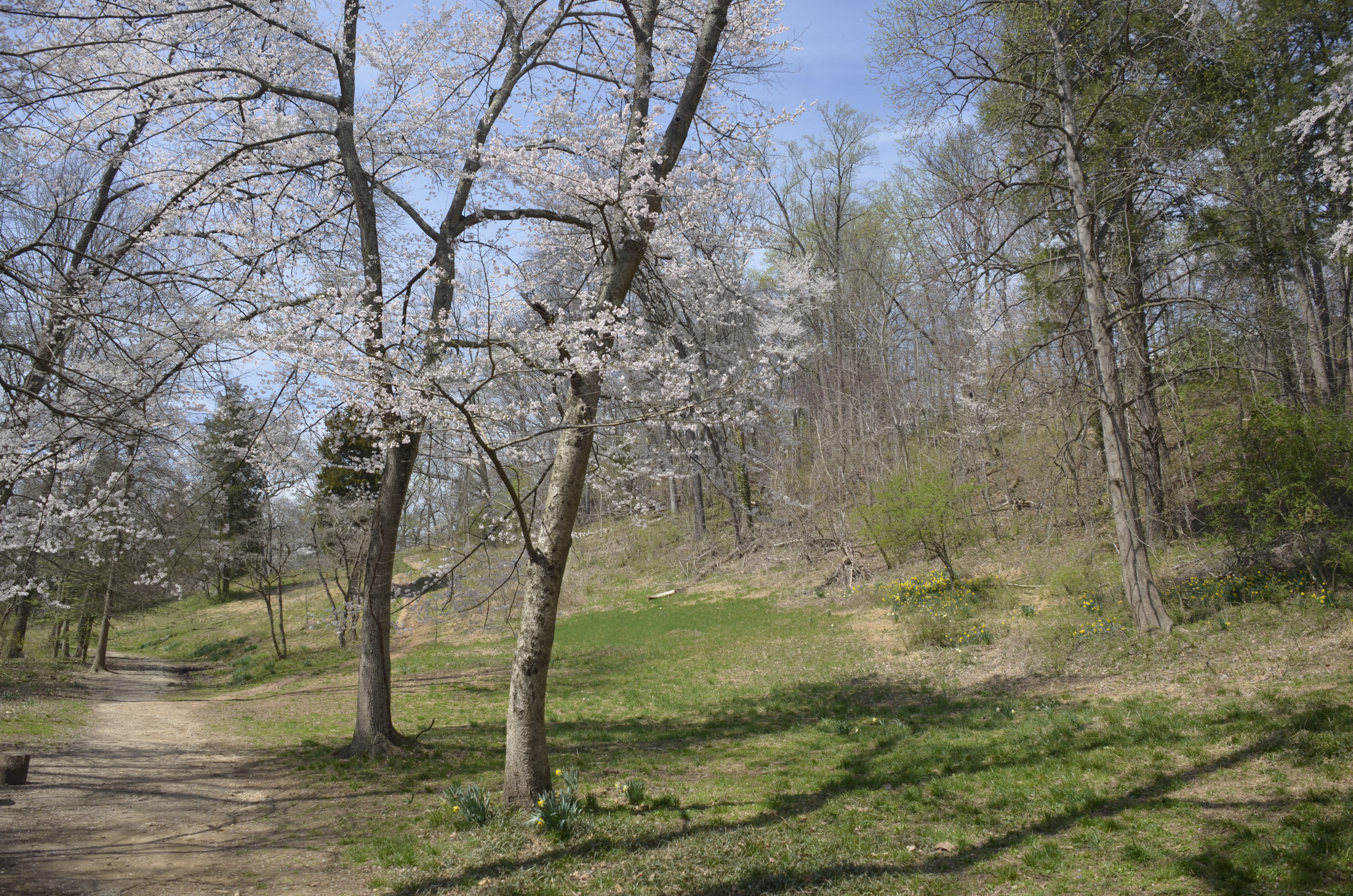
While the conservancy has already done a yeoman’s job clearing away invasive vines, etc., there is ultimately still work to be done to reintroduce sustainable plants to the meadows. For instance, the grass in a lot of the meadows isn’t appropriate. A taller more wilder-looking grass will ultimately replace it.
As the conservancy moves forward, one debate-theme will continue to crop up: Should the goal be to restore the park specifically to Farrand’s design, even if it includes non-native species, or should those elements of her design be removed? One answer won’t fit all situations, but the question will have to be answered often.
Years ago, GM read that there was a pet cemetery in the park. He went searching for it on multiple occasions and never found it. So he was tickled to be finally pointed to it (part of the reason he couldn’t find it was that it was completely overgrown:
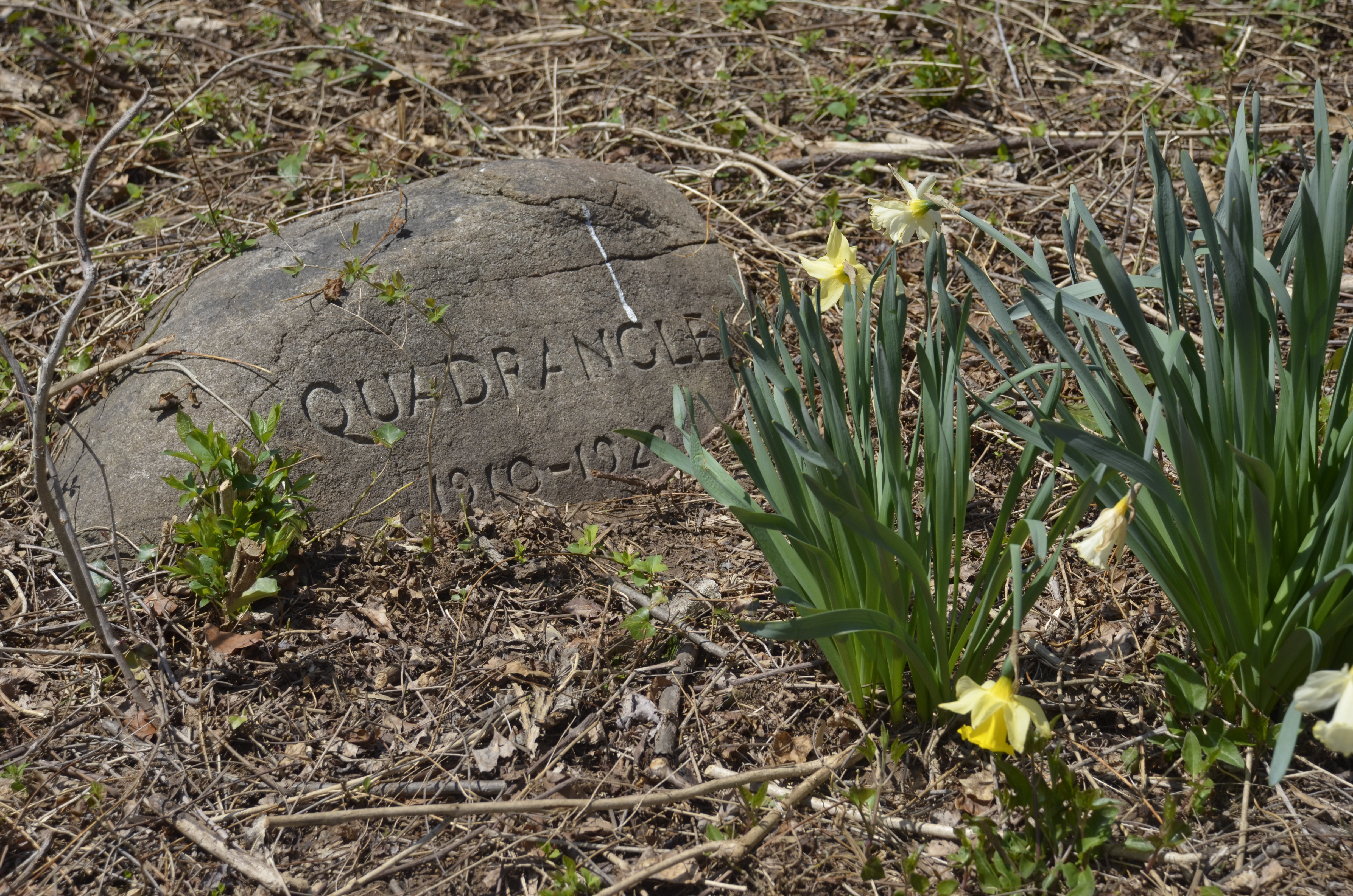
There are about 5-6 headstones, each with a funny name and dates from the first couple decades of the 20th century. But Milstein pointed out to GM that some of the dates don’t actually make sense, and there’s a chance it’s not a real pet cemetery. The suspicion is that it could be a particularly morbid type of Romantic folly, like the never functional water wheel that once stood along the path by the stream:

Lots of work remains for the conservancy, but they’ve already made visible progress and they are ambitious for that to continue. As one of the primary beneficiaries of these efforts, Georgetowners have a lot to be excited about.







 The Georgetown Metropolitan
Pingback: The gay Democrat’s dilemma