
Dumbarton Oaks
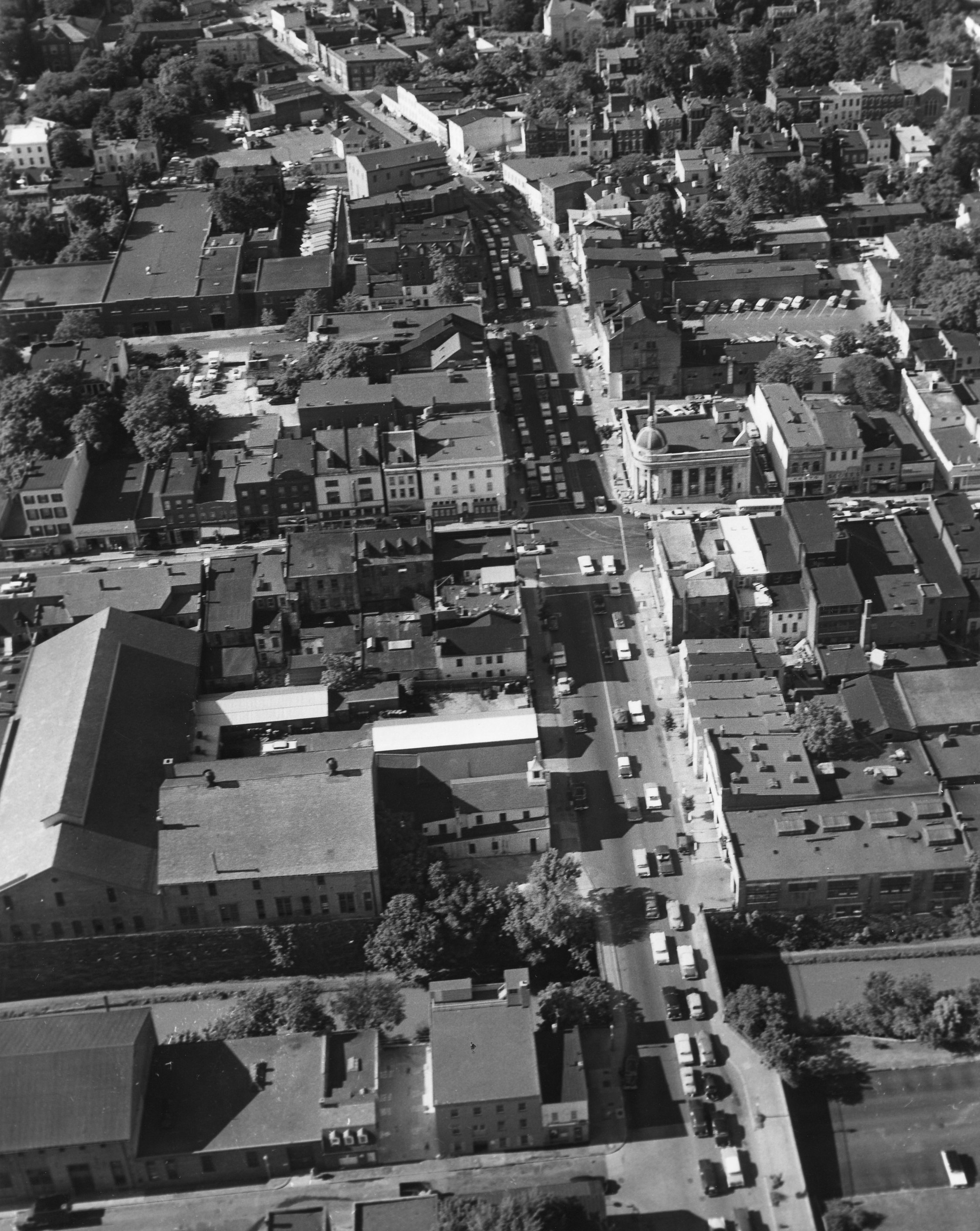
Today for Georgetown Time Machine, we’ll visit the heart of commercial Georgetown: M and Wisconsin.
The photo, part of a series of aerial shots of Wisconsin Ave., is from about 1960. For the most part, not a lot has changed between then and now in this scene. But here are some notable differences:
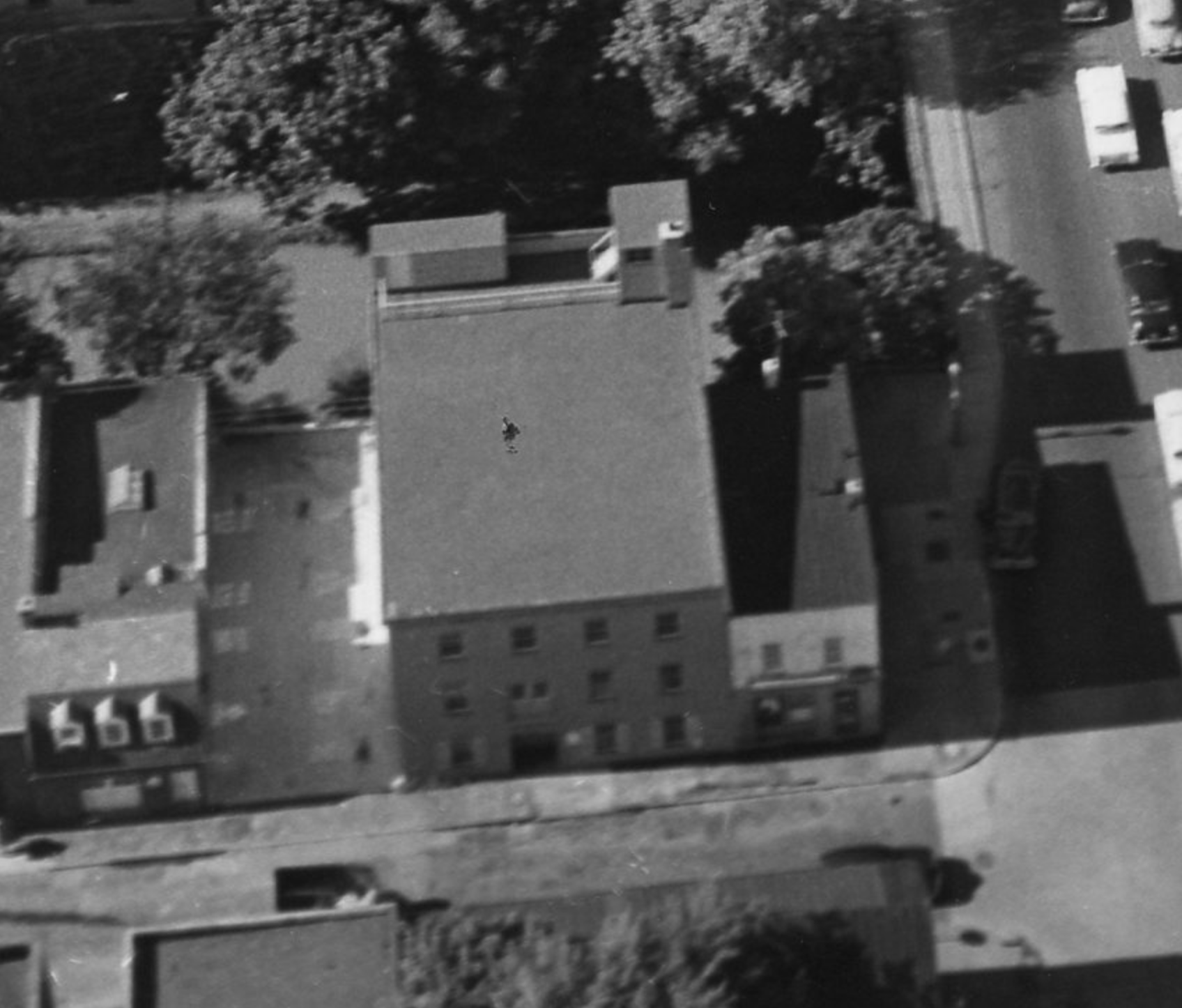
The building on the north side of Grace St. along Wisconsin Ave. is still the former building. The building now occupied by Patagonia came later. And across the street, you can just make out the old building that once stood where a surface parking lot is now.

The Georgetown Park mall was still about two decades away from being built, so you can still see what the block looked like when it hosted a streetcar facility. Continue reading
Filed under Uncategorized
 Photo by Joe Flood.
Good morning Georgetown, here’s the latest:
Filed under Uncategorized

This week for Know Your Trees, GM will visit one of the most beloved, and most endangered, American street tree: the Elm.
American elm trees were the grand dame of street trees in American throughout the first half of the 20th century. They grow relatively fast, and due to their vase-like shape, when they are planted in rows they create a natural cathedral of tree branches.
There’s an old legend that American elms were once so prevalent that Elm St. is the most common street name in America. It’s not. (It’s the 15th most popular street name). But they were awfully common street trees, but that came to an end with the arrival of the aggressive Dutch Elms Disease in the 1960s. Once beautiful rows of elms were reduced to stumps in a matter of years.
But not all collections of American elms fell to the axe. Central Park in New York City has many paths lined with them:
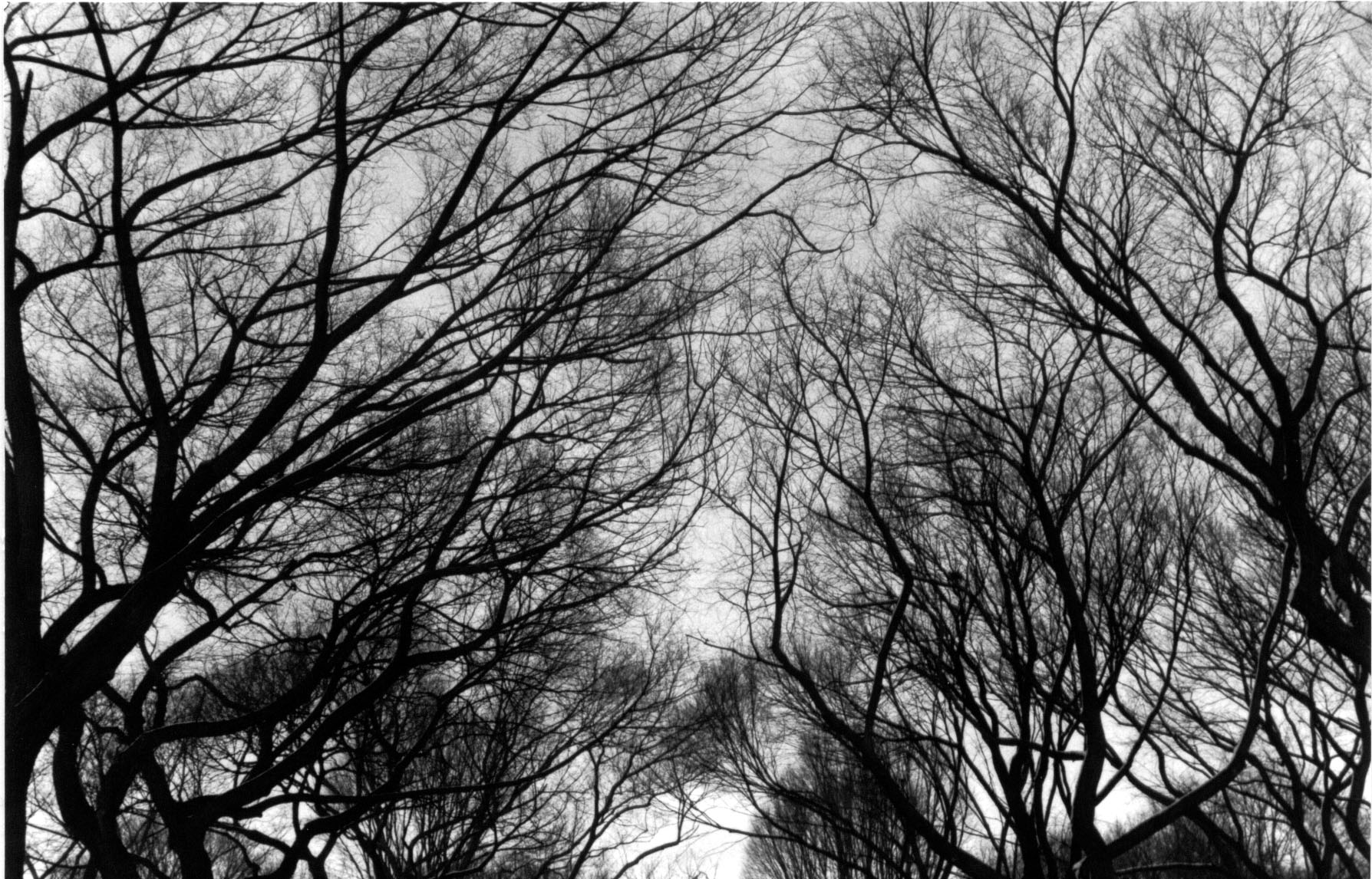
The National Mall also has many elm-lined paths. And here in Georgetown, Q St. from Dumbarton Bridge to 32nd st. has dozens of elms. Keeping these trees healthy requires expensive injections to fight of the still-rampant disease. And even then, the trees still die. Several around Q and 30th have died in recent years (but thankfully not the one right on the northwest corner, seen in the top photo above, which is one of GM’s favorite trees in Georgetown).
Luckily for future generations, some cultivars of American elms have been developed that appear resistant to Dutch Elms Disease. One of those cultivars is called Princeton elms, after the mother specimen found in Princeton, NJ. These trees now famously line the 1600 block of Pennsylvania Ave. outside the White House. They’ve been there about twelve years and continue to appear healthy.
So how do you identify an American elm?
The best way is to look for their overall shape. Mature elms are easier to identify because their shape becomes quite distinctive. They have these upward sweeping boughs which form a vase shape like this:

The branches of a mature American elm are quite massive and point off in almost unbelievable angles. The specimen at the northwest corner of Q and 31st is a good example of that. Some branches shoot of sideways from the main branch that are practically as thick as mature trees.
Younger elms are not quite as distinctive, yet they still feature that same upward arching form:
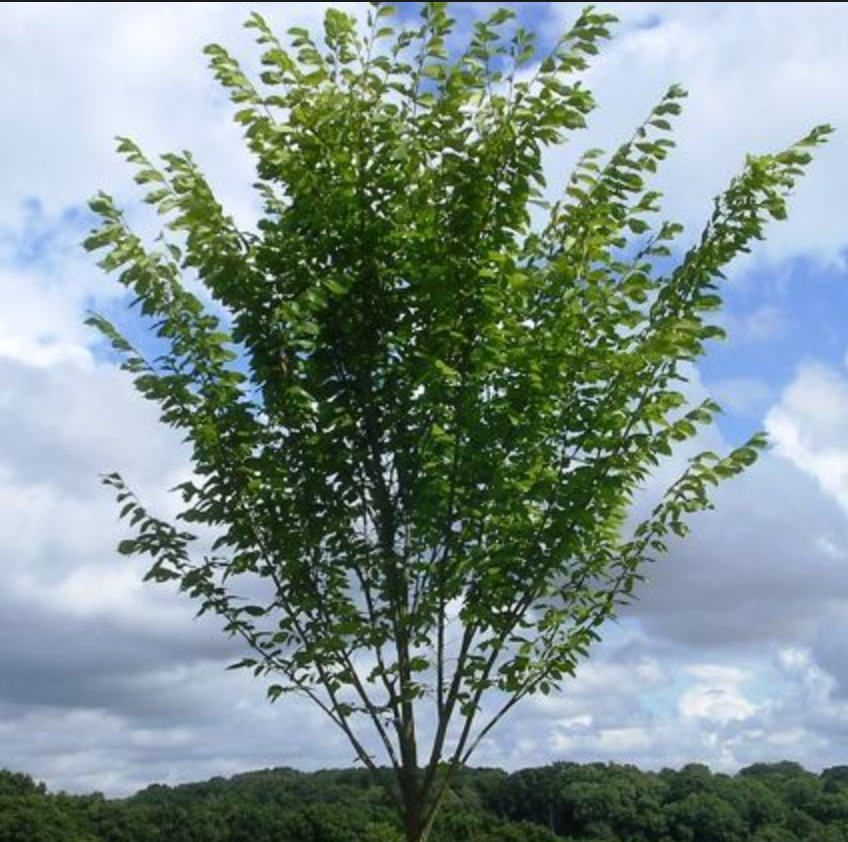
The leaves form on these branches in rows and are oval shaped, like this:

It’s easy to mistake young American elms for a similar looking tree named Zelkova. Zelkova’s are actually in the elm family. And there are a smattering of them around Georgetown. They can be distinguished from American elms by the fact that they don’t get as large and their leaves are narrower:

They tend to have a dense grouping of branches, like this Zelkova on O St.:
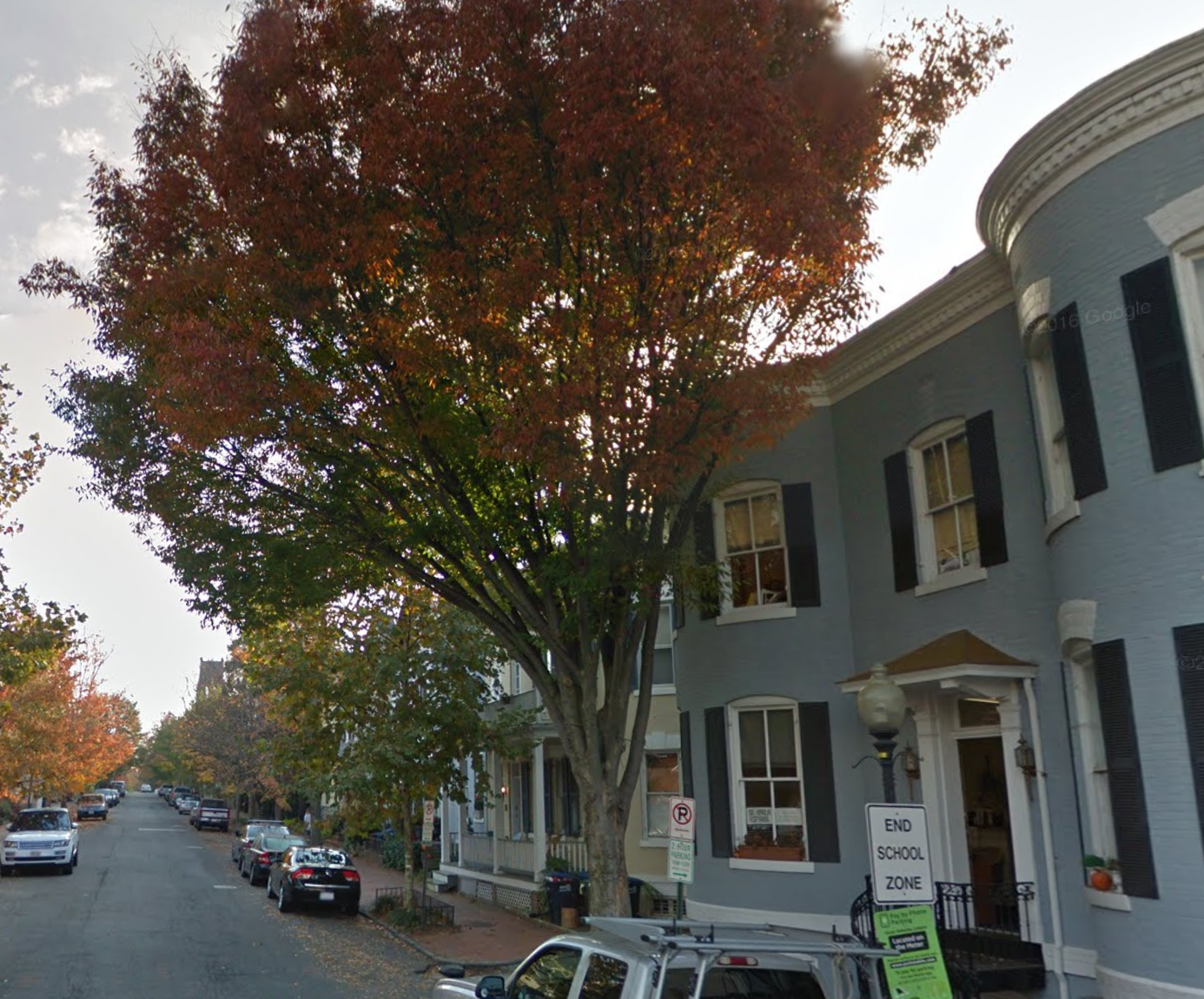
There’s one other type of elm you’ll find a lot around Georgetown, the Chinese Elm.
Chinese elm have long flowing branches that almost seem willow like:

But what gives them away is their bark, which is mottled, a bit like sycamores, but with a more reddish hue (they are much skinnier than sycamores, which should help you tell them apart):

A lot of Chinese elms have gone up around Georgetown recently. They seem to grow fairly fast and quickly provide a nice amount of shade. You can see how they’ve done that outside Wingo’s on O St. A nice large tree came down there several years ago. The elms were planted and have already recreated much of the same shade the older trees once did.
Filed under Uncategorized
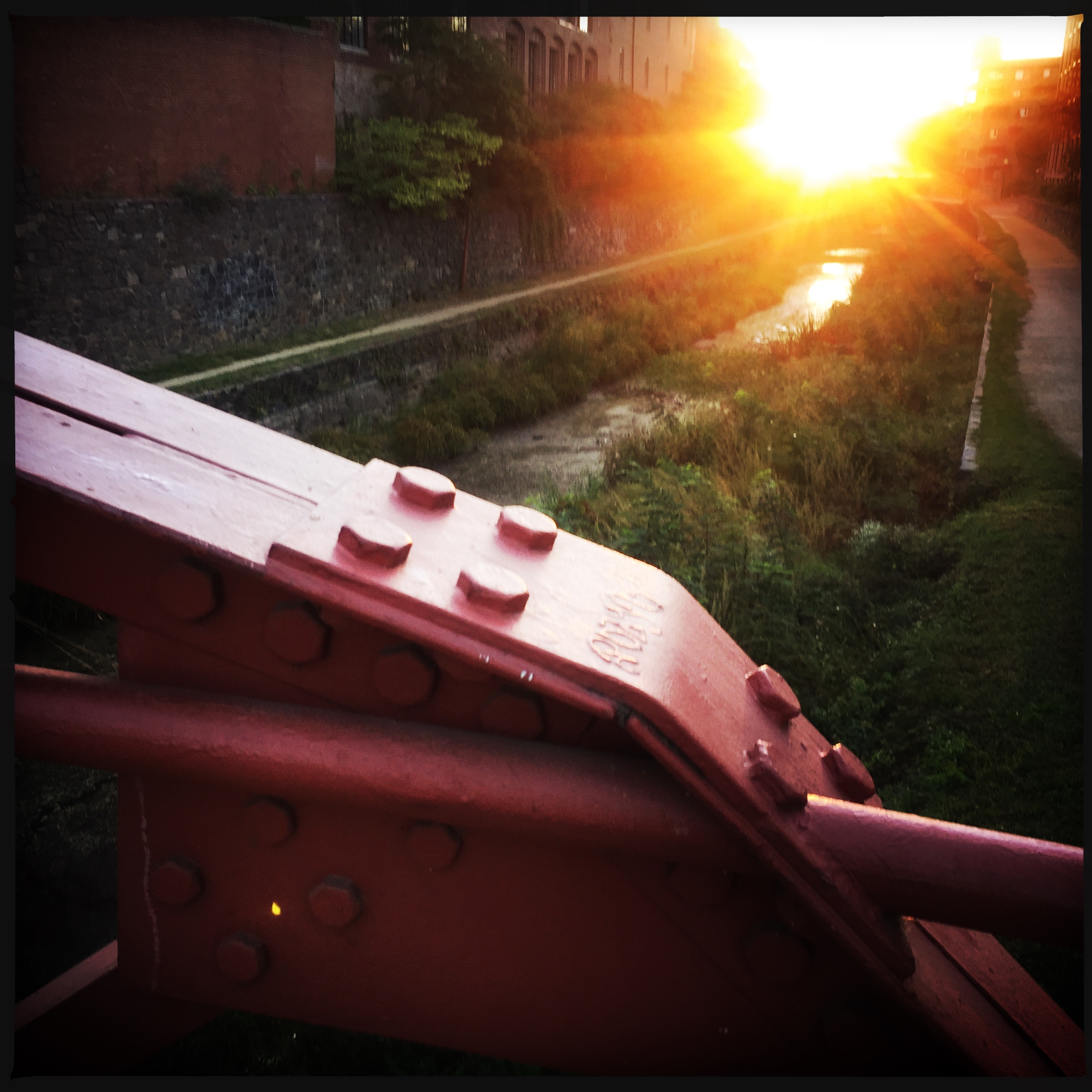
 Photo by M.V. Jantzen.
Good morning Georgetown, here’s the latest:
Filed under Uncategorized
The ANC will meet for its October session next Monday night at 6:30 at Visitation. There’s nothing particularly eye catching in the agenda, but there is one item worth mentioning.
Throughout Georgetown there are a handful of “Friends of” groups, including Friends of Rose Park, Friends of Montrose Park, Friends of Volta Park (disclosure, GM is on the board of that one), Friends of the Georgetown Waterfront Park, and so on. An effort led by ANC Commissioner Joe Gibbons is underway to get these groups together in a an informal way to coordinate efforts and share best practices. Each park has its own challenges and advantages, so sharing knowledge across groups should aid all of them. Continue reading
Filed under Uncategorized
 Photo by Jpeligen.
Good morning Georgetown, here’s the latest:
Filed under Uncategorized








 The Georgetown Metropolitan

You must be logged in to post a comment.