
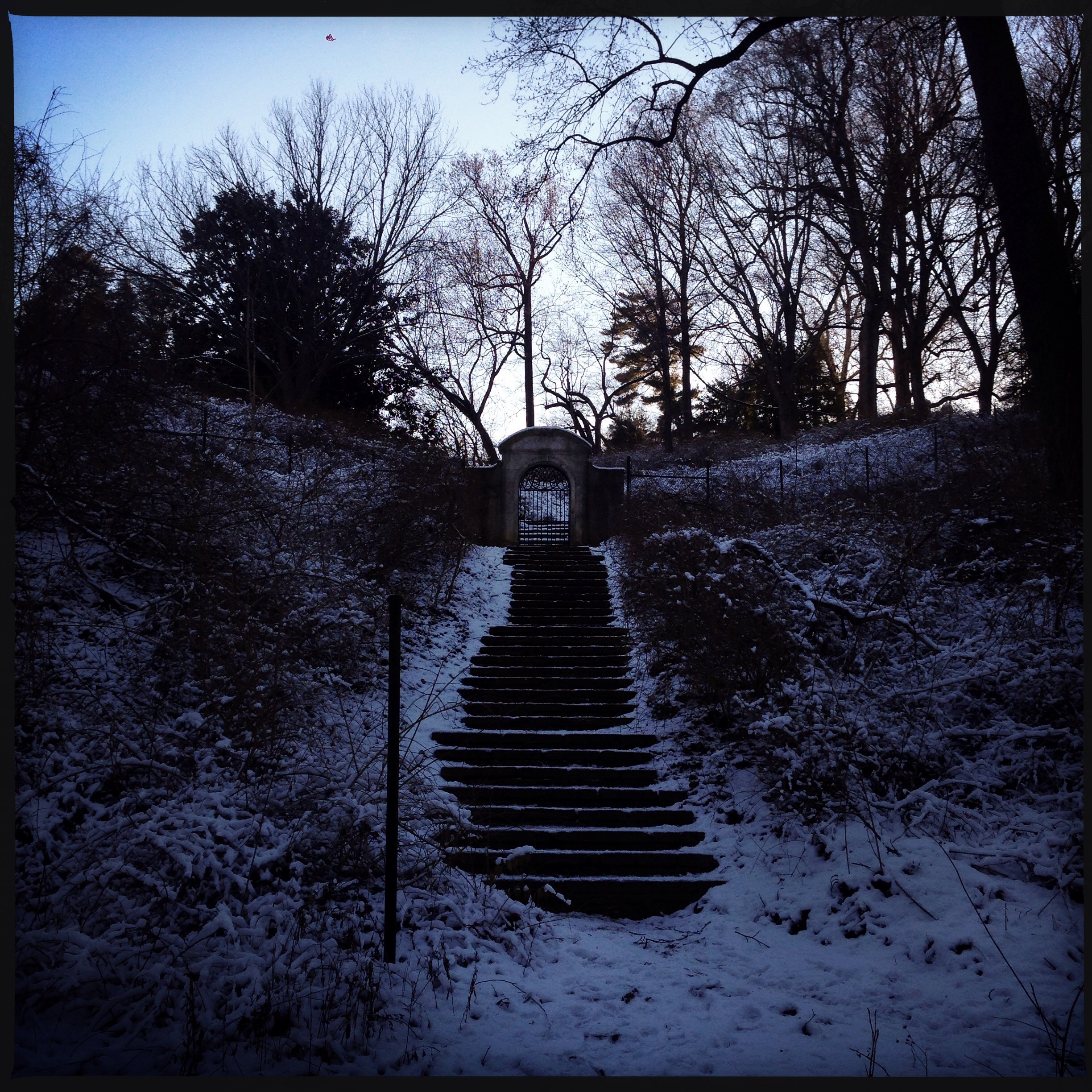
Dumbarton Oaks Park
As we muscle through the Polar Vortex, perhaps it’s some slight solace to remember that it could be worse. Like how it was February 96 years ago. It may not have been quite as cold, but it was cold enough to freee the Potomac, which was a salient fact seeing as the river was flooding.
The flood was on the week leading up to February 19, 1918. Here’s an excerpt from the Post’s report on the wreckage:
30,000 Throng Aqueduct Bridge and Neighboring Roads to Witness Wreckage Left By Weeks’ Flood
Everybody nearly was out on the Aqueduct bridge yesterday…watching the ice in the Potomac go by. There were close to 30,000 of them during the height of the rush witnessing and commenting on the greatest flood the Capital has seen since 1889…A young woman stood on the bridge. She was filled with poetry by the maelstrom which whirled beneath her feet. She grasped her escort by the arm “Ain’t it wonderful what nature can do?” she breathed. Continue reading
Filed under History
 Photo by Ehpien.
Good morning Georgetown, here’s the latest:
Filed under Uncategorized

This Thursday night at 6:30, the Georgetown Current will hold a mayoral debate at the Dumbarton House (at 2715 Q St.). The event is co-sponsored by the Georgetown Business Association and the Citizens Association.
Davis Kennedy, publisher of the Current, will moderate. But if you have any particular question you want asked, you can submit them at the front table before the debate begins.
 Photo by David Zhou.
Good morning Georgetown, here’s the latest:
Filed under Uncategorized
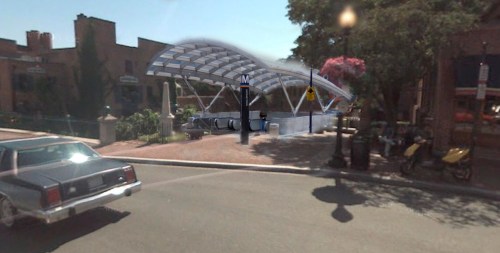
This probably belongs in the Counting-Eggs-Before-They-Hatch Department, but what would a Georgetown Metro stop do to property values?
As discussed (a lot) here, there is a renewed effort to bring one, or even two, Metro stops to Georgetown. WMATA wants to do it by 2040. Georgetown civic groups want it by 2028. Regardless of when it gets built, its construction will have a transformative impact on how people get to and from the neighborhood.
And normally when such a significant project is constructed, it results in a boost to the property values. A study by Booz Allen points supports this conclusion. The report concludes that “property value premiums due to increases in accessibility [due to the construction of rail transit] range between 3% and 40%.” The report cites several real world examples of this. For instance, the report states that the median home price for homes in Southern New Jersey that are close to the PATCO line experienced a 10% premium.
A closer corollary may be Miami. The report found that the construction of a subway impacted home prices at most only 5%. It found, however, that the impact was greatest in higher priced neighborhoods. Continue reading
Filed under Real Estate
 Photo by Random Duck.
Good morning Georgetown, here’s the latest:
Filed under Uncategorized












You must be logged in to post a comment.