GM noticed this nice piece by Jerry McCoy about a new donation to the Peabody Collection. It’s a sign from the still standing streetcar trestle over the Glover Archbold Park (which still stands). Jerry took the opportunity to link to an old movie showing a ride out the old Route 20 streetcar route that went from Union Station through Georgetown out to Glen Echo (and on to Cabin John, although the cameraman gets off at Glen Echo). Continue reading
Category Archives: History
Georgetown From The Sky: In the 1950s
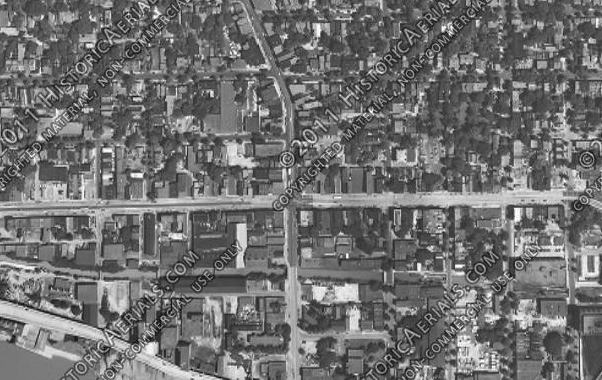
GM loves browsing around Google Maps. It’s a quick way to survey the city without leaving the couch. And GM was particularly excited to find out that a website called historicalaerials.com archives old aerial photos and enables you to browse around them. For Georgetown, the earliest shots are from 1951.
On one level, it’s simply fascinating to stare down at the shot above and know that it’s Georgetown frozen in a moment from 61 years ago. If you could zoom in close enough, you’d see bobby soxers and woodies on the streets. And more poignantly, it could be that somewhere down there a young Congressman Kennedy could be among the small dots on the sidewalk.
As for specific sites that GM noticed:

Here you can see the historic Curtis School still standing where the Hyde-Addison playground now is. This beautiful building was torn down in 1951, the year this shot was supposedly taken. Continue reading
Georgetown’s Lost Country Club
 Photo courtesy of the Library of Congress.
GM’s really into history this week! Yesterday he brought you the fascinating 1903 survey maps that show every building in Georgetown at the time. Some of the larger institutional or commercial buildings are labeled, and one in particular caught his eye. It was on Mount Hope, the large home that is at 3308 R St. GM knew this house was famous for once being owned by the legendary hostess (and Hope diamond owner) Evelyn Walsh McLean. But in 1903, this property was labeled as something called the “Dumbarton Club”. A little digging turned up this description from the 1951 book “A Portrait of Old George Town” by Grace Dunlap Ecker:
Mr. Robinson’s beautiful daughter, Margaret, married Thomas Campbell Cox, son of Colonel John Cox, and they lived at Mount Hope until they moved to Gay Street. I remember Mrs. Cox as an old lady, still beautiful, and regal in bearing. The Weaver family lived there after that until the early 1900’s, when this place was used as the Dumbarton Club. It had very good tennis courts, and for a while a nine-hole golf course where the suburb of Berleith [sic] is now.
So Georgetown once had a country club? Somehow GM’s not very surprised.
Great Old Survey Maps For Georgetown
After writing Monday’s article on the Census and how it can tell you the stories of the former inhabitants of your home, GM came across a fantastic resource from the Library of Congress. It is a page called “Researching Historic Washington, DC Buildings” and it includes dozens of links to databases and collections of materials with reams of information on old DC buildings.
But one resource GM found particularly interesting. It’s a digitalized version of Baist’s Real Estate Atlas of Surveys for Washington DC. It’s a highly detailed map of every street and building in the city from the turn of the last century. Specifically it was published in 1903, but GM doesn’t see his home on the map, and as discussed on Monday, there were residents in his house at least by 1900. But nonetheless, it reflects what buildings were there around that time.
Here are the maps for Georgetown:

Here’s southeast Georgetown. Note the wooden bridge for K St. across Rock Creek, the factories and lumber yards on the water, and the fact Virginia Ave. used to go across the waterfront. Continue reading
Filed under History
Walls Can’t Talk But the Census Does
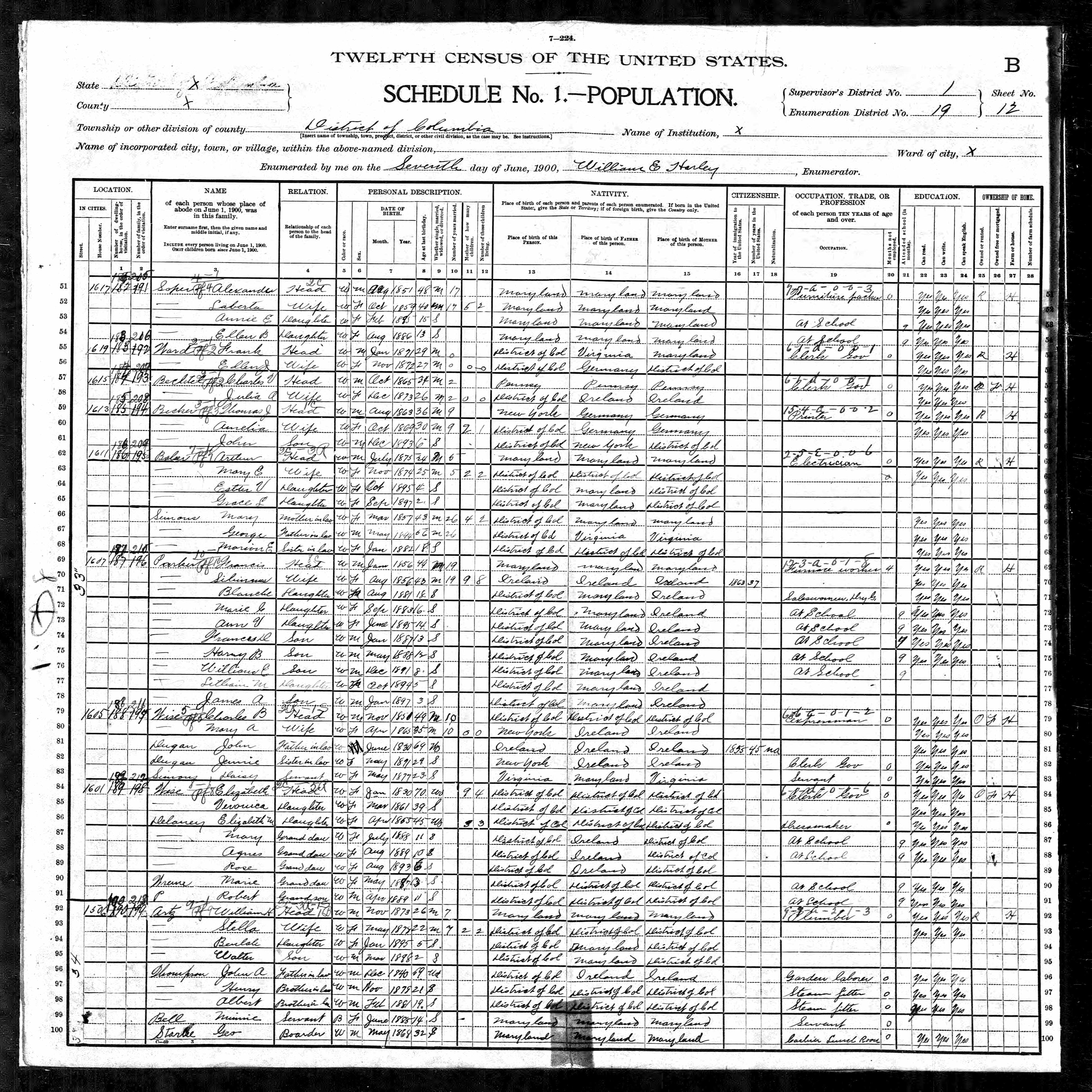
Last November, GM moved into a house on 33rd St. City records say the house was built in 1900, but that’s the default year the city lists when the house was built before 1877 or the city just doesn’t know when the building was built. But from a database GM has, he was able to identify that the original building permit was issued to a Mr. D. Haggerty in 1895 (if you’re curious when your house was built, drop GM a line). So GM’s home was built sometime around 1895, but what GM was really curious about was who actually lived there. And that’s where the Census comes in.
The Census records from 1930 and earlier are publicly available (responses to the Census are confidential for 70 years). Most of what these records get used for is to build family trees, which they can be invaluable for. And that’s why the best websites for accessing old census records are typically genealogical websites. GM uses a pay website, Ancestry.com, but a good free one is FamilySearch.org. The problem is that they don’t normally let you search the census records by address. So in order to find your house’s record, you need to learn how the forms work and how to browse them.
Start with this one from 1900. Right at the top is President William McKinley and his family. If you read down the left side you’ll see that the street is Pennsylvania Ave. The second column tells you what street number the house is (except that in this particular case, no address is listed, so maybe it’s not a great example, but you can see how President McKinley’s neighbors, the Morisi family at 1710 Pennsylvania Ave., have their house number listed). Continue reading
Bayou Documentary Looking Towards Finish Line
As described in yesterday’s Current, a small group of dedicated filmmakers have been working on a documentary of the legendary Bayou club that once stood on K St., where the Loews Theater is now. According to the Current:
For the creators of a documentary on The Bayou nightclub in Georgetown, a dawdling approach has turned out to be the right fit…But after 14 years of soaking in The Bayou’s posthumous wealth of anecdotes and artifacts, the team members now speak of the venue with intimate affection. They describe it as a complex, offbeat and raucous place that survived its decades on the Georgetown waterfront — on the site beneath the Whitehurst Freeway that’s now a Loews movie theater — by constantly shifting identities.
“Once we looked under the hood and saw this engine with odd parts and gunk and weird assembly … it became a story worth coming to,” said writer Vinnie Perrone, a former Washington Post staffer who has interviewed subjects for the documentary.
After fourteen years, the filmmakers are close to putting the final touches on the project. But they need cash to get it over the finish line. So check out the trailer up top, and if you want to see more, check out their Kickstarter page and pitch in.
Filed under History
Georgetown’s Fire Insurance Marks
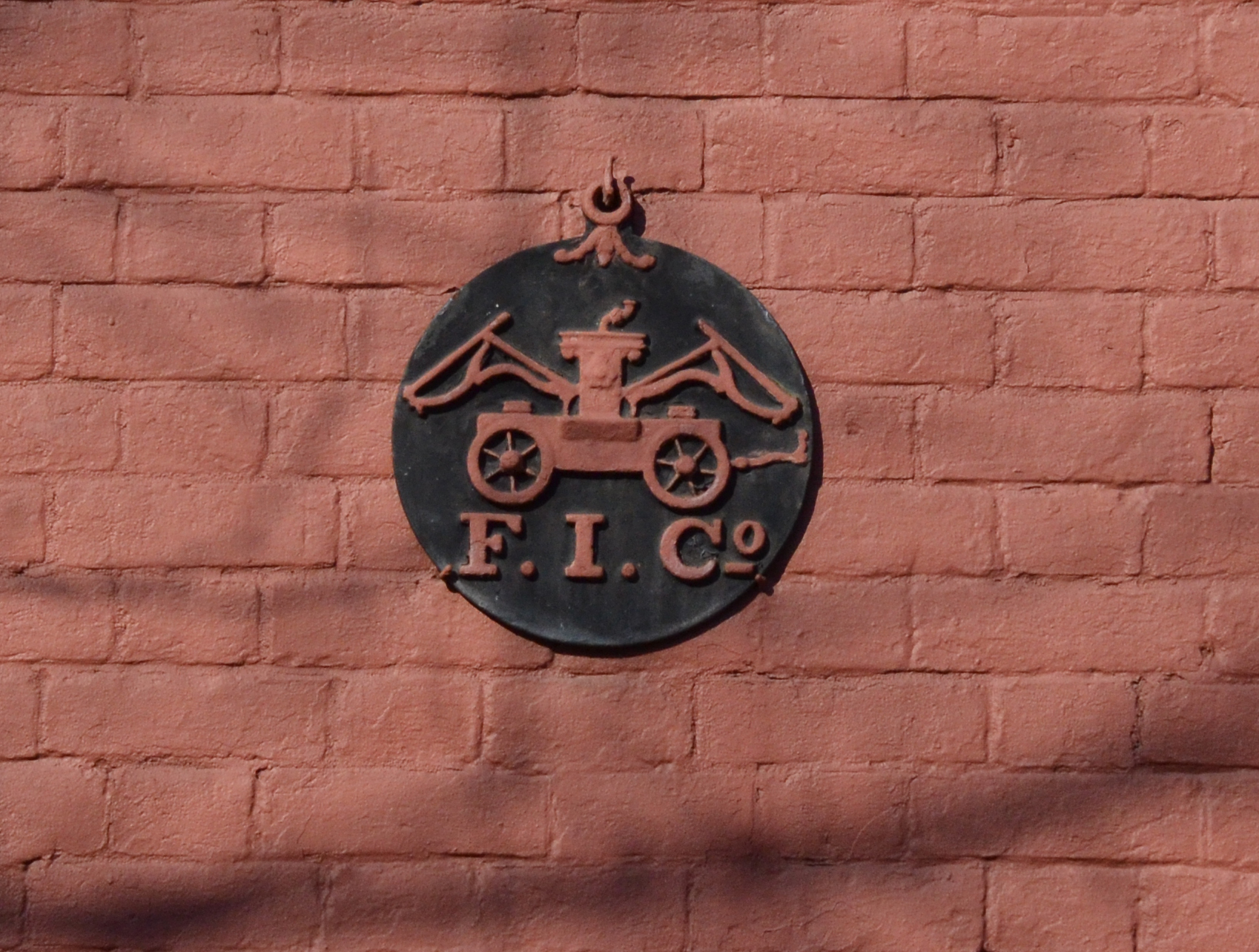
Scattered around on the front of many Georgetown homes, you’ll see plaques like the one above. What they are are fire insurance marks.
They worked basically like a big heavy insurance card. The reason you needed such a prominent proof of insurance was that there weren’t municipal fire departments. If you’re house was burning down, you would rely on the fire brigades run by the insurance companies themselves. Having the plaque ensured that they’d do the job. There were also independent fire brigades that would race to a fire and try to stake a claim on the fire, in order to get paid by the insurance company. (Like in Gangs of New York).
The mark above was for the Fireman’s Insurance Co. of Baltimore.

This one is for the Associated Firemen’s Insurance Company, also of Baltimore.
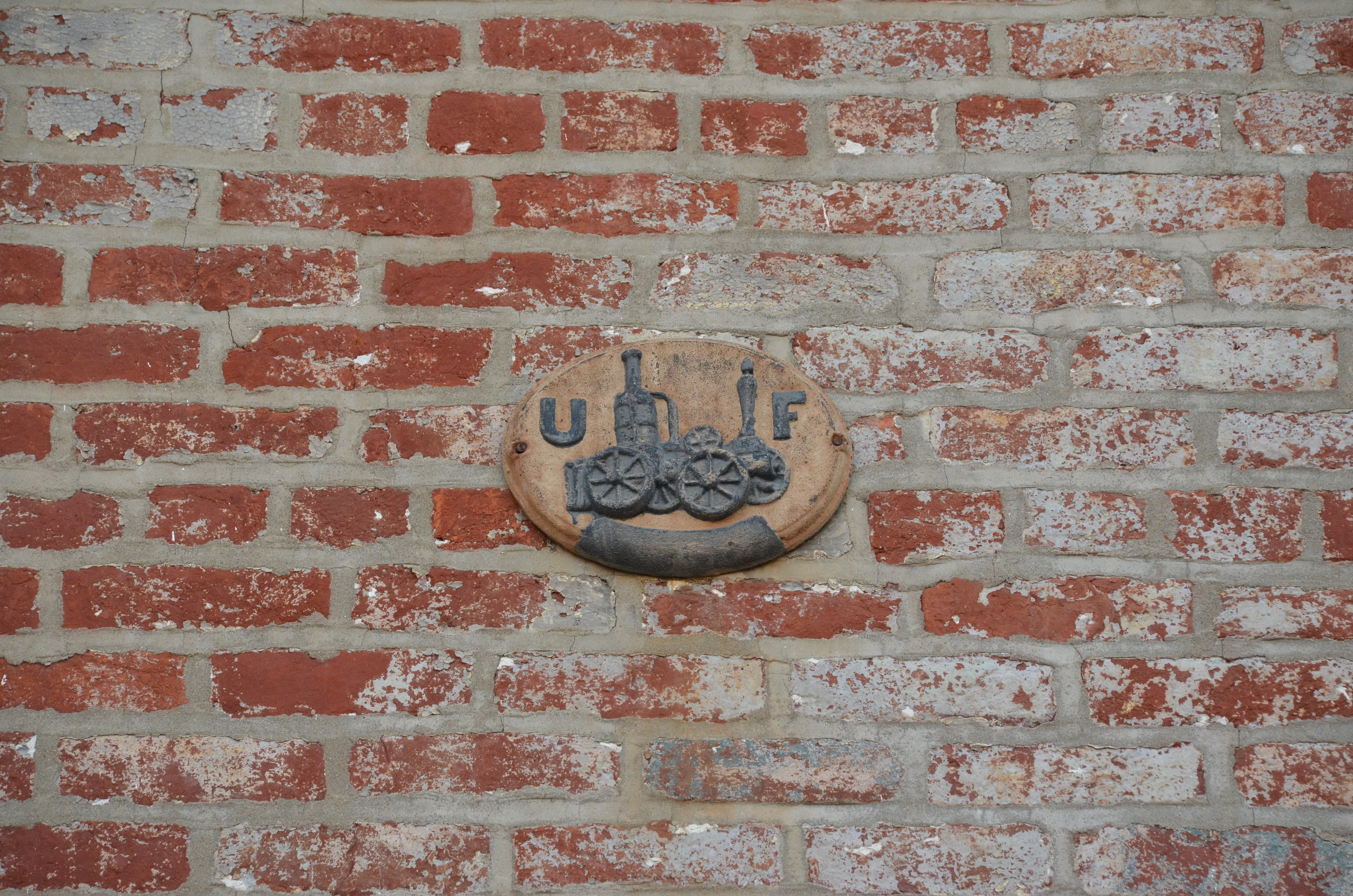
This one is for the United Firemen’s Insurance Company of Philadelphia. Continue reading
Filed under History
Georgetown University: 1977
 Courtesy of Hoyafootball.com.
GM came across an interesting website last week that documents the various home fields of Georgetown University’s football team since 1889. The site has photos of each field and the one above particularly caught GM’s attention. It’s of the baseball field that the football team used in 1977-78 while Kehoe Field was being constructed.
What catches GM’s attention is not the field so much as how much has changed to this corner in such a relatively short amount of time (that is to say, relative to the school’s age). This part of the campus was almost barren at this point. Nowadays the hospital–which takes up most of this section of the campus–has just about doubled in size, Henle Village was built, the Leavey Center was built, the business school was built, and the new Regents Hall science center has nearly been built.
But this section of the campus has always struck GM as not terribly well planned. The buildings don’t seem to relate to one and other in the slightest bit and roads dominate the ground level experience. Now seeing this old photo, it starts to make sense to GM. Unlike a school like Harvard, which has a campus planned around quads and squares, GU seems to have built its campus (at least the new parts) on the backbone of a suburban office park. Continue reading
Filed under History
Georgetown’s Vintage Wall Advertisements
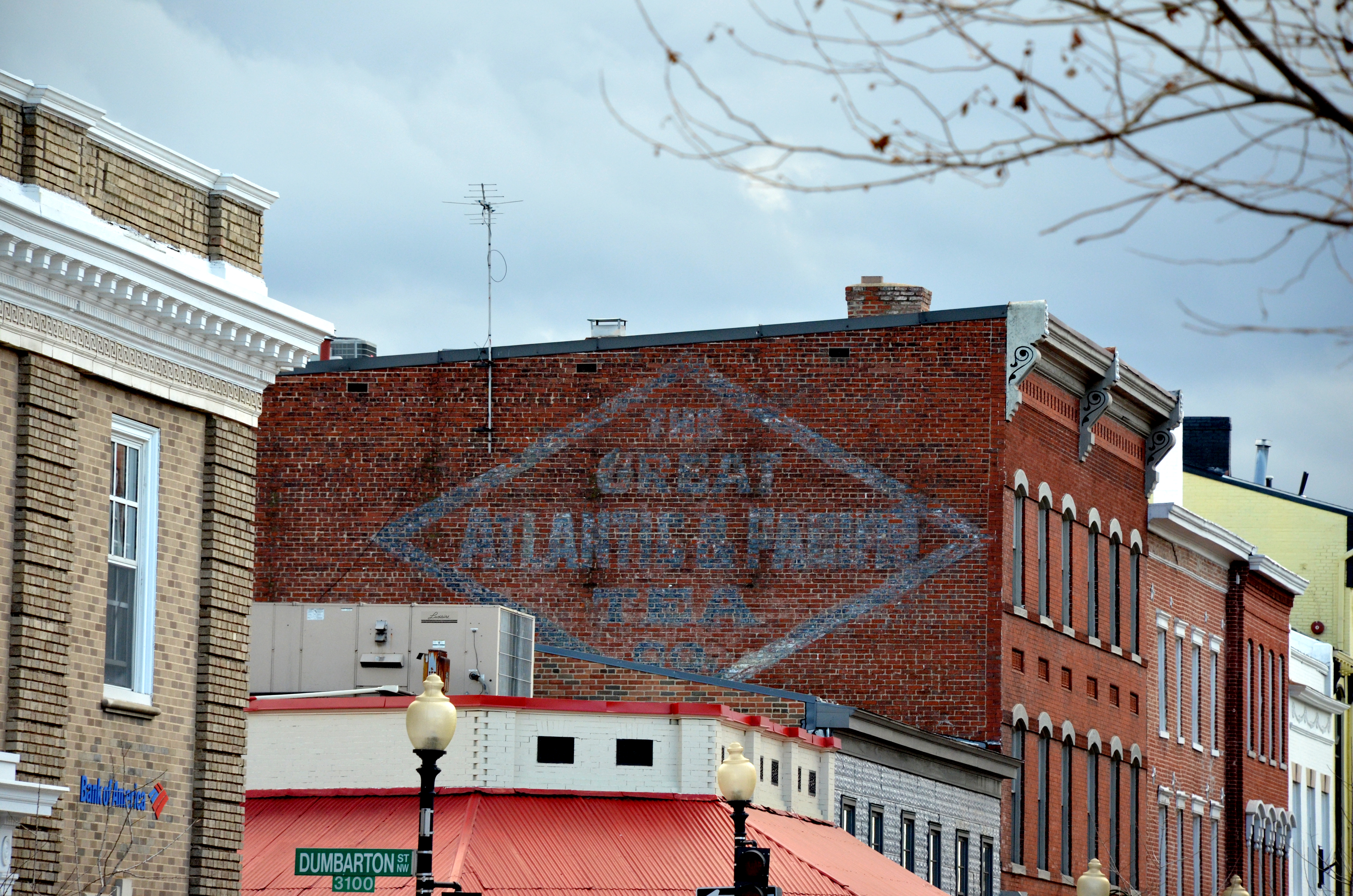
It was recently suggested to GM that he go out and document the vintage wall advertisements that are scattered around Georgetown. (A topic that has attracted plenty of attention in other cities). GM could only find three still around Georgetown, but here they are preserved for posterity.
The one above is located on Wisconsin Ave. just south of Dumbarton. It is for the Great Atlantic & Pacific Tea Co., a concern better known as the A&P. It’s still around, but they’re struggling and recently filed for bankruptcy protection. Where they used to spread from New England all the way to the south, the few remaining stores are mostly in the north. GM’s not sure if there ever was an A&P in Georgetown.
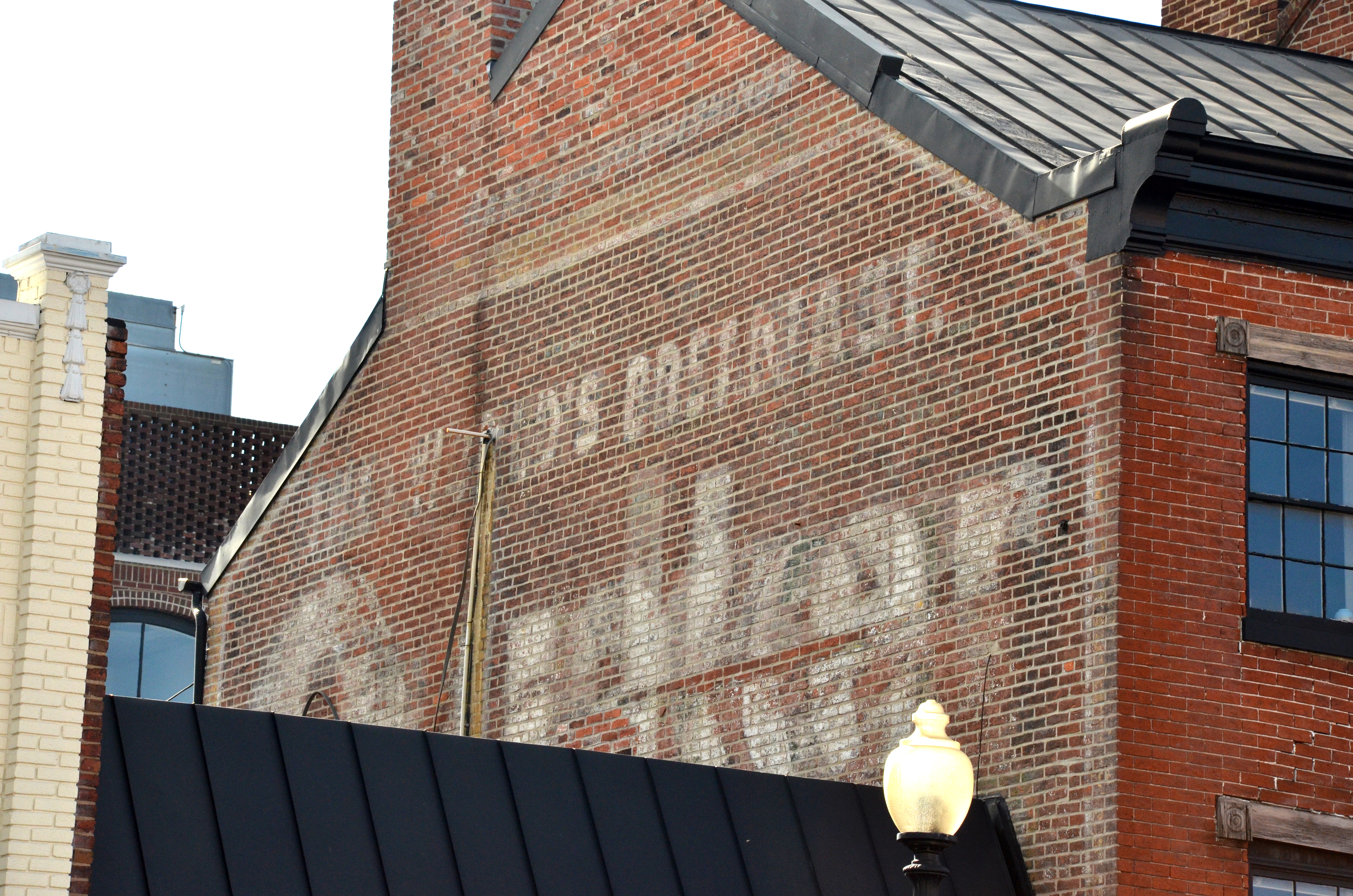
The next ad is on the side of 3112 M St. It appears to GM to be an ad for Quaker (as in oats). The line across the top appears to say “The World’s Greatest” (although the last word looks at lot more like “Greanast”). Continue reading
Filed under History
Georgetown Through the Eyes of a Forty-Three Year Old Kids Book

Being a proud District resident and a new father*, GM recently picked up a copy of the classic “This is Washington, D.C.” by M. Sasek. Browsing the book, GM saw that Georgetown gets a couple pages, and it’s pretty funny:
Georgetown is the oldest part of Washington, a district of beautiful old houses as well as of cozy small taverns and bookshops; an exclusive residential area and also an artists’ quarter. Georgetown used to be a port. It is the eastern terminus of the Chesapeake and Ohio Canel. By the way, it is named for George II, the British king, not George Washington, the American president.
Some of this was true and still is, some was true and isn’t anymore, and some may never have been true (historians can’t decide whether Georgetown was named after George II or George Beale or George Gordon, or all three). There still are some “cozy taverns” but there are probably fewer than there used to be. We all know the sad state of Georgetown bookshops…
It’s the “artists’ quarter” that caught GM’s eye. GM went into this a bit a while back when he wrote about the infamous Hamilton Arms:
According to written accounts, in its salad days the property contained the Hamilton Arms Coffee House. The coffee shop was built in 1939 by Milo Brinkley, Mary’s father. He wanted to recreate a European-style village and thought it needed a gathering place. The community and the coffee shop eventually attracted early beatniks. And speaking of salad, the coffee shop was supposedly the site of the first salad bar in the District.
Oh, and in the 1950′s it was supposedly the location of Georgetown’s first pot-party. Continue reading
Filed under History






 The Georgetown Metropolitan
You must be logged in to post a comment.