
 Photo by Daniel Lobo.
Good morning Georgetown, here’s the latest:
- More on the GU student accused of murder.
- GM missed this, but Tudor Place gardens are now open (with timed entry). [hint, hint, Dumbarton Oaks…]
Photo by Daniel Lobo.
Good morning Georgetown, here’s the latest:
Filed under Uncategorized
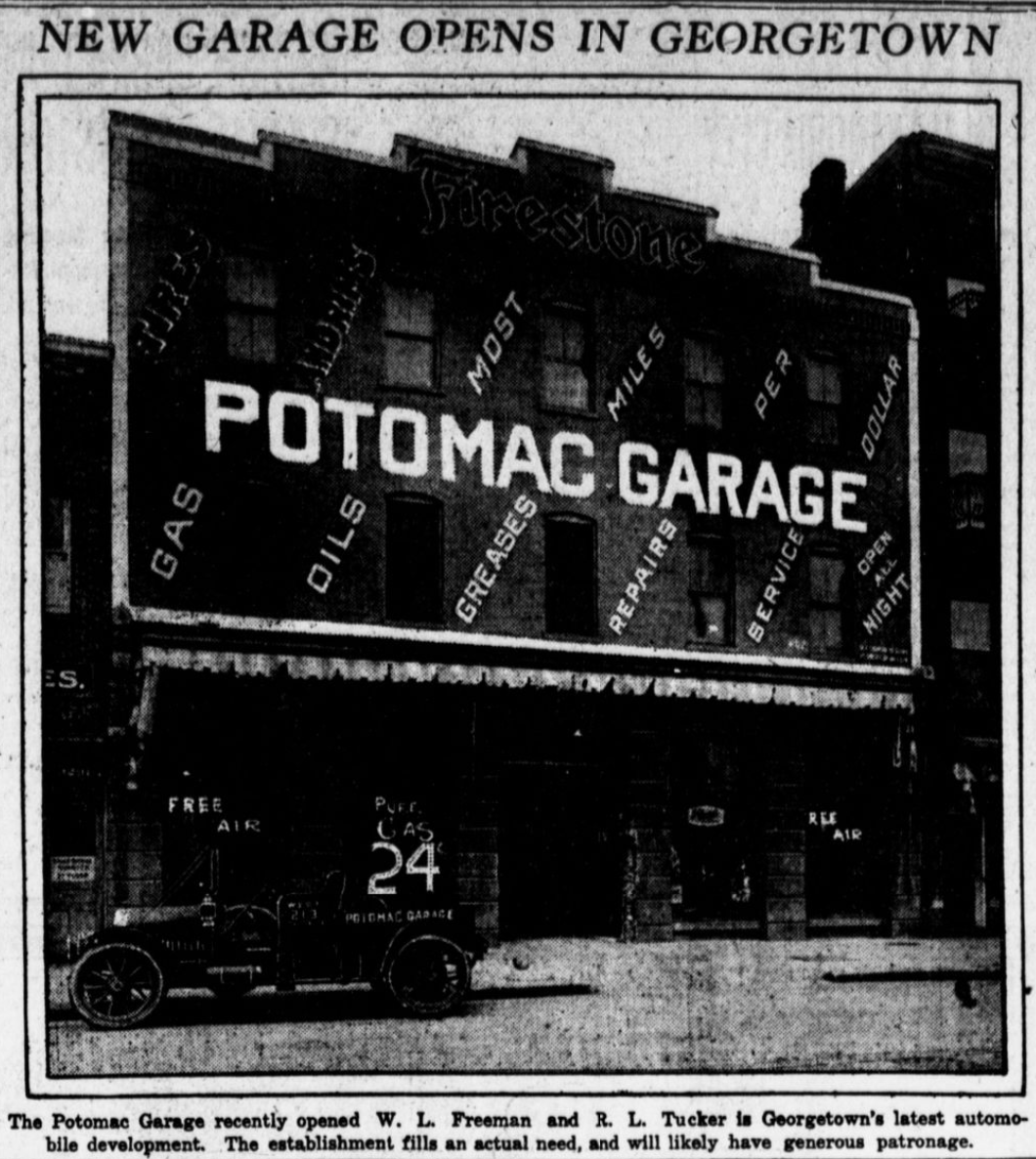
This week for Georgetown Time Machine, GM travels back to 1916, when the arrival of a new fangled car garage was considered noteworthy.
The garage, called the Potomac Garage, occupied a building at 3287 M St. Don’t bother looking it up on Google Maps, the building is long gone, replaced by the unfortunate commercial building on the northwest corner of M and Potomac St.
The location, however, provided for multiple means of ingress and egress, apparently:

(This was during that period around the turn of the 20th century when some of the streets that kept their old Georgetown names, like Prospect and Dumbarton, were called “avenues”). Continue reading
Filed under Uncategorized
 Photo by Vincent.
Good morning Georgetown, here’s the latest:
Filed under Uncategorized
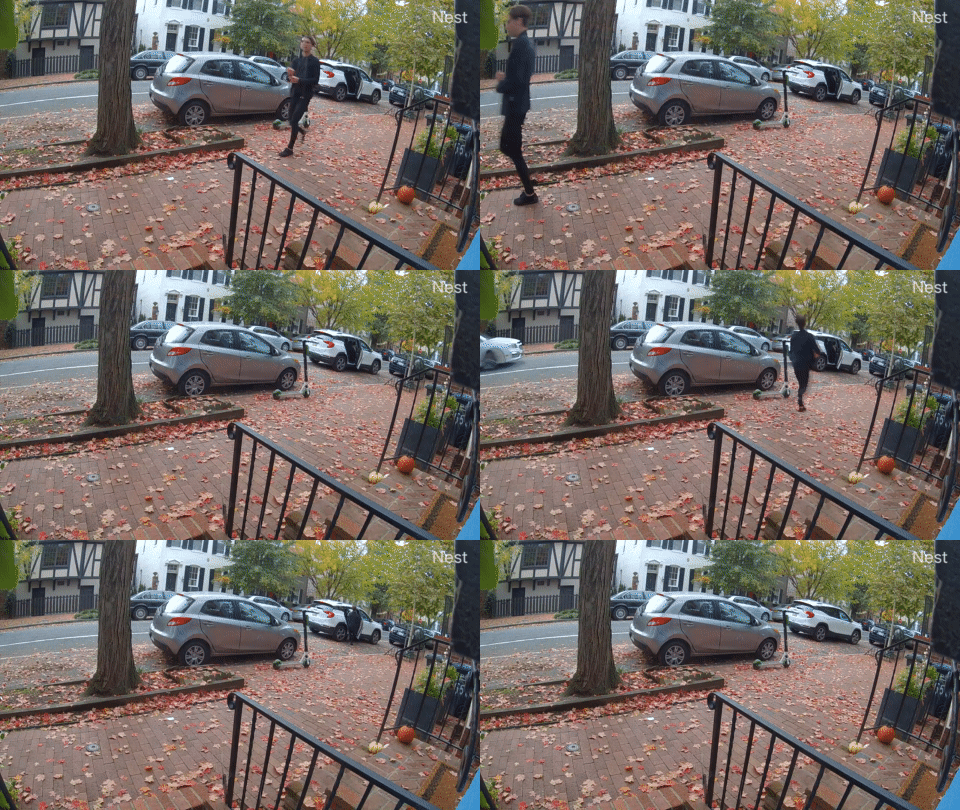
It all started with a trip to Cox’s Farm in Virginia. GM and his family wanted to get into the full spirit of the fall season last October and there’s not many places around here better suited to that task. And as you might imagine, GM and fam came home burdened with a bunch of gourds, including an unusual white pumpkin. Little did they realize that that pumpkin would soon make the national news.
The pumpkins, including the white one, were arrayed on GM’s stoop, as one does. But it wasn’t just two days later that he noticed that it was suddenly gone. Now, it’s not terribly surprising to lose a pumpkin or two (or three) over the course of October. Most of the time it’s just drunk college dudes stumbling home late at night, looking for a laugh by smashing them on the ground.
And that’s what GM assumed had happened. But then he remembered his new security cameras and realized he could actually see the culprit. He was not prepared for what he found.
No more than a half hour before GM realized the pumpkin was gone had it been stolen. And it was stolen by that fellow you see above in the tight black jeans. It wasn’t smashed (at least not immediately) it was just taken away, like a hostage being rescued by special forces.
The utter ridiculousness of the scene caused GM to laugh. But better, it provided him with easy content! He wrote up a quick article, hit “schedule” and called it a day.
An easy Monday morning article was about all he expected out the Case of the Tight Jeaned Pumpkin Thief. But so much more ensued. Continue reading
Filed under Uncategorized
 Photo by Joe Flood.
Good morning Georgetown, here’s the latest:
Filed under Uncategorized
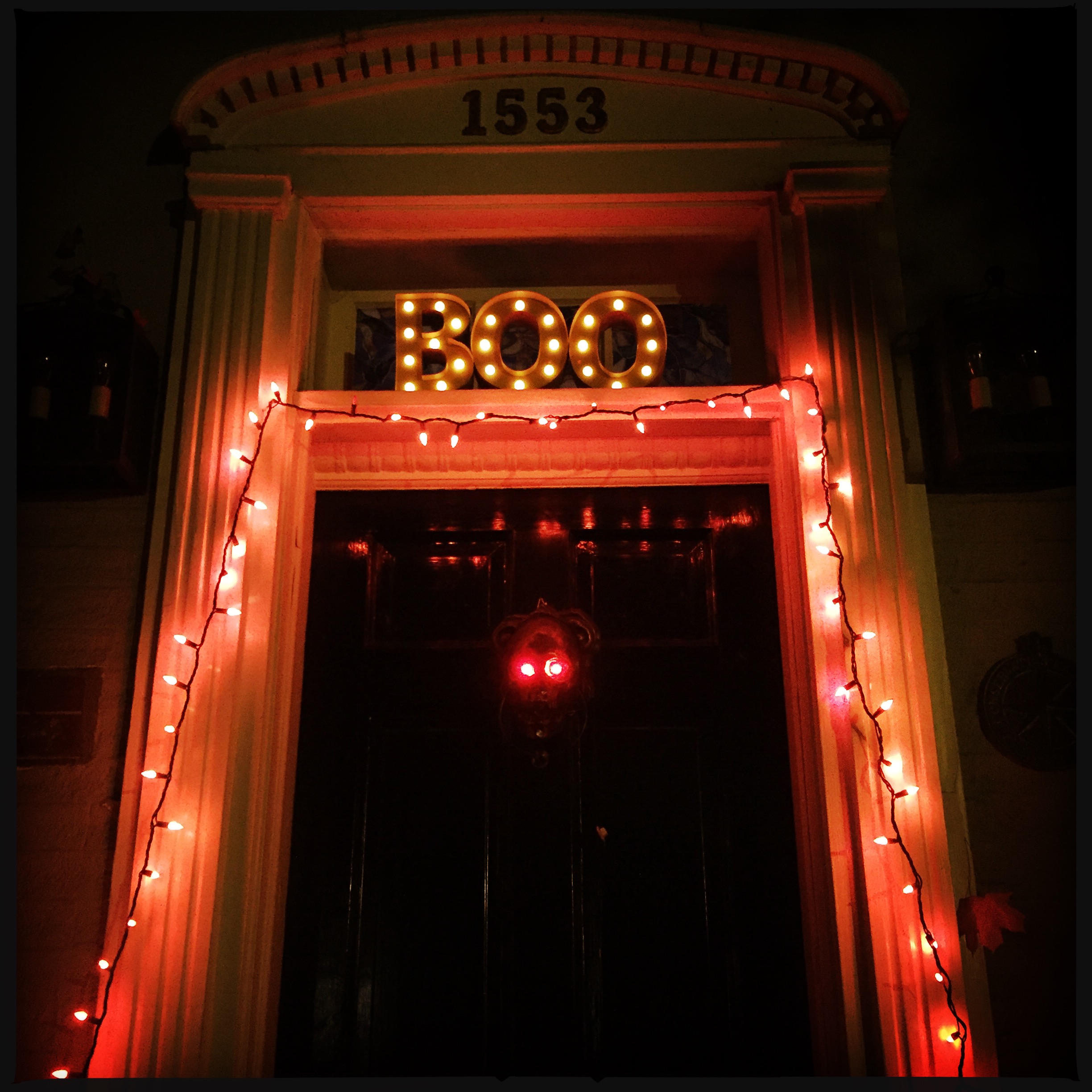
Halloween in Georgetown has a long tradition. While legendary rowdy bar crawling on M St. has subsided over the last decade, the neighborhood still draws huge crowds of trick-or-treating kids from across the region. But if the city has its way, that will not happen this year.
The DC Department of Health issued guidance earlier this week concerning many of the traditional Halloween activities. Spoiler alert: they don’t like most of them. But the guidelines are just that: guidelines, not legally enforceable laws.
Some of the activities DOH recommends skipping this year include bobbing for apples, going to haunted houses, and, most notably, going trick-or-treating. They suggest lower risk activities, including carving pumpkins with your family or attending drive-through holiday displays. Continue reading
Filed under Uncategorized
 Photo by the IMF.
Good morning Georgetown, here’s the latest:
Filed under Uncategorized









You must be logged in to post a comment.