
 Photo by Mike Maguire.
Good morning Georgetown, here’s the latest:
- This is very surprising: 1789 is moving to a tasting menu format.
- GM has reported this for a while, but as you can see: Laduree is coming to M St.
Photo by Mike Maguire.
Good morning Georgetown, here’s the latest:
Filed under Uncategorized

GM’s going to ease back into the grind with a fairly straight forward Now and a Long Time Ago. It shows the scene of 35th and Canal Rd. as of 1959. It’s from DDOT’s historic collection.
There are a couple interesting things about the historic shot. The first is to not how many more trees there are today than in 1959. Most of the time when GM superimposes shots from the mid-century, there are far more trees. But here there are really far fewer trees, particularly on the far side of the bridge. (It was also winter at the time of the shot, but even taking that into account, the area that became Francis Scott Key Park is pretty barren). Continue reading
Filed under Uncategorized
 Photo by Ehpien.
Good morning Georgetown! GM’s back from his summer break. Here’s the latest:
Filed under Uncategorized

GM’s off to the beach for the next two weeks, so there won’t be articles for a little while. Enjoy the end of summer!
Filed under Uncategorized
GM is getting ready to head to the beach, so he’s rerunning his series on Georgetown architecture:
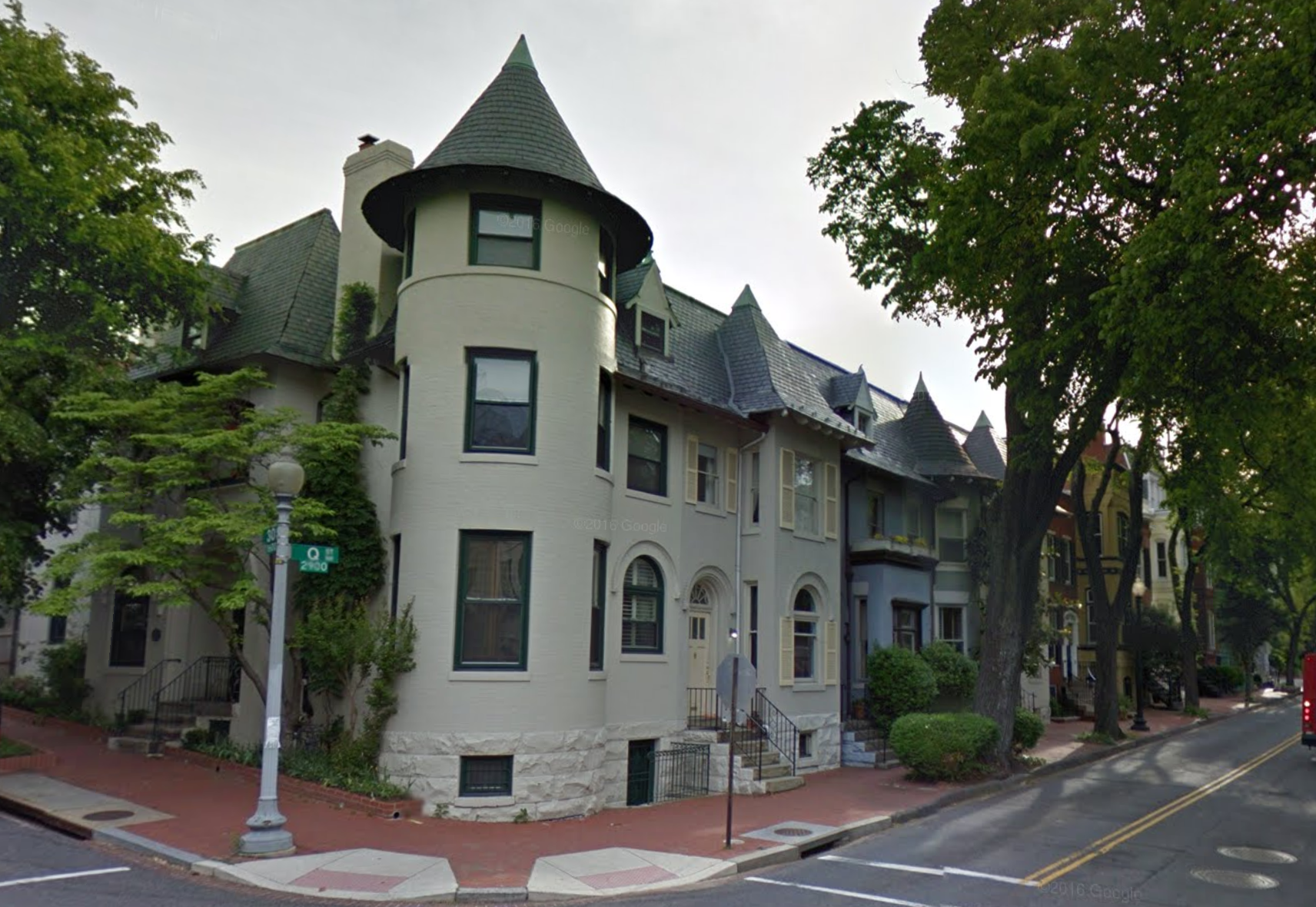
This week GM has been delving into the varieties of historic architecture that we have around Georgetown. For the final installment he is going to highlight the odd ones out, in other words the homes that weren’t built in the dominant styles of Federal, Greek Revival, Italianate, Second Empire, Queen Anne and Romanesque.
The first is French Ecclectic, which you can find on the 2900 block of Q St:
Filed under Uncategorized
Please enjoy this rerun of GM’s series on Georgetown architecture:
This week GM is exploring the variety of historic architecture around Georgetown. Today he explores the late Victorian Period. For Georgetown that means primarily two styles: Queen Anne and Richardsonian Romanesque.
First up: Queen Anne. The Queen Anne style was developed in England by a group of architects in the 1860s and 1870s. It was meant to evoke a medieval period of English architecture, although it was a bit of a misnomer since the architecture popular during the real Queen Anne was actually a formal renaissance style.
The Queen Anne style that dominated American homes during the 1880s is characterized by asymmetrical design with a variety of different towers and hipped roofs that form an irregular roof line. Also, the surface materials included a variety of textures such as scale shingles and the homes were often decorated with elaborate spindles and other fanciful woodwork. Basically, the classic “gingerbread” home that comes to your mind when you think of Victorian homes is probably a Queen Anne. Continue reading
Filed under Uncategorized
 Photo by Apium.
Good morning Georgetown, here’s the latest:
Filed under Uncategorized











 The Georgetown Metropolitan
You must be logged in to post a comment.