The Morning Metropolitan

Photo by Ted Eytan.

Good morning Georgetown, here’s the latest:

Leave a comment

Filed under The Morning Metropolitan

The Georgetown Metropolis

1400 block of 35th St.


1400 block of 35th St.

Leave a comment

Filed under The Georgetown Metropolis

Hyde Joins Twitter

GM is still slowly catching up to the news he missed over the past week, but he wanted to pass on news of another Georgetown institution catching up with the times: Hyde-Addison has finally joined Twitter.

GM is happy to see the school sign up. Many schools across the city use the service to spread news quickly to their students and their neighborhoods. Stoddert and the Capitol Hill Cluster PTA are particularly good examples. Hopefully whoever’s behind Hyde’s account will actually use it as well as some of these examples.

So welcome to Twitter Hyde!


Leave a comment

Filed under Schools

The Morning Metropolitan

Photo by Tedeytan.

Good morning Georgetown, here’s the latest:

  • Jack’s Boathouse a good date idea. (GM recommends you get two separate kayaks so that you can actually look at each other).
  • Wasn’t the Cappella roof deck going to be restricted just to guests?

Leave a comment

Filed under The Morning Metropolitan

Field Guide to Georgetown Homes: the Odd Ones Out

GM is off to Europe this week, in his absence enjoy this rerun of his series on Georgetown architecture:

This week GM has been delving into the varieties of historic architecture that we have around Georgetown. For the final installment he is going to highlight the odd ones out, in other words the homes that weren’t built in the dominant styles of Federal, Greek Revival, Italianate, Second Empire, Queen Anne and Romanesque.

First up: Neoclassical

The Neoclassical style was born at the 1893 Chicago’s World Columbian Exposition, where some of the greatest architects of the time gathered to design a grand city of monumental buildings based in the classical style. Since nearly 26 million people visited the “White City”, this new style had wide exposure and quickly became a dominant building style in the early 20th century. Downtown DC was basically rebuilt in the White City’s image. Continue reading

1 Comment

Filed under History

Field Guide to Georgetown Homes: the Late Victorian Period

GM is off to Europe this week, in his absence enjoy this rerun of his series on Georgetown architecture:

This week GM is exploring the variety of historic architecture around Georgetown. Today he explores the late Victorian Period. For Georgetown that means primarily two styles: Queen Anne and Richardsonian Romanesque.

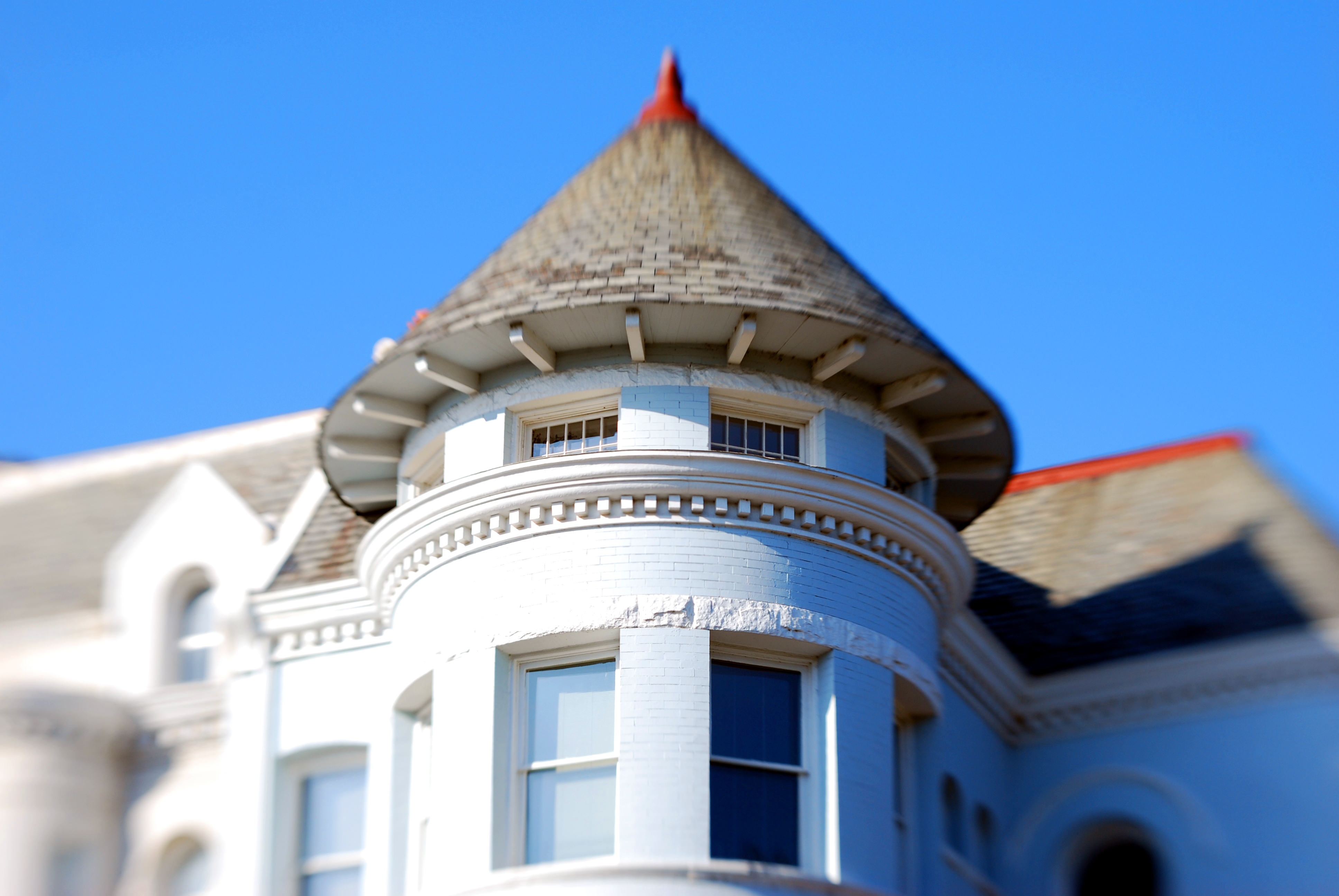
First up: Queen Anne. The Queen Anne style was developed in England by a group of architects in the 1860s and 1870s. It was meant to evoke a medieval period of English architecture, although it was a bit of a misnomer since the architecture popular during the real Queen Anne was actually a formal renaissance style.

The Queen Anne style that dominated American homes during the 1880s is characterized by asymmetrical design with a variety of different towers and hipped roofs that form an irregular roof line. Also, the surface materials included a variety of textures such as scale shingles and the homes were often decorated with elaborate spindles and other fanciful woodwork.  Basically, the classic “gingerbread” home that comes to your mind when you think of Victorian homes is probably a Queen Anne. Continue reading

Leave a comment

Filed under Uncategorized

Field Guide to Georgetown Homes: the Early Victorian Period

GM is off to Europe this week, in his absence enjoy this rerun of his series on Georgetown architecture:

This week GM is exploring the variety of historical architectural styles around Georgetown. Today GM explores the early Victorian period.

The two styles that dominated early Victorian architecture were Second Empire and Stick. However, there are no examples of Stick architecture in Georgetown that GM could find (the Stick style is not surprisingly tailored to wooden homes, which was not a popular building material in bricky Georgetown). So for Georgetown early Victorian architecture means only Second Empire. Continue reading

Leave a comment

Filed under History

Field Guide to Georgetown Homes: The Romantic Period

GM is of to Europe this week, in his absence enjoy a rerun of his series on Georgetown architecture:

This week GM is exploring the varieties of historic architecture in Georgetown and offering a field guide to help you identify each particular style.

Today: Romantic Period

For American architecture, the Romantic period stretched from 1820s to the 1880s representing the last years of the Federal Period through to the middle stages of the Victorian Era. In Georgetown the two most common Romantic Period styles are Greek Revival and Italianate.

First up: Greek Revival.

Greek Revival style homes were the dominant style across the U.S. from 1830s to 1850s. So much so that it is also called the “National Style”.  Whereas Roman designs influenced the Federal period, increasingly intellectuals looked to Greece as the more appropriate model for the young democracy. Continue reading

Leave a comment

Filed under History

Field Guide to Georgetown Homes: the Colonial and Federal Period

GM is off to Europe this week, so in the meantime enjoy a rerun of his Field Guide to Georgetown Homes:

If there’s one constant in Georgetown real estate listings, it’s that every house, no matter its shape and style, is described as “Federal”. The problem is that only a small percentage of homes in Georgetown could fairly be described as “Federal”.

As GM described during his ten favorite things countdown, Georgetown represents a cross section of 19th century architecture. It has buildings of just about every major style from that time period. To help his readers better appreciate the wealth of architectural styles in Georgetown, GM is going to take a shot at writing a field guide to Georgetown homes.

First up: Colonial and Federal Homes

Continue reading

Leave a comment

Filed under History

Holland Bound

Photo by Matt Becker.

GM’s off to a week in the Netherlands and Belgium in a couple days, so he’s going to sign off for now to use his free time for last minute planning.

Next week, GM will re-run his old architecture series, so if you’re bored and want to learn a little bit about the homes around you, check back then!

As for GM, he’ll be chasing after a toddler down cobblestone streets and trying to drink some good Belgian beer.

2 Comments

Filed under Uncategorized